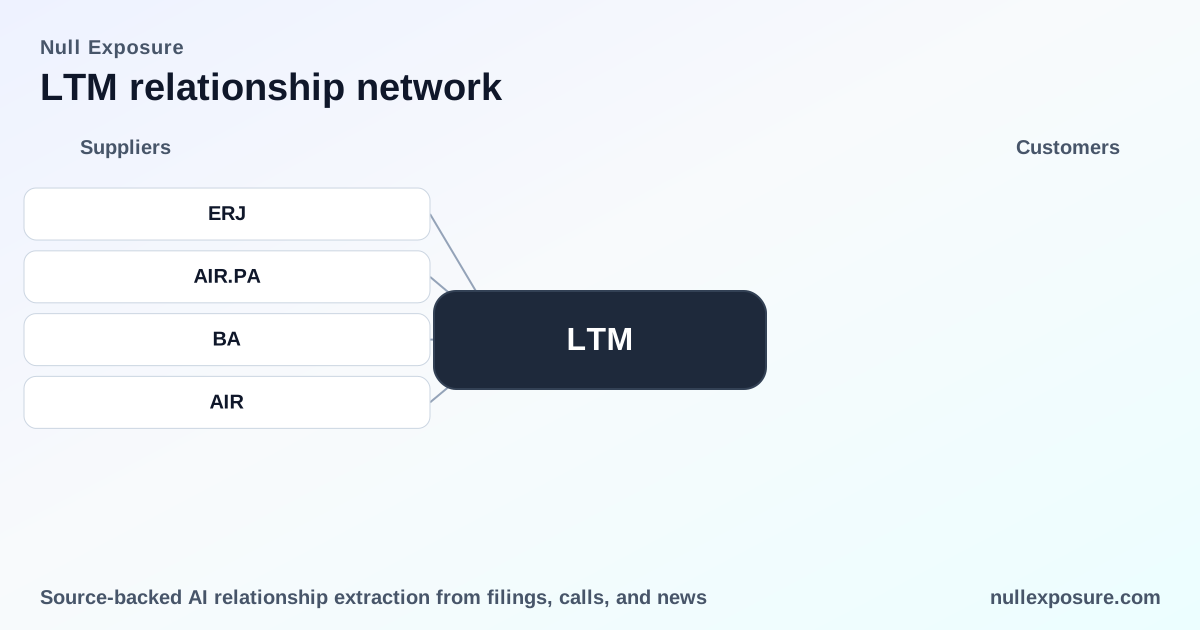
LATAM Airlines (LTM) — Customer Relationships That Drive Loyalty Revenue and Network Reach
LATAM Airlines operates a full-service passenger and cargo platform across Latin America and beyond, monetizing through ticket sales, cargo freight, ancillary services and — importantly — a high-margin loyalty ecosystem. The company leverages codeshares, bank co-branding and long-term loyalty alliances to extend network reach, accelerate customer acquisition and embed LATAM Pass into everyday financial behavior. For investors, the critical question is how these relationships convert into recurring, low-capex revenue and how concentrated or durable those contracts are. For a concise overview of relationship exposure and commercial signals, visit https://nullexposure.com/.
Why customers and partners matter more than seats on a plane
LATAM’s cash generation is not driven solely by load factors and yield management; partnerships and loyalty programs materially amplify lifetime customer value. Codeshares open incremental markets without incremental aircraft, while co‑branded bank agreements convert everyday banking spend into loyalty currency — a source of deferred revenue, breakage and ancillary sales when points are redeemed for flights or upgrades.
At the company level, the available signals point to:
- Contracting posture: LATAM routinely enters multi-year commercial alliances and renewals rather than one-off campaigns, indicating a preference for long-term partner commitments.
- Concentration: The loyalty program has deep commercial ties in key domestic markets (notably Chile), creating concentrated exposure to regional banking partners.
- Criticality: Loyalty partnerships function as strategic distribution channels for both passenger acquisition and off-balance-sheet monetization (card sign-ups, commission revenue, miles issuance).
- Maturity: Several relationships are long-standing and institutionalized, which supports predictability of ancillary revenues and reduces commercialization friction.
These are company-level signals derived from public partnership activity and do not attribute contractual language to any single counterparty.
Relationship inventory: what the public record lists
Below I cover every relationship item surfaced in the collection, with a plain-English summary and the source reference for each entry.
Aeroméxico — codeshare into Brazil and Colombia
LATAM has a commercial codeshare arrangement with Aeroméxico that places LATAM inventory on certain routes into Brazil and Colombia, effectively expanding distribution without additional fleet deployment. According to Expansion.mx, the codeshare was operative as of FY2021 and is part of LATAM’s regional alliance strategy. (Source: Expansion, May 2021).
Banco Santander Chile — five-year LATAM Pass alliance renewal (reported)
Banco Santander Chile and LATAM renewed a strategic alliance for five years, reaffirming the bank’s role as a principal partner for LATAM Pass in Chile and consolidating a multi-decade relationship that supports loyalty issuance and redemption channels. GlobeNewswire reported this renewal on August 11, 2025, noting the extension and leadership of the loyalty program in Chile (Source: GlobeNewswire, Aug 11, 2025).
Banco Santander Chile — duplicate coverage of the renewal (reported)
The same GlobeNewswire announcement was captured again in public feeds with the same substance: a five-year renewal and emphasis on long-term collaboration between Banco Santander Chile and LATAM Pass, underscoring the public messaging and investor relations emphasis around the partnership in FY2025. (Source: GlobeNewswire, Aug 11, 2025).
Banco Santander Chile — operational detail on miles assignment via bank products
A regulatory/filing excerpt recorded in FY2026 explains that as Santander customers use the bank’s transactional products, the bank incurs expenses that are consumed through the assignment of LATAM Pass miles, reflecting an operational mechanism for miles issuance tied directly to bank product usage. This illustrates how transactional banking activity is converted into LATAM Pass currency through the partner contract. (Source: bank filing reported on StockTitan mirror of the 6‑K, FY2026).
What these relationships mean for cash flow and risk
The commercial pattern visible in these records implies five practical consequences for investors and operators:
- Higher recurring revenue mix. Loyalty partnerships and co-branded bank arrangements convert non-airline spend into near-recurring revenue streams (miles issuance fees, co‑branding commissions, breakage). This diversification improves resilience against cyclical passenger demand.
- Low incremental capital intensity. Codeshares like the Aeroméxico arrangement expand network reach without the capital outlay required to add routes, improving return on invested capital for network growth.
- Concentration risk localized to market leaders. Long-term exclusivity or dominant partnerships in specific markets (for example, Chile with Santander) create concentrated counterparty exposure; loss or non-renewal would have outsized local impact on loyalty issuance and redemption economics.
- Contractual maturity supports forecastability. Multi-year renewals provide forward visibility for loyalty-related cash flows and allow better matching of miles liability with redemption patterns.
- Operational embedding of miles issuance. The bank filing note that transactional products are a trigger for miles issuance exemplifies how embedded product mechanics deepen partner dependence and raise switching costs for customers.
Investment takeaways and operational checklist
- Key investment thesis: LATAM’s loyalty partnerships and codeshares are strategic revenue multipliers that boost margin and reduce pure seat‑revenue volatility. These commercial relationships should be valued alongside fleet and route economics when modeling future cash flows.
- Watchlist for investors: renewal terms with major banking partners, mileage liability accounting, breakage trends, and the geographic concentration of loyalty monetization (Chile and other core markets).
- Operator focus: prioritize retention of embedded bank mechanics (transaction triggers, co‑brand card economics) and ensure contractual protections against unilateral changes that could accelerate miles issuance or reduce partner incentives.
For a deeper read on partner exposure and to monitor changes in LATAM’s commercial relationships, see https://nullexposure.com/.
Bottom line
LATAM’s customer relationships — from codeshares to multi‑decade bank alliances — are more than marketing: they are durable commercial engines that shape revenue composition and strategic flexibility. Investors should treat these relationships as first‑class drivers of valuation, monitor contract renewals and liability accounting closely, and factor concentration and partner mechanics into any assessment of downside scenarios.