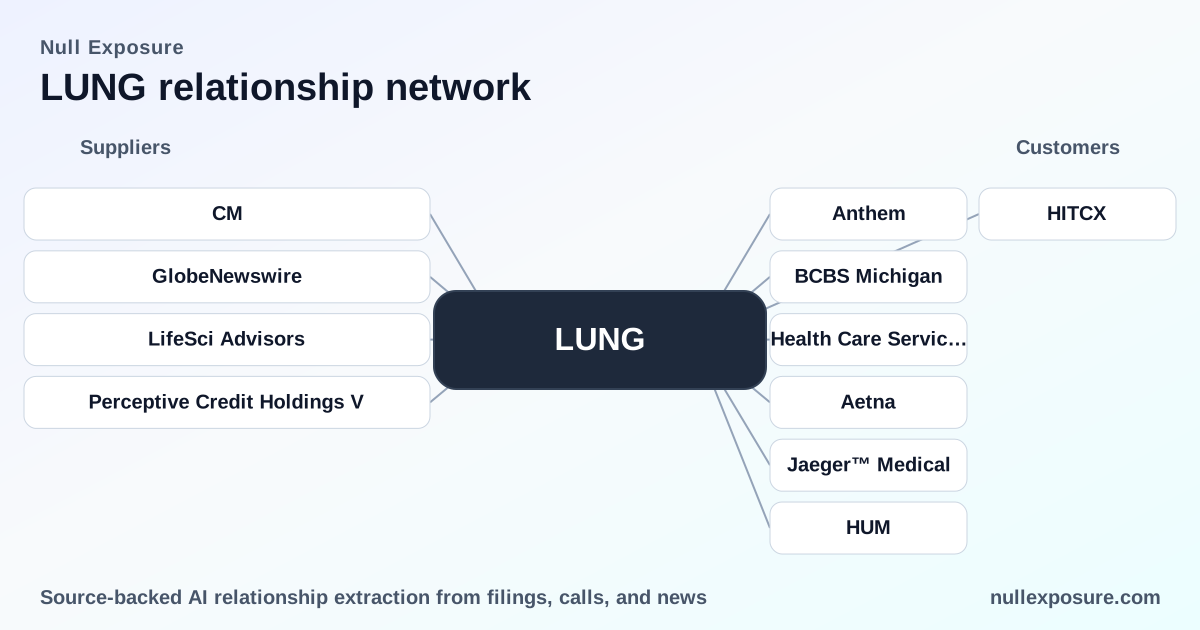
Pulmonx (LUNG) — Payer Coverage and Partner Footprint that Drive Adoption of Zephyr
Pulmonx sells a focused portfolio of minimally invasive medical devices—primarily the Zephyr Valve and delivery catheters—plus a cloud QCT service (LungTraX) to identify and quantify candidates for treatment; the company monetizes through device sales to hospitals and clinics, backed by third‑party payer coverage and strategic diagnostic partnerships that accelerate patient selection and procedure volume. Investors should value Pulmonx as a specialist medical‑device seller with revenue driven by hospital adoption, payer reimbursement, and growing international markets.
For a concise investor summary of Pulmonx’s customer and payer relationships, see the company profile at NullExposure: https://nullexposure.com/.
How the business actually generates revenue and where customer value sits
Pulmonx derives the bulk of revenue from hardware sales—Zephyr Valves and associated catheters—sold directly to hospitals and interventional pulmonologists in the U.S. and through distributors internationally. Hospitals bill commercial payors and government programs for the procedure, so positive coverage decisions from major insurers materially improve the revenue outlook by reducing friction to adoption. LungTraX adds a software‑enabled clinical funnel that improves patient identification and workflow efficiency, which supports device utilization and sales growth.
A more detailed view of customer exposures and contract posture is on NullExposure: https://nullexposure.com/.
Payer coverage and strategic partners — line‑by‑line relationship map
The following entries cover every relationship referenced in Pulmonx’s public customer results. Each entry provides a concise, plain‑English summary and the source.
Anthem
Anthem is identified among the large Blue Cross Blue Shield plans that have issued positive coverage policies for the Zephyr Valve, facilitating hospital reimbursement and likely smoothing procedure approvals. Source: Pulmonx 2024 Form 10‑K (FY2024).
BCBS Michigan
BCBS Michigan is listed as a Blue Cross Blue Shield plan that has issued positive coverage for Zephyr, supporting regional access in Michigan and contributing to procedure uptake in that state. Source: Pulmonx 2024 Form 10‑K (FY2024).
Health Care Service Corporation (HCSC)
Pulmonx reports HCSC as a Blue Cross plan that issued positive coverage policies for Zephyr, which expands reimbursement across HCSC’s multi‑state footprint and reduces payer‑driven deployment barriers. Source: Pulmonx 2024 Form 10‑K (FY2024).
An earlier media note reiterated HCSC’s coverage decision for Zephyr in 2021, underscoring the persistence of that policy in subsequent reporting. Source: RTTNews summary referencing HCSC coverage (reported 2026; referencing FY2021).
Aetna
Aetna is named among the commercial payors with positive coverage policies for Zephyr, improving nationwide access because Aetna’s network includes many large hospital systems that perform interventional pulmonary procedures. Source: Pulmonx 2024 Form 10‑K (FY2024).
Jaeger™ Medical
Jaeger Medical announced a strategic partnership with Pulmonx to integrate advanced data qualification into Jaeger’s SentrySuite respiratory diagnostics software, which directly supports identification and clinical workflow for candidate patients. This partnership strengthens the referral and diagnostic funnel feeding device utilization. Source: Yahoo Finance press release (Jaeger–Pulmonx partnership, published 2026‑03‑10).
Humana (HUM)
Humana is listed alongside other major commercial payors that have adopted positive coverage policies for the Zephyr Valve, expanding coverage within Humana’s membership and reducing reimbursement uncertainty for hospitals. Source: Pulmonx 2024 Form 10‑K (FY2024).
Highmark
Highmark is cited as one of the Blue Cross Blue Shield plans that issued positive coverage for Zephyr, supporting reimbursement in Highmark’s service areas and contributing to regional procedure volume. Source: Pulmonx 2024 Form 10‑K (FY2024).
What the relationship map implies about Pulmonx’s operating posture and constraints
-
Direct‑sales dependence and concentration of manufacturing. Pulmonx sells directly in the United States through its own sales organization and performs substantially all manufacturing and R&D from its Redwood City headquarters; this creates high operational control but concentrated execution risk. Evidence: 2024 Form 10‑K company disclosures.
-
Payor coverage is a growth enabler and de‑risking factor. Multiple major commercial payors and large Blue Cross Blue Shield plans have published positive coverage policies for Zephyr, which materially reduces adopt‑rate friction and supports hospital purchasing decisions. Evidence: Pulmonx 2024 Form 10‑K (FY2024) and public press reports.
-
Geographic diversification is meaningful but U.S.‑centric. Pulmonx reports that roughly one‑third of revenue comes from international markets (EMEA and APAC focus), while 96% of revenue is generated from markets where the company sells directly, indicating a heavy emphasis on direct‑sales market penetration. Evidence: 2024 Form 10‑K (FY2024).
-
Customer concentration is low at the single‑customer level but market concentration is strategic. No single customer accounted for more than 10% of revenue in 2023–2024, but Pulmonx also targets approximately 500 high‑volume hospitals and relies on payer policies and hospital adoption to scale—this creates low single‑account concentration but high exposure to hospital segment dynamics. Evidence: 2024 Form 10‑K.
-
Product mix and route to revenue. The company generates most revenue from Zephyr valves and delivery catheters (hardware) while LungTraX is positioned as a complementary software service that increases identification and utilization of eligible patients. This mix creates recurring device demand driven by clinical throughput rather than high‑frequency consumable cycles. Evidence: 2024 Form 10‑K.
Investment implications — risk and upside distilled
-
Upside catalyst: Continued expansion of payer coverage across major commercial insurers and adoption of Jaeger partnership‑enabled workflows will accelerate procedure volume and materially lift device revenue. Positive coverage by large payors already reduces a key adoption blocker.
-
Key operational risk: Centralized manufacturing and single‑site operations in Redwood City create a supply and execution risk; any disruption would directly affect shipments and customer service given the lack of redundant facilities.
-
Revenue profile: Expect moderate growth driven by hospital penetration and international expansion, with LungTraX improving addressable population identification but the immediate revenue base still hardware‑heavy.
-
Valuation context: With a small market capitalization and negative operating margins, Pulmonx is a classic commercialization‑stage med‑tech story where reimbursement and procedure adoption are the primary drivers of valuation re‑rating.
If you require a focused exposure analysis broken down by payer footprint or hospital concentration, NullExposure provides tailored customer‑level dossiers and monitoring: https://nullexposure.com/.
Final read
Pulmonx’s commercial case is straightforward: device sales depend on hospital adoption and payer coverage, and the company has secured several large commercial payors and Blue Cross plans that materially reduce the reimbursement obstacle to growth. The Jaeger partnership strengthens diagnostic funneling, which supports utilization. Investors should weigh the clear upside of broader coverage and diagnostic integration against operational concentration and a still‑hardware‑centric revenue base when assessing Pulmonx’s path to sustainable profitability.