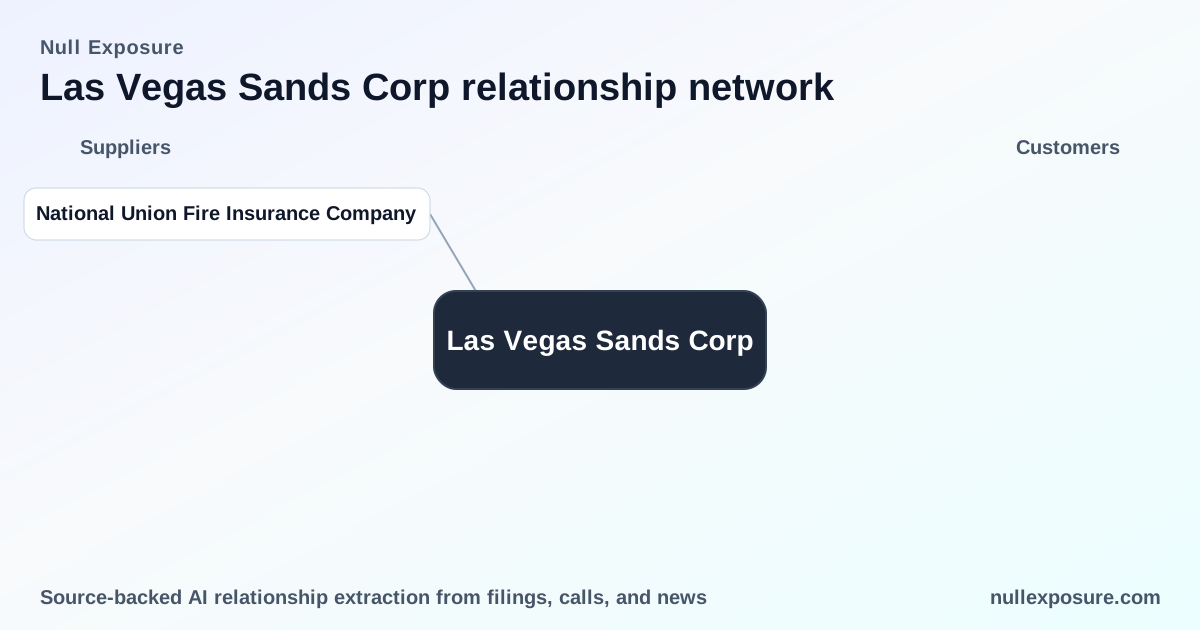
Las Vegas Sands (LVS): Customer Relationships that Shape Revenue, Distribution and Risk
Las Vegas Sands operates, develops and monetizes destination integrated resorts by combining gaming, hospitality, retail, conventions and entertainment to capture spend across multiple customer touchpoints. The company earns revenue from gaming, room nights, food & beverage, retail and MICE (meetings, incentives, conferences and exhibitions), and expands distribution through licensing and strategic commercial relationships that drive occupancy, premium spend and event volumes. For active investors assessing customer-facing exposure and counterparty dynamics, these relationships illuminate distribution channels, asset ownership shifts and the role of entertainment programming in driving visitation. Learn more about how we track these relationships at https://nullexposure.com/.
Quick take: what investors should watch in LVS customer ties
Las Vegas Sands runs a mature, asset-heavy hospitality operator whose customer relationships reflect both short-term retail exposure and long-lived strategic distribution partnerships. Key signals:
- Contracting posture is largely short-term on customer liabilities — gaming chip liabilities are redeemable or recognized within a year, reflecting retail, high-turnover customer exposure.
- Counterparties include individuals as primary end-customers, while institutional partners extend distribution and asset ownership.
- Geographic concentration skewed toward APAC operating markets (Macao and Singapore) while the corporate footprint and brand operate globally.
- LVS positions as a seller of services and experiences, leveraging property scale to monetize non-gaming amenities and MICE traffic.
These characteristics flag a business with high operating leverage to consumer cycles, regulatory regimes in APAC, and the effectiveness of distribution partnerships that channel demand into LVS properties.
Catalog of customer relationships: concise, investor-focused summaries
Hyatt (H) — licensing agreement expands distribution for The Venetian resort
Hyatt Hotels Corporation entered a licensing agreement to make The Venetian Resort Las Vegas bookable through Hyatt’s channels, bringing The Venetian and The Palazzo under Hyatt’s booking inventory and distribution network. According to Travel Market Report (March 10, 2026), the arrangement makes the iconic Las Vegas Strip property accessible to Hyatt’s loyalty and reservation platforms, which should increase channel reach and capture incremental room revenue (https://www.travelmarketreport.com/hotels-resorts/articles/hyatt-and-the-venetian-resort-las-vegas-sign-licensing-agreement).
Apollo (APO) — asset owner of former LVS U.S. Strip properties following 2022 sale
Apollo is identified as a buyer of LVS’s Venetian and Palazzo Las Vegas assets in the U.S., which were sold in 2022; this transaction removed direct LVS ownership of those U.S. Strip assets while preserving other commercial arrangements tied to those properties. Benzinga reported on insider trading activity in April 2026 and reiterated that the Venetian and Palazzo U.S. assets were sold to Apollo (https://www.benzinga.com/insights/news/26/04/52177011/las-vegas-sands-director-sold-616k-in-company-stock).
Vici (VICI) — landlord/transaction counterparty for U.S. Strip real estate
Vici acquired a stake alongside Apollo in the Venetian and Palazzo transaction and functions as an institutional real estate counterparty following the 2022 sale, shifting LVS’s role from full owner-operator to lessee/partner for those assets. Benzinga’s coverage (April 2026) notes the joint sale to Apollo and Vici and underscores the capital recycling strategy LVS executed by monetizing U.S. Strip assets (https://www.benzinga.com/insights/news/26/04/52177011/las-vegas-sands-director-sold-616k-in-company-stock).
National Basketball Association (NBA) — programming and venue partnership enabling live events
LVS has invested in entertainment assets and arena renovations that enabled the hosting of NBA games and other premium programming, using sports and live-event content to enhance visitation and guest spending across its properties. A Q1 2026 earnings call transcript captured by Investing.com described renovation of the arena that allowed for NBA games and referenced entertainment programming as a deliberate revenue driver (Investing.com transcript; May 2026, https://m.investing.com/news/transcripts/earnings-call-transcript-las-vegas-sands-beats-q1-2026-earnings-expectations-93CH-4630884?ampMode=1).
How these relationships map to LVS’s operating constraints and business model
The relationship set reinforces several company-level signals about LVS’s operating model and commercial posture:
- Short-term contracting with end-customers. The company recognizes that gaming chip liabilities convert to revenue or cash within a year, reflecting transactional, high-frequency customer behavior rather than extended contractual lock-ins. This dynamic produces cash flow volatility linked to visitation and seasonal patterns.
- Individual patrons as primary counterparties for gaming revenue. Outstanding chip liabilities are an explicit liability to patrons, underscoring that core gaming revenue depends on retail customer flows and retention strategies.
- APAC operational concentration with global reach. LVS’s principal operations occur in Macao and Singapore, which concentrates regulatory and cyclical risk in APAC while the brand and commercial activities operate globally.
- Seller of services and experiences rather than a pure real estate landlord. The company’s focus is on delivering integrated-resort services—lodging, gaming, MICE, entertainment and retail—which creates diversified revenue streams but ties margins to operating scale and guest spending patterns.
Collectively, these constraints indicate a capital-intensive operator whose revenue mix balances high-margin gaming with scale-dependent services and distribution partnerships. The 2022 asset sales to private capital and REIT counterparties (Apollo, Vici) illustrate an active balance-sheet management approach that converts owned real estate into long-term lease or management economics.
For investors seeking deeper tracking of distribution and customer relationships across hospitality assets, visit https://nullexposure.com/ for structured relationship analysis and signals.
Investment takeaway: what matters for valuation and risk
LVS monetizes a broad customer funnel: loyalty and channel partnerships (e.g., Hyatt) feed room nights and MICE attendance, entertainment programming (including NBA-level events) increases per-visitor spend, and strategic asset sales (Apollo, Vici) reshape capital allocation and earnings composition. Key investment considerations are distribution effectiveness, APAC regulatory exposure, the resilience of retail gaming demand, and the company’s ability to convert non-gaming amenities into stable margin streams.
- Positive reading: Licensing and programming deals expand addressable demand and can boost occupancy and spend without equivalent capital outlay.
- Risk reading: Short-term retail customer exposure and APAC concentration create sensitivity to economic cycles and policy changes; asset-sale partnerships transform balance-sheet risk into counterparty and leasing dynamics.
For investors focused on revenue drivers and customer counterparty exposures, these relationships provide a clear lens into where LVS captures demand and how it manages capital. If you want systematic tracking of these commercial ties and their earnings implications, explore our coverage at https://nullexposure.com/.
Bold final point: LVS’s customer relationships are a strategic mix of distribution partnerships, entertainment programming and asset monetization—each materially shaping revenue mix, operating leverage and risk profile for equity investors.