Luxfer Holdings (LXFR): Customer Relationships that Signal Industrial durability and niche growth optionality
Luxfer Holdings designs and manufactures high-performance, high-pressure gas containment materials and components—selling engineered cylinders and pressure vessels into defense, emergency response, healthcare, transportation and industrial markets. The company monetizes through manufacturing and product sales across specialty segments, supported by long-standing commercial contracts and selective divestitures that refocus capital toward core engineered products. For investors, the customer lens highlights two active commercial developments in FY2025–FY2026 that illustrate both adjacent growth in hydrogen logistics and portfolio simplification through divestiture. Learn more about how this coverage is assembled at the source: https://nullexposure.com/
Why the customer map matters for valuation and operational risk
Luxfer is a manufacturing-first business with a global footprint and exposure to cyclical industrial end markets. Company disclosures through March 31, 2026 show $371.5 million in trailing revenue and $46.3 million in EBITDA, underlining the firm’s scale as a mid-cap specialty manufacturer. Its core commercial characteristics drive valuation and risk:
- Seller of engineered hardware: Revenue recognition and product shipments are transactional and delivery-driven, reflecting a traditional manufacturing contracting posture rather than a recurring-software model.
- Global but North America‑weighted: The principal markets are North America, Europe and Asia, with a material portion of sales concentrated in the United States—this creates both market diversification and meaningful regional exposure to industrial cycles and policy shifts.
- Diversified, mature customer base: Public disclosures describe long-standing relationships and multiple end markets, which reduces single-customer concentration risk while keeping revenue tied to capital spending in defense, healthcare and transport.
- Manufacturing footprint and channel characteristics: Operating multiple plants across the U.S., U.K., Canada and China implies fixed-cost leverage and sensitivity to production utilization and commodity inputs.
These structural facts are central for investors assessing cash conversion, margin resilience and the optionality of winning growth in adjacent markets (for example, hydrogen logistics).
Two relationships that matter right now
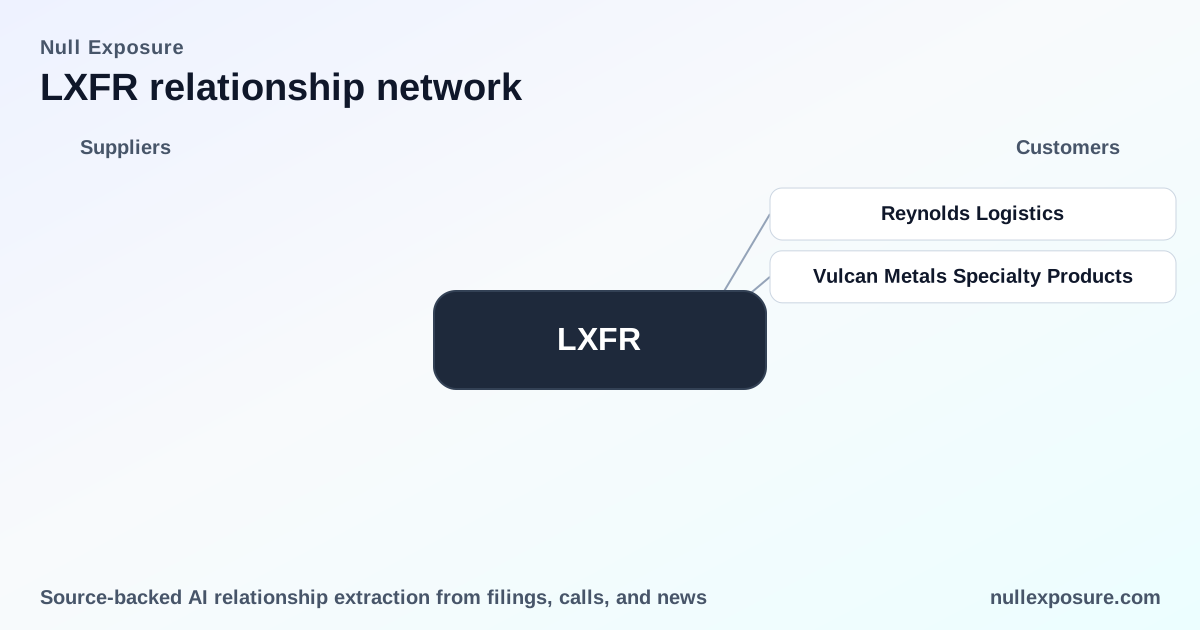
HyHaul hydrogen logistics — Reynolds Logistics deploys Luxfer G‑Stor MEGCs
Reynolds Logistics will deploy Luxfer’s G‑Stor Hydrosphere Multiple Element Gas Containers (MEGCs) in the Hydrogen Aggregated UK Logistics Project (HyHaul), positioning Luxfer products into a growing low‑carbon fuel logistics use case. This is a commercial win that converts Luxfer’s composite cylinder expertise into exposure to alternative-fuel transport infrastructure. Source: FleetPoint article reporting on the HyHaul project (March 2026).
Graphic Arts divestiture — Vulcan Metals Specialty Products acquires the business
Luxfer completed the divestiture of its Graphic Arts business to Vulcan Metals Specialty Products, a newly created affiliate of TerraMar Capital, signaling active portfolio pruning to concentrate resources on core gas containment and engineered materials. This transaction reduces non-core exposure and crystallizes proceeds that can be redeployed against higher-margin or higher-growth product lines. Source: CityBiz report on the completed sale (March 2026).
How these relationships fit Luxfer’s operating model
Both items are consistent with the company-level commercial signals in public filings and commentary:
- Contracting posture: Luxfer operates as a product seller—revenue is recognized on shipment/delivery when transfer of control conditions are met—so commercial wins convert relatively quickly to revenue when production capacity is available.
- Concentration and diversification: Management states a diversified customer base with long-standing relationships, which supports top-line stability but keeps the company exposed to capital cycles in defense and transport.
- Criticality of product: Cylinders and pressure containment systems are mission‑critical in defense, first response and healthcare; this gives Luxfer pricing leverage in specialized applications and potential sticky repair/recertification revenue streams.
- Maturity and cadence: Descriptors such as “long‑standing relationships” indicate a mature commercial posture where growth is a mix of market share gains in specialty niches and adjacent applications like hydrogen logistics.
These are company-level signals pulled from the firm’s public descriptions of markets and product lines rather than derived from any single customer relationship.
Investment implications: revenue quality, risk and runway
The Reynolds Logistics deployment is an example of adjacent revenue optionality—Luxfer’s product is being adopted into hydrogen logistics, providing a pathway to secular growth if hydrogen transport volumes scale. The Vulcan Metals transaction is a strategic de‑risking move that refocuses management on core engineered cylinders and pressure vessels while reducing exposure to lower-growth commodity applications.
Key takeaways for investors:
- Revenue quality is productized and delivery-driven: Growth will correlate to industrial capex and adoption of new fuel infrastructure, not recurring subscriptions.
- Balance sheet optionality from portfolio pruning: Divestitures free capital and management attention for higher-margin core segments.
- Manufacturing leverage and margin sensitivity: Fixed-cost manufacturing footprint gives upside in demand cycles but creates margin pressure in downturns.
- Geographic and end-market balance matters: A North America-heavy revenue base reduces exposure to any single foreign market but keeps the company tied to U.S. defense and healthcare spending cycles.
For a tracked summary of Luxfer’s evolving customer relationships and how they feed valuation assumptions, see our coverage hub: https://nullexposure.com/
Risks and monitoring checklist
Investors should monitor:
- Adoption rates and contract cadence in hydrogen logistics deployments, which determine whether HyHaul‑style wins scale materially.
- Integration of capital from divestitures into R&D or capacity expansion for core segments.
- Utilization rates at manufacturing sites and any input‑cost inflation that compresses operating margins.
- Regional demand shifts given exposure to North America, EMEA and APAC markets and foreign‑currency exposure noted in company disclosures.
Bottom line
Luxfer is a niche industrial manufacturer with stable, delivery-led revenue, a diversified and mature customer base, and clear strategic moves toward core engineered products and new end-market applications such as hydrogen logistics. The Reynolds Logistics deployment and the Graphic Arts divestiture are complementary signals: one evidences pathway growth into new fuel infrastructure, the other sharpens the company’s focus on higher‑value, mission‑critical hardware. For investors prioritizing operational durability and targeted growth optionality in industrials, these customer developments warrant active monitoring and incorporation into cash‑flow and margin scenarios.