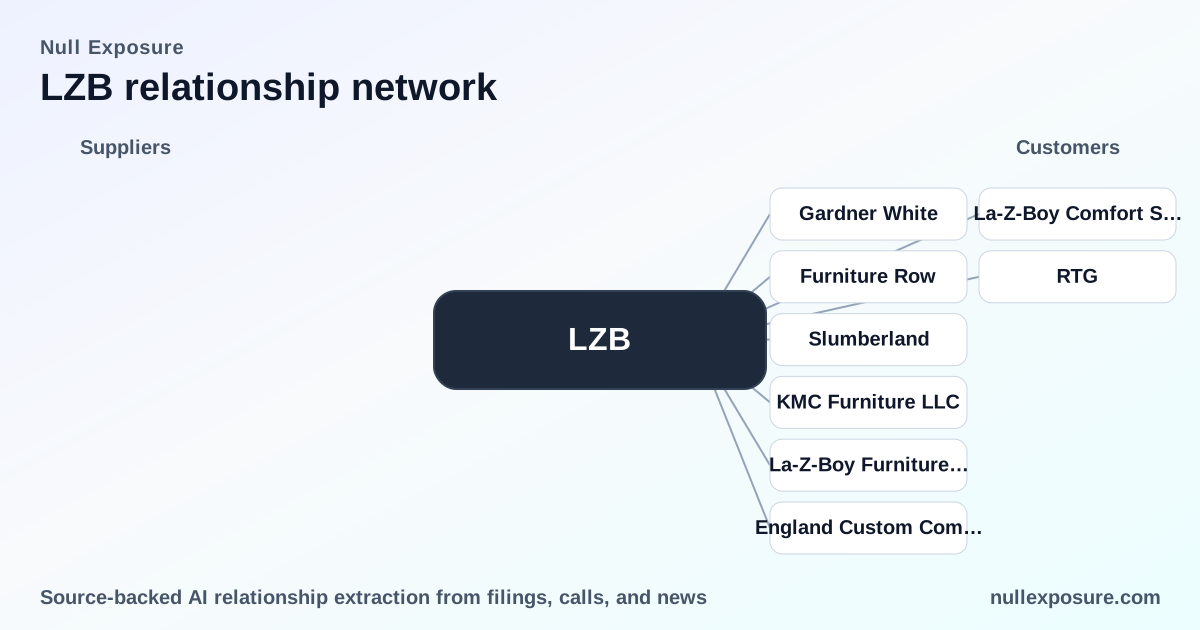
La‑Z‑Boy (LZB): where manufacturing meets a blended retail-wholesale distribution model
La‑Z‑Boy manufactures and sells upholstery and casegoods through a hybrid model that monetizes via wholesale contracts with regional retailers and proprietary retail channels, plus direct‑to‑consumer sales through company stores and e‑commerce. Wholesale relationships with regional partners drive recurring institutional revenue while its owned retail network and websites capture higher‑margin consumer sales. For a concise, data‑driven lens on LZB’s customer footprint and partner risk, see https://nullexposure.com/.
How LZB’s customer relationships shape cashflow and risk
La‑Z‑Boy’s operating model combines short transactional fulfillment with a layer of strategic, perpetual retail arrangements. Most revenue is generated by manufacturing and delivering furniture to independent retailers and to end consumers through company-owned stores and websites, so cashflow is a mix of near‑term order fulfillment and ongoing retail economics. The company reports that all orders are fulfilled within one year, which creates a predominantly short‑term revenue recognition profile and keeps unfulfilled performance obligations low (company commentary, FY2025 filings). At the same time, La‑Z‑Boy’s reacquired rights to operate La‑Z‑Boy Furniture Galleries are described as perpetual agreements, giving the company indefinite control over that retail channel and embedding longer‑duration commercial exposure in its go‑to‑market strategy (FY2025 filings).
Concentration and counterparty mix are material: the Wholesale segment’s FY2025 sales mix is approximately 60% proprietary, 10% major dealers (large, regional retailers), and 30% other independent retailers, indicating reliance on a small number of larger partners plus a broad base of smaller dealers. The firm is predominantly domestic — 91% of revenue is attributed to the United States — though it sells to about 50 other countries as a secondary diversification vector (FY2025 disclosures). Operationally, La‑Z‑Boy is both manufacturer and seller of core upholstery and casegoods, which makes customer relationships critical to both top‑line stability and inventory flow.
Who LZB calls partners — what management and media highlighted
Below are every partner mentioned in the collected results, each with a plain English summary and source reference.
Rooms to Go (RTG)
Rooms to Go is cited as a strategic regional partner that La‑Z‑Boy sees as a growth opportunity within its wholesale pipeline; management flagged continued expansion with Rooms to Go in the Q4 2025 earnings call (March 8, 2026). (LZB 2025 Q4 earnings call)
RTG (ticker RTG)
The same relationship is recorded under the RTG ticker; management uses Rooms to Go/RTG interchangeably when discussing targeted wholesale growth, reinforcing that RTG is a named strategic account for LZB (LZB 2025 Q4 earnings call, March 8, 2026).
Gardner White
Gardner White is listed among LZB’s existing strategic regional partners that the company expects to grow with, reflecting an ongoing wholesale distribution tie to regional retailers (LZB 2025 Q4 earnings call, March 8, 2026).
Furniture Row
Furniture Row appears alongside other regional partners as part of La‑Z‑Boy’s targeted wholesale expansion; management included Furniture Row when describing the pipeline of strategic partners (LZB 2025 Q4 earnings call, March 8, 2026).
Slumberland
Slumberland is another regional wholesale partner management highlighted for further growth, reinforcing that LZB’s wholesale strategy leans on a concentrated set of regional retailers (LZB 2025 Q4 earnings call, March 8, 2026).
La‑Z‑Boy Furniture Galleries
La‑Z‑Boy sells directly to independently owned La‑Z‑Boy Furniture Galleries and has reacquired indefinite rights to own and operate those stores, indicating perpetual retailer agreements and direct control over a proprietary retail channel (MarketScreener report and Band press coverage, FY2025; leadership realignment commentary, March 2026).
La‑Z‑Boy Comfort Studio
La‑Z‑Boy Comfort Studio locations are identified as branded retail spaces where the company sells directly, and management has reorganized leadership responsibilities to align sales to these owned and branded retail formats (MarketScreener and HomeNewsNow coverage, FY2025).
England Custom Comfort Center
England Custom Comfort Center locations are listed among branded retail channels that receive direct company sales, forming part of La‑Z‑Boy’s owned/affiliated retail footprint and marketing alignment strategy (MarketScreener report, FY2025).
KMC Furniture LLC
KMC Furniture LLC purchased Kincaid Upholstery from La‑Z‑Boy in a transaction publicized in March 2026; this sale reflects a divestiture of certain upholstery/casegoods operations and a relaunch of those operations under KMC ownership in Taylorsville, N.C. (Furniture Today report, March 10, 2026).
Banner House (formerly Magnussen Home Furnishings, Inc.)
La‑Z‑Boy agreed to sell its American Drew and Kincaid casegoods businesses to Banner House (formerly Magnussen), a portfolio operator in the home furnishings sector; the transaction was announced and reported in May 2026 as part of a broader portfolio streamlining initiative (Furniture Today / Home Accents Today / MarketWatch and other press, May 2026).
Constraints and what they imply about LZB’s commercial posture
- Contracting posture — primarily short‑term fulfillment with targeted long‑lived retail control. Company statements that orders are fulfilled within one year indicate a transactional fulfillment model that minimizes multi‑year unfulfilled obligations; however, perpetual retailer agreements for La‑Z‑Boy Furniture Galleries create a longer‑term embedded retail platform that the company controls and uses to capture margin and consumer data (company FY2025 commentary).
- Concentration — a mix of proprietary wholesale volume plus a small set of major dealers. The Wholesale segment’s split (60% proprietary, 10% major dealers) implies meaningful concentration risk around a handful of large partners while still relying on a wide base of smaller retailers for volume.
- Counterparty diversity — retail consumers plus large enterprise partners. Revenue sources include direct sales to individual consumers (company stores and e‑commerce) and to large regional retailers and distributors, creating a layered counterparty profile that balances retail margin capture with scale from institutional buyers.
- Geographic exposure — heavily U.S.‑centric with international presence. With 91% of sales in the United States, domestic spending trends and supply‑chain dynamics dominate LZB’s revenue sensitivity; international routes provide diversification but are secondary.
- Role and maturity — manufacturer and seller in a mature furnishings market. LZB functions as both producer and retailer of core upholstery and casegoods; its relationships are established, and recent divestitures (casegoods to Banner House, sale of Kincaid upholstery) indicate active portfolio optimization consistent with mature‑company stewardship.
Investment takeaways for operators and research teams
- Distribution strategy mixes predictable short‑term order flow with a strategic retail platform that the company controls via indefinite‑lived agreements — this duality stabilizes margins and gives the company levers over the consumer experience.
- Wholesale concentration around regional partners such as Rooms to Go, Gardner White, Furniture Row and Slumberland creates both scale benefits and counterparty dependence; monitor sales to major dealers for directional revenue signals.
- The recent divestiture of American Drew and Kincaid casegoods to Banner House and the Kincaid upholstery sale to KMC Furniture reflect a purposeful streamlining of non‑core assets, reducing complexity and sharpening focus on the core upholstery/retail mix (press coverage, March–May 2026).
- Domestic demand and supply disruptions will disproportionately affect LZB given its 91% U.S. revenue base; international operations are present but not primary.
For a structured, upstream view of customer relationships and to model counterparty concentration trends across furniture manufacturers and retailers, visit https://nullexposure.com/ for more analysis and tailored exposure reports.