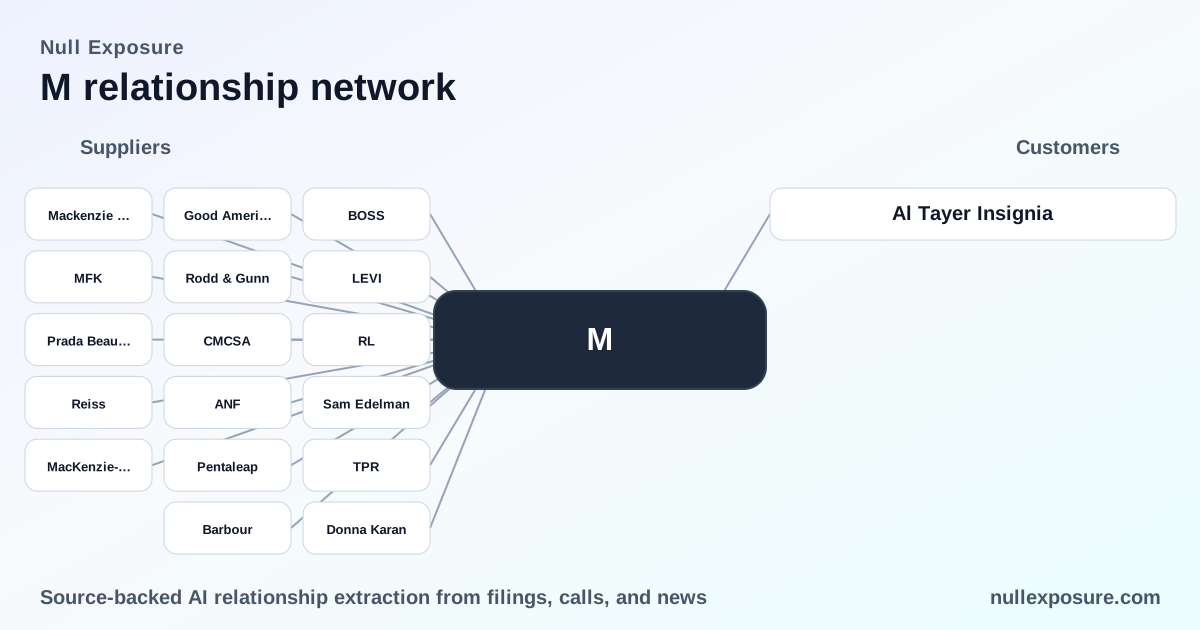
Macy’s (M): Customer Relationships — Where Revenue Really Comes From
Macy’s operates an omni‑channel retail platform that monetizes primarily through the sale of merchandise across its Macy’s, Bloomingdale’s and bluemercury brands via stores, websites and mobile apps. The company converts foot traffic and digital demand into near‑immediate cash receipts (point‑of‑sale and shipment recognition), supplements revenue with loyalty and gift‑card economics, and leverages licensed brand relationships to extend reach internationally. For investors, the core thesis is simple: Macy’s generates the vast majority of cash flow from transactional retail sales, with incremental margin driven by private label, loyalty engagement and selective licensing income. Learn more about our coverage at https://nullexposure.com/.
Market posture at a glance
- Revenue driver: Retail merchandise sales recognized at point of sale or shipment.
- Customer base: Predominantly individual consumers in North America, supported by loyalty programs.
- International reach: Limited owned footprint; selective licensing (e.g., Bloomingdale’s in the Middle East) extends brand presence without large store CAPEX.
How Macy’s customer economics actually work
Macy’s collects cash at the point of sale for in‑store purchases and at shipment for online orders, which creates a highly predictable working capital cadence tied to inventory turns and promotions. Net sales—retail transactions, gift cards and loyalty activity—account for roughly 96–97% of total revenue, making the company’s customer relationships both the primary revenue engine and a critical operational focus. Company disclosures through the January 2026 reporting cycle emphasize the transactional, spot nature of most customer contracts and the prominence of individual consumers in the revenue mix.
The single partnership investors should know about (and why it matters)
Al Tayer Insignia — Bloomingdale’s licensing in the Middle East
Bloomingdale’s locations in Dubai and Al Zahra, Kuwait are operated under a license agreement with Al Tayer Insignia, extending Bloomingdale’s brand reach in the Gulf without large capital investment from Macy’s. According to a MarketScreener post tied to Macy’s fiscal communications on March 10, 2026, these stores are operated under that licensing arrangement. (MarketScreener, March 10, 2026)
This relationship is illustrative: licensing enables Macy’s to monetize brand equity internationally while keeping the balance sheet light, but it is not a substitute for the company’s core North American transactional revenue base.
What the operating constraints tell us about risk and opportunity
Macy’s public disclosures and operating notes surface a set of company‑level signals that frame how customer relationships function:
- Contracting posture — spot transactions: Sales are recorded at the point of sale or shipment, so Macy’s cash flow is tightly coupled to retail performance and inventory management rather than long‑dated contractual receivables. This structure yields rapid revenue recognition but exposes the company to sales volatility during demand shocks.
- Counterparty type — individual consumers: The business is retail‑centric. Loyalty programs are used to drive repeat purchase and lifetime value, but there is limited enterprise counterparty diversification.
- Geographic concentration — North America dominant: The store base is concentrated across the U.S. (43 states, DC, Puerto Rico and Guam), indicating that macro trends in U.S. consumption disproportionately impact Macy’s results.
- Materiality — customer revenue is critical: Net sales constitute the vast majority of revenue (around 96–97%), meaning any sustained deterioration in consumer spend directly compresses margins and EBITDA.
- Role — Macy’s is the seller: The company’s economic exposure is sales of core merchandise categories—apparel, home, cosmetics and accessories—rather than platform fees or recurring B2B revenues.
- Relationship stage — mature: Macy’s customer relationships are long‑established, with entrenched brand recognition and mature loyalty programs rather than early‑stage customer acquisition profiles.
- Segment focus — core product centric: The customer relationship centers on core merchandise; ancillary services and licensing supplement rather than replace the core retail model.
Together these constraints explain Macy’s operating model: highly transactional, consumer‑driven, regionally concentrated and reliant on efficient inventory and promotions management. For investors, that combination profiles Macy’s as a cash‑generative retailer with exposure to consumer cycles and inventory execution risk.
How the Al Tayer Insignia relationship fits the bigger picture
The Al Tayer Insignia licensing arrangement is meaningful for brand exposure but small relative to Macy’s consolidated revenue. Licensing converts brand equity into incremental revenue and royalties without incremental store capital, which is attractive from a capital allocation perspective. The relationship shows Macy’s appetite for low‑capital international expansion while living off an overwhelmingly North American consumer base. (MarketScreener, March 10, 2026)
What to watch next — catalysts and vulnerabilities
- Inventory and promotions management: Because Macy’s recognizes revenue at the point of sale, inventory turns and markdown strategy directly influence free cash flow. Watch the company’s inventory days and promotional cadence across quarters.
- Loyalty program monetization: With a retail consumer base, improving engagement and spend per active loyalty member drives margin expansion—track loyalty penetration and purchase frequency metrics in quarterly reports.
- Geographic exposure: The company’s North American concentration leaves it vulnerable to regional economic slowdown, while licensing deals like Al Tayer Insignia mitigate capex risk but do not materially diversify revenue.
- Retail secular shifts: Evolving omnichannel behavior and competitive discounting pressure require Macy’s to maintain cost discipline and differentiated assortments to protect margins.
Bottom line for investors
Macy’s is a mature, transaction‑driven retailer whose financial outcome is tightly linked to consumer spending patterns and inventory execution. Licensing relationships such as the agreement with Al Tayer Insignia provide strategic brand extension at low capital cost but remain peripheral to the company’s top‑line. The investment case hinges on margin recovery through improved inventory management, loyalty monetization, and steady North American consumer performance. For ongoing coverage and deeper customer‑relationship analytics, visit https://nullexposure.com/.
Sources cited in this note include Macy’s fiscal disclosures through the January 2026 reporting period and a MarketScreener news post referencing Macy’s FY2026 communications on March 10, 2026 regarding Bloomingdale’s licensing in Dubai and Kuwait.