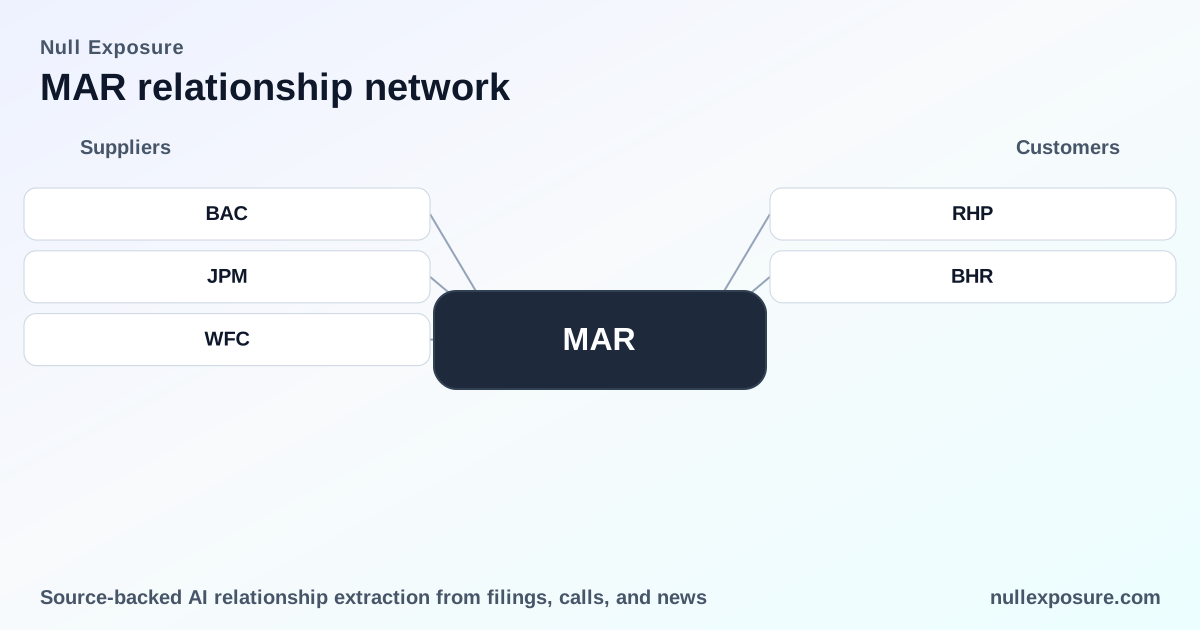
Marriott (MAR) — a customer map for investors and operators
Marriott International operates and monetizes a global portfolio by franchising, licensing and directly managing lodging assets, collecting fixed fees, royalties and variable performance-based management fees while leveraging the Marriott Bonvoy loyalty platform to drive distribution and pricing power. This combination creates an asset-light revenue stream anchored in long-term contracts and usage-linked economics — a model that scales globally and compounds value through brand and data-driven demand. For a concise sourcing and relationship audit, view full coverage at https://nullexposure.com/.
How to read this note: the following section lists every company relationship surfaced in recent coverage; each entry is a one-line investment-grade summary with a source for verification.
Key operating model signals and what they mean for counterparties
- Long-term contracting posture. Marriott structures many arrangements as decade-long management or franchise agreements, creating durable revenue visibility and high switching costs for owners (evidence cited in FY2026 disclosures).
- Licensing and royalty economics. Marriott acts as a licensor for brand and IP across franchised properties, generating recurring, largely usage-based royalties and franchise fees.
- Usage‑and-performance sensitivity. A material portion of fees are variable — tied to property revenue or profit — which aligns owner incentives but creates earnings cyclicality for Marriott.
- Global concentration and distribution scale. Operations span 145 countries with nearly 9,805 properties system-wide (year‑end 2025), providing powerful marketing and loyalty effects that are critical to revenue capture.
- Service provider and seller roles. Marriott operates as both operator (service provider) and seller (guest-facing accommodations) depending on asset ownership, increasing complexity but also multiple revenue channels.
- Commercial maturity. Contracts and capitalization policies (amortizing contract costs over 15–30 years) indicate established, mature relationship structures that favor predictability.
Marriott’s customer relationships — line‑by‑line investor checklist
-
Ryman Hospitality Properties (RHP): Marriott manages Ryman’s hotel portfolio under long‑term management agreements with base and incentive fee structures tied to performance — TradingView SEC 10‑K summary and GlobeNewswire (FY2026).
Source: TradingView reporting on RHP 10‑K and Ryman press releases (Mar–Apr 2026). -
Xenia Hotels & Resorts (XHR): Xenia owns luxury and upper‑upscale hotels that are operated or licensed by Marriott among other premium chains, creating distribution lift via Marriott brands — Investing.com and Yahoo Finance (Q1 2026).
Source: Investing.com / Yahoo Finance coverage of Xenia (May 2026). -
Ashford Hospitality Trust (AHT and preferred series): Ashford executed franchise conversions to Marriott’s Tribute and Autograph flags, leveraging Marriott distribution and brand repositioning for value uplift — HotelDive and PR Newswire (2023–2026 reporting).
Source: HotelDive and PR Newswire announcements (2024–2026). -
Sunstone Hotel Investors (SHO and preferred tickers): Multiple Sunstone properties are affiliated with Marriott brands, capturing reservations and loyalty distribution benefits — MarketBeat and company filings (FY2025–FY2026).
Source: MarketBeat and Sunstone earnings transcripts (2025–2026). -
Braemar Hotels & Resorts (BHR and preferred classes): Braemar’s portfolio includes properties integrated with Marriott platforms, including Homes & Villas and Autograph conversions that improved rental performance — Benzinga / InsiderMonkey transcripts (Q4 2025–2026).
Source: Benzinga and insider transcripts for Braemar (Mar 2026). -
DiamondRock Hospitality (DRH): DiamondRock’s Westin Seaport franchise agreement was called out as expiring at end of 2026, highlighting contract lifecycle exposure in Marriott relationships — Investing.com earnings transcript (Q1 2026).
Source: Investing.com DRH earnings transcript (May 2026). -
RLJ Lodging Trust (RLJ and preferred): RLJ’s portfolio is largely operated under Marriott flags (including Renaissance, Tribute and Courtyard), driving scale benefits for both owner and operator — TradingView / MarketScreener filings (FY2026).
Source: RLJ 10‑K summary and Marketscreener coverage (Mar 2026). -
Chatham Lodging Trust (CLDT and preferred class): Chatham focuses on extended‑stay and select‑service hotels, many flagged under Marriott brands such as Residence Inn, giving Marriott footprint in the extended‑stay segment — TradingView and ad‑hoc news (FY2026).
Source: TradingView and ad‑hoc reporting on Chatham (Mar 2026). -
Summit Hotel Properties (INN and preferred series): Over 99% of Summit guestrooms operate under premium brands including Marriott, indicating heavy franchise dependence — TradingView SEC report (FY2025–FY2026).
Source: Summit 10‑K / TradingView summary (Mar 2026). -
Brandywine Hospitality (BDN): The Brandywine joined Marriott’s Tribute Portfolio and now participates in Bonvoy point accrual/redemption, expanding Marriott’s boutique footprint — HospitalityNet announcement (Mar 2026).
Source: HospitalityNet (Mar 2026). -
Pebblebrook Hotel Trust (PEB and preferred series): Pebblebrook owns and manages properties including Marriott‑managed Westin Copley Place (noted in awards), reflecting operational ties to Marriott management teams — Hotel‑Online / Yahoo Finance (2025–2026).
Source: Hotel‑Online and Yahoo Finance (May 2026). -
Hersha Hospitality Trust (HT and preferred series): Hersha has transacted and repositioned assets under Marriott’s Autograph Collection, using Marriott’s distribution in core urban markets — Hotel‑Online / Commercial Observer (2016–2026 reporting).
Source: Hotel‑Online and Commercial Observer (2016; referenced in 2026 aggregations). -
Marriott Vacations Worldwide (VAC): MVW maintains exclusive long‑term development and sales relationships with Marriott (and affiliates), embedding Marriott brand in timeshare and vacation‑ownership channels — StockTitan and TravelAndTourWorld (FY2025–FY2026).
Source: StockTitan and TravelAndTourWorld releases (Mar 2026). -
Apple Hospitality REIT (APLE): Apple’s portfolio includes a concentrated set of Marriott‑branded hotels (96 properties cited), underscoring Marriott’s penetration in franchised lodging — MarketBeat / SahmCapital (FY2026).
Source: MarketBeat and SahmCapital reporting (2026). -
Host Hotels & Resorts (HST): Host emphasizes an asset‑light model with operator partnerships including Marriott, reinforcing Marriott’s role as a strategic operator for large publicly traded owners — ad‑hoc news (Q1 2026).
Source: ad‑hoc‑news coverage of Host (May 2026). -
Park Hotels (PK): Park’s portfolio diversification includes Marriott flags post‑acquisition of Chesapeake Lodging, extending Marriott’s upper‑upscale presence — Morningstar company report (2026).
Source: Morningstar Park Hotels report (2026). -
Melco Resorts & Entertainment (MSC): Melco announced a partnership to bring Marriott’s W Hotels brand to Studio City Phase 2, expanding Marriott brand into integrated resorts in APAC — MacauDailyTimes / project reporting (2022–2026 summaries).
Source: MacauDailyTimes coverage (2022 referenced). -
MGM Resorts (MGM): Marriott Bonvoy integration has routed high‑spending loyalty members into partner properties, reflecting Marriott’s cross‑brand loyalty leverage in gaming/hospitality partnerships — FinancialContent / ThePointsGuy (2026 commentary).
Source: FinancialContent and ThePointsGuy (2026). -
Travelzoo (TZOO): Travelzoo promotional packages have featured Ritz‑Carlton and other Marriott properties, demonstrating distribution partnerships with travel marketers — TravelAndTourWorld / Finviz (2026).
Source: TravelAndTourWorld / Finviz (Mar 2026). -
Creative Media Community Trust (CMCT): CMCT funded renovations with key money tied to extending Marriott management agreements, illustrating contract economics around owner incentives — InsiderMonkey earnings call transcript (FY2025).
Source: InsiderMonkey (2025). -
Joe Hospitality (JOE): JOE reported construction of Residence Inn by Marriott projects, showing franchise development activity at the owner level — HospitalityNet project annoucement (2023–2024).
Source: HospitalityNet (2023). -
MakeMyTrip (MMYT): Industry commentary flagged changing OTA wallet share with Marriott hotels in India, signaling distribution-channel competition affecting Marriott’s commission and channel mix — SahmCapital / VCCircle (2026).
Source: SahmCapital and VCCircle coverage (Mar 2026). -
Additional owner/REIT mentions (abridged): a wide set of REITs and owner‑operators including preferred share classes — (PEB‑P‑G, PEB‑P‑H, BHR‑P‑D, BHR‑P‑B, INN‑P‑E, INN‑P‑F, RLJ‑P‑A, CLDT‑P‑A and others) — are repeatedly referenced as operating or franchising properties under Marriott flags in company filings and press releases through FY2025–FY2026. These items collectively confirm broad owner reliance on Marriott for brand, reservations and loyalty distribution.
Source: aggregated company filings, MarketBeat and PR Newswire summaries (2017–2026).
Investor takeaways and risk framing
- Structural revenue durability: Long‑term management and franchise agreements plus licensing royalties create recurring revenue streams with embedded variable upside through incentive fees.
- Concentration versus diversification: Marriott’s global scale and Bonvoy program are critical competitive assets but create counterparty concentration risk where large REITs and owners consolidate under Marriott flags.
- Earnings cyclicality: Usage‑based fees tie near‑term cash flow to property performance; investors should model sensitivity of base vs variable fees during downturns.
- Contract lifecycle events matter. Expiring franchises or management agreements (e.g., publicized expirations) create optionality for owners and negotiation windows for Marriott.
For deeper credit and counterparty diligence on these owner relationships, our platform provides linked source documents and a structured view — explore further at https://nullexposure.com/.
If you want a tailored list of the contracts and expiry schedules for a subset of owners (REITs, preferred classes or specific assets), we can assemble a focused briefing for underwriting or portfolio stress testing.