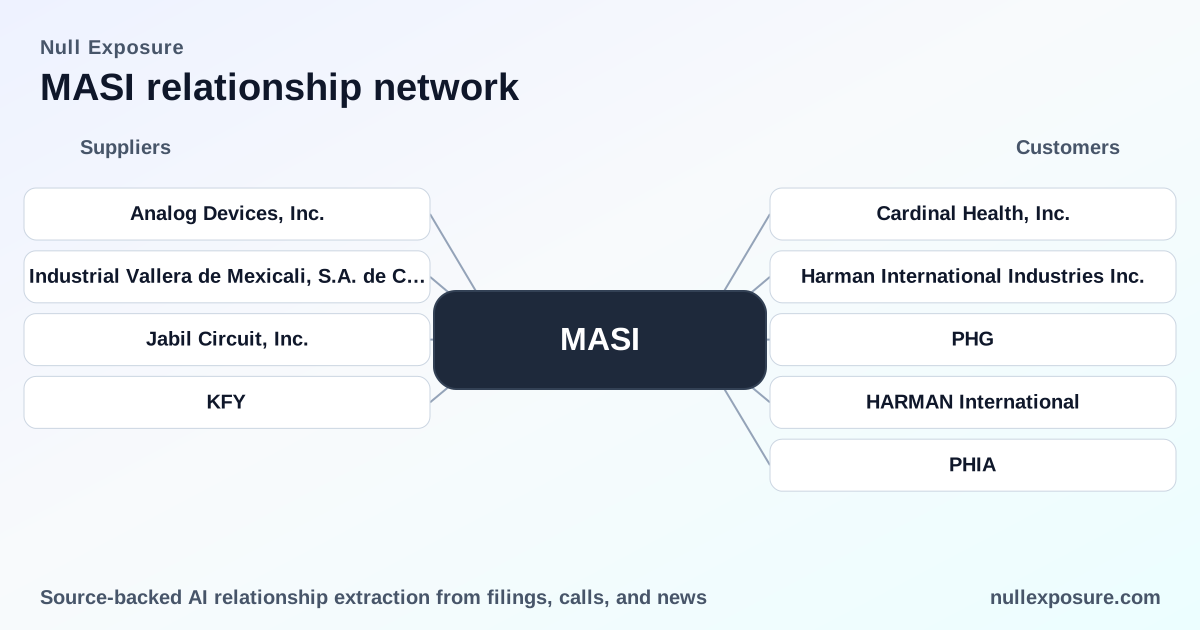
Masimo (MASI) — customer relationships that drive recurring revenue and strategic optionality
Masimo designs, manufactures and sells non‑invasive patient monitoring systems, sensors and software, and monetizes through device sales, high‑margin recurring consumables (single‑patient and reusable sensors), and licensing arrangements with OEMs and channel partners. The business model combines direct sales to healthcare providers, distributor and OEM partnerships that secure multi‑year sensor revenue, and selective consumer and licensing activities—creating a dual stream of hardware sales and predictable consumable/license cash flows. For a focused view of counterparty risk and strategic levers, read the relationship summaries below and the company‑level operating constraints that shape go‑to‑market execution. For ongoing monitoring of Masimo counterparties visit https://nullexposure.com/.
What investors should watch in Masimo’s customer base
Masimo’s commercial footprint is concentrated around a few high‑volume channels: group purchasing organizations (GPOs), a just‑in‑time healthcare distributor, OEM partners, and direct hospital sales. That mix drives both revenue stability and exposure: large channel partners deliver scale and predictable sensor demand, while OEM and licensing agreements provide leverage into third‑party device platforms.
Cardinal Health — a major distributor customer
Masimo reported $114.1 million of sales to Cardinal Health in FY2024, up from $93.9 million in FY2023; these figures demonstrate Cardinal’s role as a material distribution partner for Masimo’s healthcare products. According to Masimo’s FY2024 Form 10‑K, Cardinal accounted for a meaningful share of sales in that period.
HARMAN / Harman International — buyer of Masimo’s Sound United business
Masimo executed a definitive sale of its Sound United consumer audio business to HARMAN International for $350 million in cash, transferring the consumer audio division to a Samsung‑owned subsidiary. Multiple news reports, including RAVE Publications and industry coverage, confirmed the transaction and the sale price in FY2026 reporting.
Royal Philips (PHG / PHIA) — expanded OEM and strategic partner
Masimo renewed and expanded a long‑term strategic partnership with Royal Philips designed to accelerate adoption of Masimo monitoring technologies, including SET pulse oximetry, across Philips patient monitors through 2026 and beyond. Market press coverage summarized the expanded agreement and its intent to broaden integration across Philips’ clinical portfolio.
IRadimed (IRMD) — OEM integration of Masimo algorithms
IRadimed’s recent product descriptions and investor communications reference wireless SpO2 using Masimo® algorithms for its IRadimed 3880 monitor, indicating an OEM integration of Masimo’s SpO2 technology into third‑party monitoring devices. Globenewswire and regional press releases noted IRadimed’s device feature set that incorporates Masimo technology.
Neuraxis (NRXS) — license termination and IP reversion
Neuraxis terminated its NSS‑2 Bridge license with Masimo on July 1, 2025, regaining associated intellectual property rights for a payment of $200,000 payable in two installments, per company filings and investor press releases reported in The Globe and Mail and Yahoo Finance. The termination reflects a transactional unwind of a previously licensed relationship.
Danaher Corporation — strategic acquisition target / process scrutiny
Newsflow in 2026 documents an investigation into the proposed sale of Masimo to Danaher Corporation, with law firms and former officials reviewing deal price and process. FinancialContent reported on investor‑side scrutiny tied to the proposed transaction with Danaher, introducing M&A‑related counterparty and governance considerations for investors.
Operating constraints and what they imply for counterparty risk
Masimo’s published disclosures and contract excerpts reveal several company‑level operating signals that shape customer risk and revenue durability:
- Contracting posture: licensing plus deferred equipment agreements. Masimo recognizes OEM software license revenue on OEM shipment and structures deferred equipment agreements in which equipment and services are provided up‑front in exchange for sensor purchase commitments over three to six years. This model creates multi‑year revenue visibility but locks in delivery obligations and timing for sensor consumption.
- High channel concentration and criticality of GPOs. Shipments to GPO member customers represent a very large share of U.S. healthcare product sales (disclosed at approximately 98% of U.S. healthcare product shipments for pulse oximetry), and GPO‑related revenue was roughly 56.9% of healthcare revenue in the most recent year—signaling both dependency and bargaining concentration.
- Single distributor materiality. One just‑in‑time healthcare distributor represented approximately 18.5% of healthcare revenue for the year ended December 28, 2024, and has consistently been the only customer above the 10% threshold—introducing counterparty concentration risk if logistics or terms change.
- Mixed counterparty types and global reach. Masimo sells direct to hospitals and EMS, to individuals and retail channels for consumer products, and through OEM partnerships and distributors across North America, EMEA and APAC—supporting diversified end markets but adding geographic and channel management complexity.
- License and OEM revenue drivers. The company licenses audio and parameter software to OEMs and directly sells hardware bundles that include proprietary sensors and software; these licensing and OEM revenue streams are recognition‑triggered by OEM shipments, which ties Masimo’s revenue cadence to partner product cycles.
- Product segment dynamics. The business combines durable hardware sales with recurring consumables (sensors) and software licensing, resulting in a high‑margin annuity component that underpins valuation but depends on sustained device install base and channel replenishment.
Implications for investors and operators
- Upside: Expanded OEM agreements such as the Philips renewal and the strategic sale of non‑core consumer assets improve focus on core monitoring and high‑margin sensor revenue; OEM licensing and recurring consumables are the primary engines for margin expansion.
- Key risks: Concentration in GPO channels and a single large distributor create outsized counterparty exposure; operational disruption or contract renegotiation with these channels will materially affect revenue. License terminations (as with Neuraxis) and M&A activity (Danaher bid scrutiny) add event‑driven volatility.
- Execution focus: Protecting sensor annuity economics requires maintaining favorable OEM licensing terms and stable GPO relationships, while converting expanded Philips integrations into concrete installed‑base growth.
For a consolidated view of Masimo’s counterparties and evolving risk signals, visit https://nullexposure.com/ for ongoing relationship analytics and alerts.