Maze Therapeutics: licensing-led biotech with venture and pharma partners
Maze Therapeutics is a clinical-stage biopharma that develops small-molecule precision medicines for metabolic, renal and cardiometabolic indications and monetizes primarily through exclusive out‑licensing of programs and episodic capital raises. The company’s commercial model is built on selling worldwide licenses and know‑how to larger pharmaceutical partners (upfront payments plus potential milestones) while supplementing cash flow with equity placements to institutional healthcare investors; this dual revenue and financing mix explains both the 2024 license windfall and the active investor syndicate into 2025–2026. For further context on counterparties and deal structure, see Maze’s corporate disclosure and recent press coverage or visit the Null Exposure homepage: https://nullexposure.com/.
How Maze makes money — a few decisive characteristics
Maze operates with a seller contracting posture: the company executes exclusive, worldwide license agreements that transfer control of program-specific intellectual property and materials in exchange for non‑refundable upfront payments and contingent milestones. That contract structure produced the majority of reported revenue in 2024 and is the primary monetization lever going forward. According to company disclosures from its 2024 and 2025 reporting cycle, Maze recognized upfront license payments as revenue at the point control transferred under ASC 606.
- Revenue is lumpy and concentrated. Maze recorded meaningful license revenue in 2024 (driven by a small number of large transactions) and reported no license revenue in 2025, demonstrating timing risk inherent to upfront‑and‑milestone deals (TradingView coverage of the 2025 Form 10‑K and Maze press releases).
- Deals are global and exclusive. Multiple agreements grant exclusive, worldwide (and often sublicensable) rights to the programs — an operating choice that trades recurring fees for larger single payments (company license disclosures in FY2024 cited in Maze filings).
- Counterparty mix spans big pharma and specialized investors. On the licensing side Maze transacts with large pharma partners; on the financing side it works with healthcare‑focused funds and mutual funds that participate in registered and private placements (GlobeNewswire and related news in 2025–2026).
These contract and revenue characteristics make Maze a predictable acquirer of large, discrete payments but expose the company to cadence‑driven top‑line volatility and dependency on successful deal execution.
Relationship-by-relationship: counterparties that matter
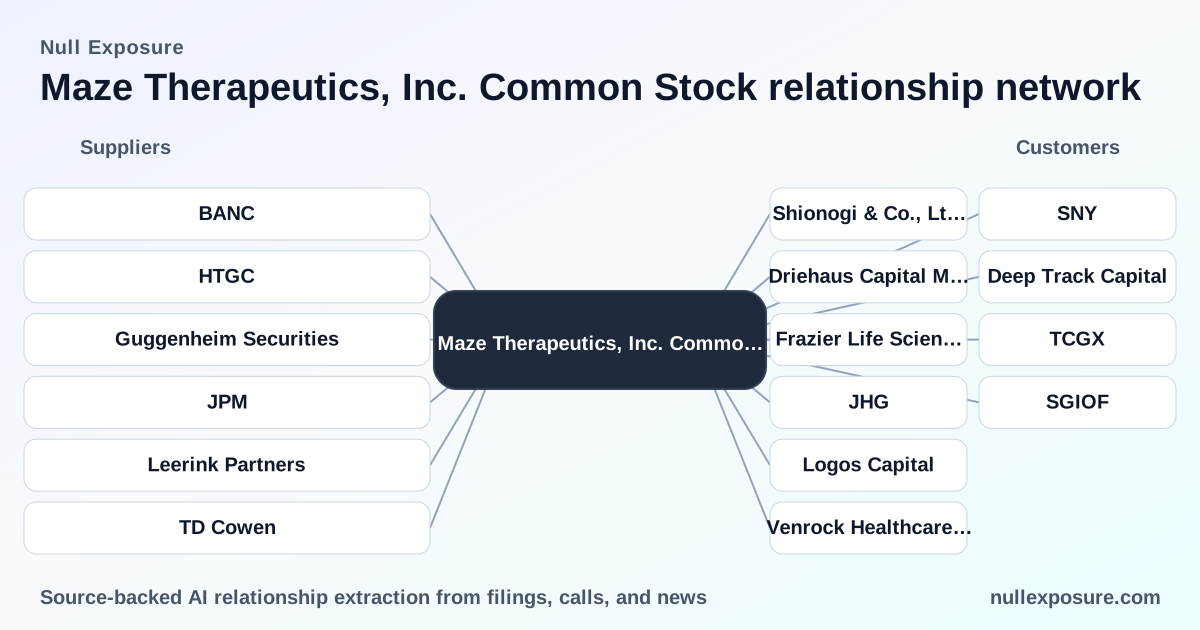
This section enumerates all counterparties disclosed in recent coverage and filings. Each short entry reflects the nature of Maze’s relationship with that entity and the public source.
Shionogi & Co., Ltd. (SGIOF / Shionogi)
Maze granted Shionogi an exclusive, worldwide, sublicensable license to MZE001 and recognized a $150.0 million non‑refundable upfront payment when control transferred; the transaction and associated revenue recognition are described in Maze’s FY2024 disclosures and reiterated in Maze press releases (GlobeNewswire Q4 2025 release; FierceBiotech coverage, Mar 2026).
Trace (Trace Neuroscience, Inc. / TCGD)
Maze granted Trace an exclusive worldwide license to a discovery program targeting UNC13A, and recorded a $15.0 million non‑refundable upfront payment recognized as license revenue in 2024, per company disclosure in FY2024 (company filing excerpts cited in Maze’s FY2024 summaries).
Neurocrine Biosciences, Inc. (NBIX)
Maze entered an exclusive license arrangement with Neurocrine for an ATXN2 discovery program and recognized a $2.5 million upfront payment when control transferred; TradingView’s review of Maze’s 2025 Form 10‑K highlights the shift in license revenue between 2024 and 2025 and references Neurocrine among prior partners (TradingView, May 2026).
Sanofi (SNY)
Prior reporting described a proposed transaction with Sanofi relating to MZE001; FierceBiotech summarized the industry reporting around the program sale process and the upfront economics originally negotiated (FierceBiotech, Mar 2026).
T. Rowe Price Investment Management (T. Rowe Price / TROW)
T. Rowe Price is listed among institutional participants in Maze’s 2026 registered offering and private placements, signaling institutional demand for Maze equity as part of the company’s financing strategy (GlobeNewswire registered offering disclosure, Apr 22, 2026).
Farallon Capital Management
Farallon is named as a participating investor in the 2026 offering and prior private placements, illustrating interest from long‑only and opportunistic healthcare investors in Maze’s equity financings (GlobeNewswire offering release, Apr 2026; Intellectia.ai coverage).
Deep Track Capital
Deep Track Capital participated in Maze’s placement activity alongside other healthcare‑focused funds, indicating a syndicate approach to equity financing (GlobeNewswire offering release, Apr 2026; StockTwits reporting on the private placement, Mar 2026).
Driehaus Capital Management
Driehaus joined other institutional funds in the offering and private placement allocations, consistent with Maze’s strategy of tapping investor demand to fund operations and pipeline progression (GlobeNewswire Apr 2026; StockTwits Mar 2026).
Frazier Life Sciences
Frazier Life Sciences appears among participating healthcare investors in the 2026 and earlier placements, representing specialist life‑science allocation into Maze equity raises (GlobeNewswire Apr 2026; StockTwits Mar 2026).
Janus Henderson Investors (JHG)
Janus Henderson is a named participant in the syndicate for Maze’s registered offering, reflecting mutual‑fund interest in Maze’s pipeline and licensing‑driven upside (GlobeNewswire Apr 2026; StockTwits Mar 2026).
Venrock Healthcare Capital Partners
Venrock is identified among private placement participants in coverage of Maze’s financing activity, contributing to the cross‑section of venture and institutional capital backing Maze (StockTwits private placement coverage, Mar 2026).
Logos Capital
Logos Capital was listed by market reports as a participant in the private placement, rounding out the mix of healthcare‑focused funds in Maze’s investor base (StockTwits Mar 2026).
TCGX
TCGX is named in media summaries as a participant in Maze’s private placement activity, one of several specialized funds supporting the equity raise (StockTwits Mar 2026).
What the relationships tell investors: strategic implications
- Licensing is the core revenue engine. The Shionogi, Trace and Neurocrine agreements collectively demonstrate a deliberate strategy of delivering program IP to larger partners in exchange for sizable, one‑time cash consideration; Maze recognized those upfronts in 2024 as revenue per its disclosures. This makes near‑term cash receipts highly event‑driven and tied to closing and transfer milestones.
- Counterparty risk is concentrated but diversified in type. A small number of large pharma and specialist partners produce outsized revenue events (concentration risk), while the investor syndicate is broad and institutional, providing financing runway when licensing cadence slows (GlobeNewswire and market reports, 2025–2026).
- Global, exclusive licenses increase near‑term monetization but reduce residual optionality. Granting worldwide, sublicensable rights accelerates cash collection but limits Maze’s upside capture if a program becomes a breakout product — a trade‑off visible in the company’s FY2024 agreements.
Key takeaways and next steps
- Maze is a licensing‑centric biotech whose P&L will remain lumpy until multiple milestone streams mature. The company relies on large, discrete upfront payments to fund operations and uses institutional equity placements to bridge funding gaps (company filings and press releases, 2024–2026).
- Institutional investor participation (T. Rowe Price, Janus Henderson, Farallon, others) validates market appetite for Maze’s pipeline but increases the importance of execution on partnered programs. Recent registered and private placements brought a diversified syndicate to the cap table (GlobeNewswire and market reports, Mar–Apr 2026).
If you want a systematic dashboard of Maze counterparties and a structured view of the deal economics, Null Exposure maintains ongoing coverage and curated relationship profiles: https://nullexposure.com/.
For institutional investors and operators evaluating counterparty exposure, focus on the timing of milestone triggers and the probability of downstream milestone realization in partner programs — those variables dictate when Maze’s licensing model translates to repeatable revenue rather than episodic events.