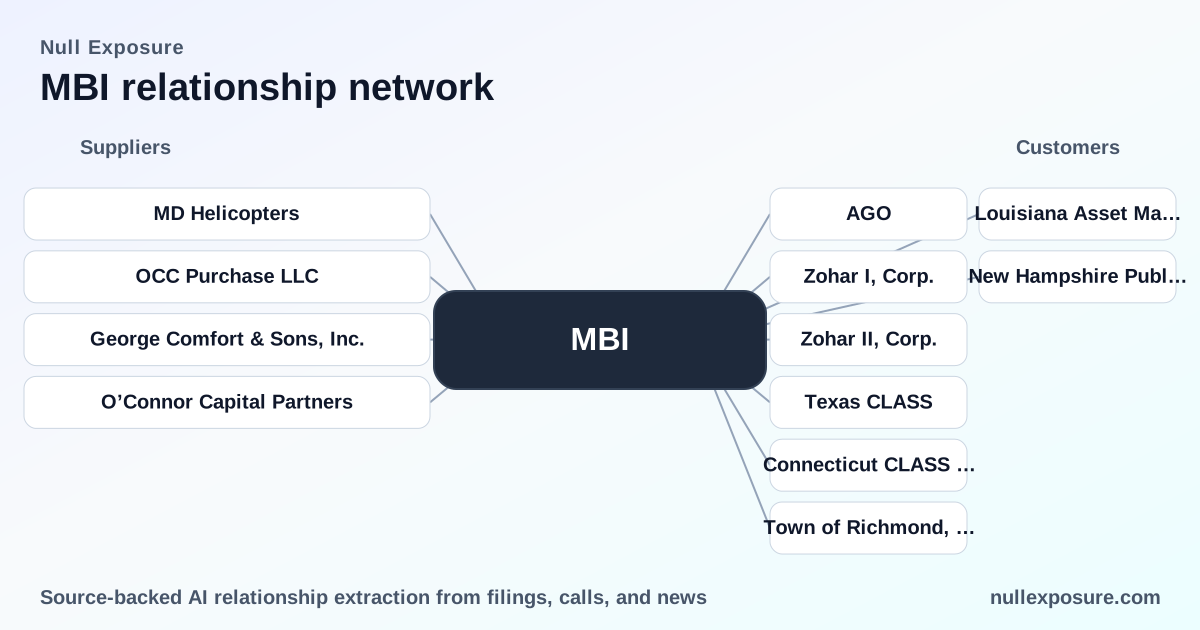
MBIA Inc (MBI) — Customer relationships, exposures and operating posture
Thesis: MBIA underwrites financial guarantees for public finance and structured finance issuers and monetizes through insurance premiums and the long-duration spread between invested assets and claim payouts; today the company is running off legacy portfolios, harvesting claim recoveries and unlocking capital through strategic divestitures. For investors, the important lens is capital return vs. legacy liability run‑off, and how insured counterparty credit and legal recoveries drive statutory results. Explore more on NullExposure.
How MBIA makes money and why its customer map matters
MBIA’s core product is guarantee insurance—unconditional, irrevocable assurances on principal and interest for municipal, international public finance and structured finance obligations. Revenue is concentrated in long-term premium streams plus investment income on reserves; losses and recoveries from insured defaults and legacy CDOs determine statutory volatility. The company’s strategic posture is explicit: run off existing books, avoid writing new business outside remediation, and extract value through recoveries and asset disposition.
Operating constraints that shape the customer book
Several company-level signals explain why MBIA’s customer list looks like a legacy map rather than a pipeline for growth:
- Long-term contracts and duration: National (MBIA’s principal operating subsidiary) estimates the average life of its domestic public finance policies is roughly eight years and insurances in force have expected maturities out to 2058, indicating multi-year cashflow profiles and delayed recognition of ultimate loss/earnings outcomes (company disclosures through 2024).
- Government and public-sector concentration: MBIA’s insured universe is heavily tilted to municipal and other public-sector credits—utilities, airports, hospitals and higher education—which makes credit outcomes correlated with public budgets and restructurings.
- Geographic breadth with North America still primary: MBIA reports three segments—U.S. public finance, corporate, and international/structured—so the book is both North America‑centric and globally exposed in structured finance.
- Seller and service-provider roles: MBIA functions primarily as a guarantor/seller of credit protection but also acts as a service provider in structured finance contexts tied to SPEs, which makes recovery and legal outcomes operationally important.
- Winding‑down business model: The company states its subsidiaries are running off insured portfolios and do not expect to write new financial guarantees outside remediation activities—this is a mature, capital‑return and loss‑mitigation strategy, not a growth play.
- Material single-entity exposure — PREPA: MBIA’s filings reference PREPA specifically when discussing loss reserves and the potential material impact of confirmed restructuring plans, making Puerto Rico Electric Power Authority an explicitly material counterparty for statutory results.
What every named customer relationship tells an investor
Below I list each relationship the public record ties to MBIA, with a concise investor‑oriented take and the source.
-
Assured Guaranty / AGO — MBIA agreed to sell its flagship insurer to Assured Guaranty and has signaled a large special dividend to return cash to shareholders as the deal advances, which is a direct capital‑allocation event affecting residual insurance liabilities. Source: ad-hoc-news coverage, March 10, 2026.
-
AGO (ticker AGO) — The transaction referenced above is cited with AGO as the acquirer; this deal transfers core insured capacity and shifts counterparty dynamics for legacy obligations. Source: ad-hoc-news reporting, March 10, 2026.
-
Puerto Rico Electric Power Authority (PREPA) — MBIA is exposed to PREPA through insured bonds, and company commentary ties PREPA recoveries and reserves to material impacts on statutory results and loss reserves. Source: Q4 2025 earnings call transcript published by The Globe and Mail, May 3, 2026.
-
PREPA (alternative mention / PPDC symbol) — Management reiterated that PREPA exposure comprises multiple insured bonds across the portfolio, underscoring that PREPA is a portfolio-level credit driver rather than a single-ticket exposure. Source: Q2 2025 earnings call coverage (InsiderMonkey transcript).
-
Zohar I, Corp. — MBIA Insurance Corp. acted as credit enhancer and guaranteed senior notes issued by Zohar I, placing MBIA on the hook for recoveries tied to those legacy CDO structures. Source: Jones Day analysis, December 2022.
-
Zohar II, Corp. — As with Zohar I, MBIA guaranteed senior notes for Zohar II, meaning legacy CDO recoveries continue to affect statutory outcomes. Source: Jones Day analysis, December 2022.
-
Zohar CDOs (collective reference) — MBIA’s insured exposure to the Zohar CDO series remains a recurring item in earnings commentary as recoveries and litigation outcomes continue to influence reported statutory results. Source: Q4 2025 earnings call transcript published by The Globe and Mail, May 3, 2026.
-
Connecticut CLASS Plus — Historical operational issues surfaced in a 2014 security incident involving indexed account statements tied to municipal investment pools; MBIA’s name appears in the context of data exposure reporting for municipal pool participants. Source: Krebs on Security, October 2014.
-
Louisiana Asset Management Pool — Similar to Connecticut CLASS Plus, the Louisiana pool was named in reporting about indexed account statements tied to municipal investment pools that referenced institutional participants. Source: Krebs on Security, October 2014.
-
New Hampshire Public Deposit Investment Pool — Included in the same 2014 reporting thread that documented indexed municipal pool account statements; cited as an institutional municipal participant in the security incident. Source: Krebs on Security, October 2014.
-
Texas CLASS — The Texas municipal investment pool was also listed in the 2014 information‑exposure reporting, which is relevant for operational risk history even if not a current material insurance exposure. Source: Krebs on Security, October 2014.
-
Town of Richmond, NH — Local municipality names surfaced in the same 2014 incident; the mention is operationally relevant to MBIA’s historical municipal relationships and data‑handling context. Source: Krebs on Security, October 2014.
Key implications for investors
- Capital return is the dominant near-term value lever: The Assured Guaranty transaction and announced special dividend convert legacy value into distributable capital rather than continued underwriting growth.
- Loss/recovery timing drives earnings volatility: Long-duration guarantees and the running‑off policy book create multi-year sensitivity to individual restructurings (notably PREPA) and legal recoveries (notably Zohar CDOs).
- Concentration in public finance creates policy sensitivity: A government-heavy counterparty mix means credit outcomes correlate with fiscal cycles and legal restructuring frameworks.
Final take
MBIA is a legacy guarantor executing a wind‑down and capital‑return strategy while statutory results pivot on a small number of material legacy credits (PREPA, Zohar CDOs) and the successful closing of the Assured Guaranty transaction. For diligence on counterparty and recovery risk, review the company’s public filings and transcripts around Q2–Q4 2025 and the March 2026 transaction announcements. If you want a consolidated view of MBIA’s customer exposures and news signals, visit NullExposure for structured tracking and source links: https://nullexposure.com/.