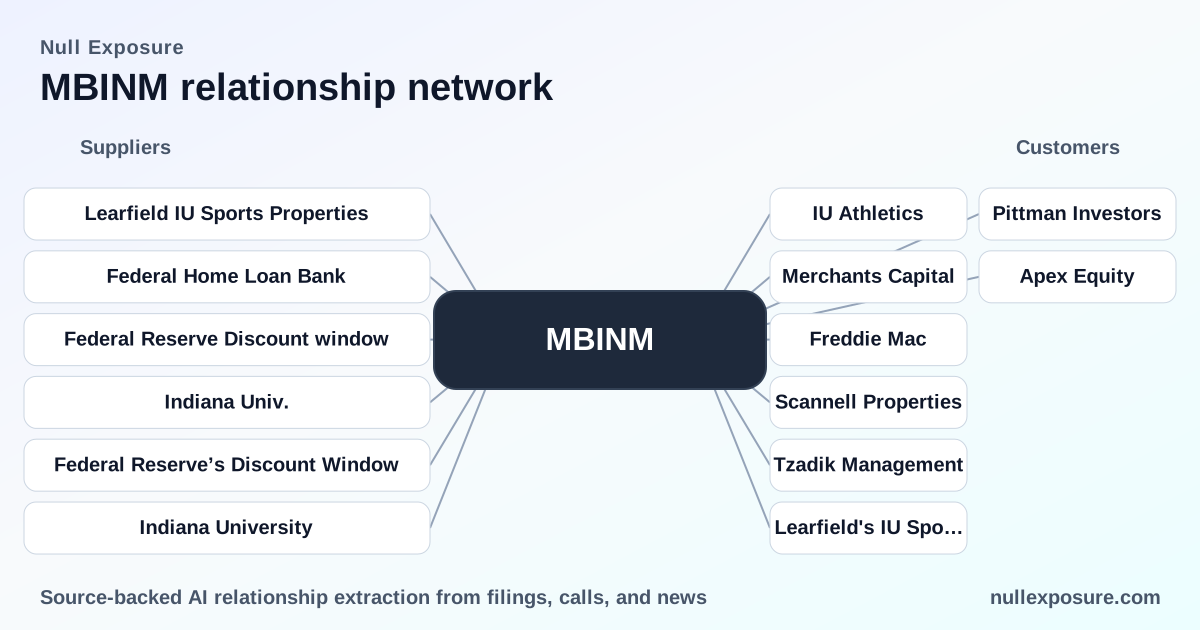
Merchants Bancorp (MBINM) — Customer Relationships and Commercial Signals
Merchants Bancorp operates as a diversified regional bank holding company headquartered in Carmel, Indiana, monetizing through a mix of originations, loan sales, servicing fees, warehouse financing, and traditional retail deposits. The firm runs an originate-to-sell multi‑family and mortgage business while retaining select portfolio loans and fee businesses (servicing, warehouse lending, SBA), extracting income from gain-on-sale activity and noninterest servicing fees. For a consolidated view of relationship traces and primary-source links, visit https://nullexposure.com/.
How Merchants’ customer mix drives revenue and risk
Merchants structures its business around short-term, market-facing lending flows and longer-tail portfolio positions. Company disclosures indicate many fixed-rate originated loans are sold to government agencies as mortgage-backed securities within approximately 30 days, which converts origination activity into near-term cash and fee income. At the same time, the bank retains adjustable-rate loans and servicing to manage interest-rate exposure and sustain recurring revenue.
Several operating characteristics matter for investors:
- Contracting posture: The bank combines short-term transactional relationships (warehouse financing and sale-to-agency pipelines) with active portfolio and deposit servicing. Company language highlights depositors often have contractual prior notice periods (typically 180 days), signaling moderate deposit mobility.
- Counterparty concentration and type: Merchants does business with government agencies and large financial institutions (as primary purchasers of securities), while also serving small businesses through SBA programs; this mix drives both diversification and reliance on secondary-market demand.
- Geographic reach and criticality: The company underwrites nationally (multi‑family and healthcare portfolios) while maintaining a concentrated retail footprint in Indiana, creating national funding dependence with local deposit bases.
- Relationship roles and maturity: Merchants acts as service provider and seller—originating and warehousing loans, selling to agency investors, and offering derivative hedges—supporting both transactional and ongoing service revenue streams.
Customer relationships that matter (what we observed)
IU Athletics
Merchants Bank announced a comprehensive partnership supporting Indiana University Athletics, positioning the bank as a visible community and brand partner in its home state; the announcement included naming rights tied to Memorial Stadium. The press release is documented on IUHoosiers.com during FY2025.
Source: IUHoosiers.com press release (Aug 21, 2025; referenced FY2025).
Learfield’s IU Sports Properties
As part of the IU agreement, Learfield’s IU Sports Properties coordinated the stadium naming placement—Memorial Stadium’s playing surface was renamed Merchants Bank Field—reflecting a sponsorship and marketing relationship that extends brand visibility across university athletics.
Source: IUHoosiers.com press release (Aug 21, 2025; referenced FY2025).
Merchants Capital
Merchants Capital obtained multiple financings including a $33 million construction loan, a $16.6 million equity bridge loan from Merchants Bank of Indiana (MBI), and a $27.45 million Freddie Mac tax‑exempt loan, illustrating intra‑group lending and structured financing capabilities tied to real‑estate development in FY2023.
Source: HousingFinance.com reporting on development financing (FY2023).
Scannell Properties
Merchants Capital (via Merchants Bank of Indiana) provided a construction loan for Scannell Properties’ development “The Farm,” underscoring the bank’s role as a construction lender to national developers and participation in suburban multifamily projects.
Source: ReadTheReporter.com article on the Zionsville development (FY2023).
Pittman Investors
Pittman Investors acted as co‑developer on the same Zionsville project and received accompanying construction financing via Merchants Capital’s Merchants Bank of Indiana facilities, demonstrating the bank’s willingness to fund co‑developer structures on sizeable residential projects.
Source: ReadTheReporter.com article on the Zionsville development (FY2023).
Freddie Mac
Merchants increased gain-on-sale income through higher secondary-market sales, including a Freddie Mac‑sponsored Q‑Series securitization, indicating the bank sells multi‑family loans into agency channels and uses sponsored securitizations to monetize originated assets.
Source: Merchants Bancorp Q3 2025 results release on PR Newswire (FY2025).
Tzadik Management
Merchants extended a $53 million loan to developer Tzadik Management for two apartment complexes in Sioux Falls, demonstrating direct, large-balance commercial lending to national developers and the bank’s exposure to growth-stage multifamily credits.
Source: TheRealDeal reporting on lending activity (Aug 20, 2025; FY2025).
Apex Equity
Reporting notes that Merchants lent to some less-creditworthy borrowers during growth, highlighting a specific exposure to Apex Equity’s Aron Puretz as an example of underwriting to higher-risk developers during expansion — a signal investors should monitor for asset‑quality implications.
Source: TheRealDeal article on merchant lending practices (Aug 20, 2025; FY2025).
What these relationships say about merchants’ strategy and constraints
The relationship set confirms a two‑track strategy: 1) aggressively originate and warehouse loans for near-term sale to government and large institutional investors, and 2) retain selective portfolio assets and servicing for recurring fees. Company-level disclosures reinforce short-term transactional behavior—sold loans commonly exit to agencies within ~30 days—creating volatility tied to secondary market demand. The bank’s counterparty mix includes government agencies and large institutions (buyers) and also small-business borrowers through SBA programs, producing a diversified but market‑sensitive funding model.
Constraints drawn from company excerpts serve as actionable signals: short-term contract lengths, national geography for multi‑family/healthcare lending, service-provider/seller roles, and active engagement with government agency buyers. These attributes imply revenue is sensitive to secondary-market liquidity and underwriting discipline.
For ongoing primary-source monitoring and alerts, see https://nullexposure.com/.
Investment implications and risk monitoring
- Revenue drivers: Gains on sale and servicing fees tied to Freddie Mac/GSE channels underpin near-term profitability; continued securitization activity is a positive sign for fee generation.
- Credit and concentration risk: The bank’s willingness to fund large developer credits (Tzadik, Scannell, Apex) increases exposure to cyclical real‑estate risk; evidence of lending to less-creditworthy borrowers requires active monitoring of delinquencies and loss‑provisioning.
- Liquidity sensitivity: Short-term warehousing and deposit concentration expose the bank to funding strain if secondary buyers or large custodial depositors pull back (company notice periods highlighted in disclosures).
- Diversification benefits: National origination capabilities plus local deposit franchises produce an overall diversified footprint, but investors must track secondary-market access and servicing portfolio performance as leading indicators.
Conclusion — what investors should watch next
Merchants Bancorp combines agency‑driven origination economics with selective portfolio retention and community banking. Key monitoring priorities are securitization volumes (Freddie Mac activity), large‑loan performance (Tzadik/Apex exposures), and deposit concentration/notice dynamics. These indicators will determine whether the firm sustains its gain‑on‑sale model without elevating credit risk.
For a continuous feed of relationship-level evidence and source links, visit https://nullexposure.com/.