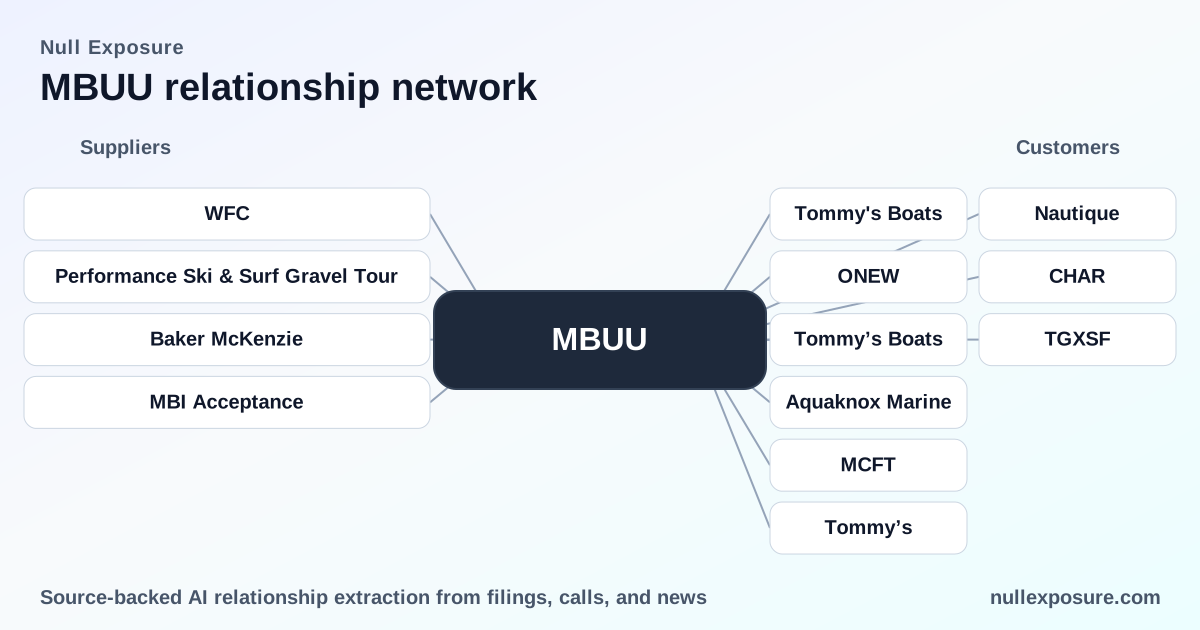
Malibu Boats (MBUU) — dealer relationships, concentration and commercial risks investors should price in
Malibu Boats designs, manufactures and sells recreational powerboats and monetizes through three primary channels: direct manufacturing and wholesale to an extensive dealer network, recurring royalty/licensing income for proprietary wake-surfing technology, and selective brand acquisitions that expand distribution reach. The company runs a globally distributed, dealer-driven go-to-market model where short-term dealer agreements and a highly concentrated top-dealer base materially shape revenue visibility and operational risk.
If you’re evaluating Malibu from an investor or operator perspective, focus on dealer concentration, litigation risk tied to major channel partners, and the steadying effect of licensing royalties. For a concise vendor-risk brief and ongoing monitoring, visit https://nullexposure.com/ for structured relationship intelligence.
Why the dealer network defines Malibu's operating profile
Malibu operates with a dealer network that is both its distribution backbone and its primary commercial vulnerability. Dealer agreements are short-term (one to three years), which gives Malibu pricing and distribution flexibility but reduces long-term cash-flow visibility and increases churn risk; this contract posture requires active dealer management and frequent re-contracting (see company filing for FY2025, https://www.sec.gov/Archives/edgar/data/1590976/000159097625000037/mbuu-20250331.htm).
The network is global (325+ dealer locations) with strong North American representation, but materially concentrated: the top ten dealers accounted for roughly 42.8% of net sales in FY2025, a level that creates outsized exposure if one or more large dealers reduce orders or fall into dispute. Malibu’s commercial roles are multiple — manufacturer, distributor, reseller and licensor — so downstream partner disruption affects product sales, parts/service economics and recurring royalty streams simultaneously (SEC FY2025 filing).
For an operational snapshot and ongoing alerts on dealer-led disruption, check https://nullexposure.com/.
Dealers and partners: line-by-line relationship readout
OneWater Marine, Inc. (ONEW)
OneWater Marine is disclosed in Malibu’s FY2025 SEC filing as a dealer that represented more than 10% of consolidated net sales in both fiscal 2024 and the first nine months of fiscal 2025, indicating single-counterparty revenue significance and an elevated concentration risk (Malibu FY2025 SEC filing, https://www.sec.gov/Archives/edgar/data/1590976/000159097625000037/mbuu-20250331.htm).
Tommy’s Boats / Tommy's Boats (multiple filings and reports)
Tommy’s Boats is a longtime dealer partner that filed federal litigation against Malibu alleging delivery of roughly $100 million of high-margin slow-moving inventory and a scheme to inflate company metrics; the allegation and subsequent suit introduce significant litigation and reputational risk tied directly to a major channel partner (news releases and litigation coverage, e.g., PR Newswire and Newsfile, April–May 2024; see https://www.prnewswire.com/news-releases/mbuu-investors-have-opportunity-to-lead-malibu-boats-inc-securities-fraud-lawsuit-302170327.html and https://www.newsfilecorp.com/release/211464).
Aquaknox Marine
Aquaknox Marine is presented as a new addition to Malibu’s dealer network, reinforcing the company’s global dealer expansion narrative and channel outreach in targeted markets (press coverage announcing the appointment, Taiwan News, FY2025; https://taiwannews.com.tw/news/6128980).
MarineMax, Inc.
MarineMax is referenced in the context of Malibu’s acquisition of Saxdor Yachts and Saxdor’s distribution footprint in North America; Saxdor’s existing partnership with MarineMax gives Malibu incremental distribution breadth via Saxdor’s 100+ global dealer locations, while the brand will operate as a subsidiary with operational autonomy (press release reporting on Saxdor acquisition, May 2026; https://www.theglobeandmail.com/investing/markets/stocks/MBUU/pressreleases/505161/malibu-boats-inc-accelerates-its-global-expansion-with-the-acquisition-of-category-disruptor-saxdor-yachts-one-of-the-worlds-fastest-growing-boat-brands/).
Mastercraft (MCFT)
Malibu reports royalty income from license agreements with several boat manufacturers, including Mastercraft, reflecting a recurring, lower-capital revenue stream tied to intellectual property rather than unit sales — a diversifying income source vs. wholesale boat revenue (royalty disclosures in Malibu FY2025 SEC filing, https://www.sec.gov/Archives/edgar/data/1590976/000159097625000037/mbuu-20250331.htm).
Nautique
Nautique is listed alongside other manufacturers that license Malibu’s wake-surfing technology, creating a steady royalty relationship that monetizes intellectual property across competing brands and helps smooth revenue volatility from dealer sales (see Malibu FY2025 SEC filing, https://www.sec.gov/Archives/edgar/data/1590976/000159097625000037/mbuu-20250331.htm).
Chaparral (CHAR)
Chaparral (catalogued in sources as CHAR) is identified as a licensee in Malibu’s royalty program, contributing to Malibu’s licensing income stream and indicating cross-manufacturer adoption of Malibu’s proprietary technology (royalty disclosure in FY2025 filing, https://www.sec.gov/Archives/edgar/data/1590976/000159097625000037/mbuu-20250331.htm).
Tige (TGXSF)
Tige is also named as a licensee of Malibu’s wake-surfing IP, reinforcing the breadth of licensing partners and the company’s position as an IP licensor within the recreational-boat ecosystem (royalty disclosure in FY2025 filing, https://www.sec.gov/Archives/edgar/data/1590976/000159097625000037/mbuu-20250331.htm).
Constraints and what they imply about Malibu's business model
- Short-term contracting posture: Dealer agreements typically last one to three years, with most at one year, which gives Malibu negotiating leverage but reduces long-term revenue certainty and increases the need for active channel management (company FY2025 filing).
- Global reach with North American concentration: The dealer footprint exceeds 325 locations globally but retains strong North American representation; this dual geography creates growth optionality abroad while keeping sales sensitivity to North American leisure spending cycles.
- High concentration and materiality: The top ten dealers contributed roughly 42.8% of net sales in FY2025, making Malibu's revenue profile sensitive to order changes or disputes with a small set of large dealers.
- Hybrid commercial roles: Malibu operates as manufacturer, distributor, reseller and licensor — a structure that diversifies revenue types (unit sales vs. royalties) but couples operational risks (inventory, warranty, dealer credit) with IP licensing performance.
- Active, mature distribution segment: The distribution channel is active and mature, representing Malibu’s primary go-to-market and requiring significant dealer relations resources to sustain orders and protect brand experience.
Investment implications: what investors should price in now
- Concentration and litigation are the primary near-term risks. The OneWater exposure (>10% of sales) and Tommy’s litigation raise downside scenarios for revenue and unexpected legal costs; under a stress scenario, lost volume or settlement costs could meaningfully affect near-term margins.
- Licensing income is a stabilizer. Royalties from Nautique, Mastercraft, Chaparral and Tige provide recurring, capital-light revenue that cushions unit-sales cyclicality and supports margin mix in downturns.
- Contract structure drives agility and unpredictability. Short dealer terms give Malibu the ability to reallocate distribution rapidly but require constant dealer network management and create quarterly variability in order timing.
- M&A and brand acquisitions expand reach but add integration complexity. The Saxdor acquisition and its established distribution through MarineMax extend Malibu’s global footprint but introduce execution and channel-overlap risk that investors should monitor.
For a structured, investor-ready risk and relationship dossier on Malibu and to monitor dealer litigation and concentration dynamics, visit https://nullexposure.com/.
Bold conclusion: track dealer concentration, the Tommy’s legal outcome, and royalty trends as the three variables that will dominate Malibu’s near-term valuation trajectory.