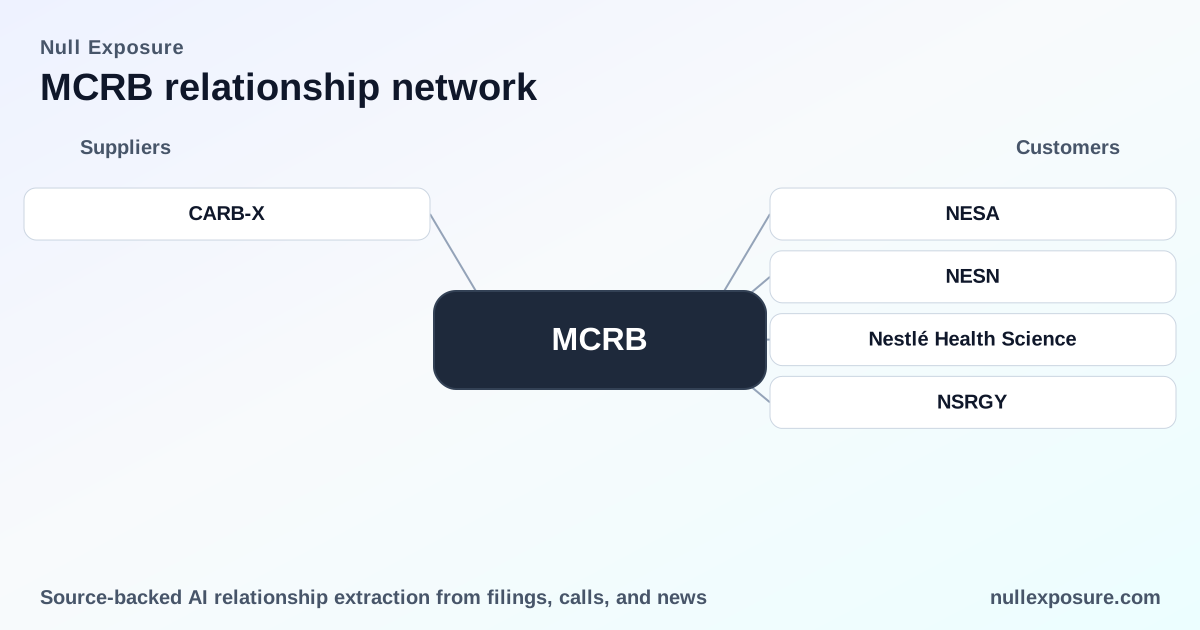
Seres Therapeutics (MCRB): Customer relationships that define the post‑VOWST strategy
Seres Therapeutics develops and commercializes live‑biotherapeutic products and has shifted its model away from direct commercialization of VOWST toward monetization through an asset sale, transition services and contingent economics tied to future sales and milestones. The company realized an upfront divestiture to Nestlé Health Science and now generates revenue from a Transition Services Agreement (TSA), usage‑based manufacturing fees and milestone/profit‑share provisions, while continuing grant‑back and licensing arrangements that affect future upside. Learn more at https://nullexposure.com/.
What the relationship map tells investors about Seres' operating posture
Seres has moved from a classic biotech commercialization posture to a hybrid services/licensing company for the divested asset. Contracting is mixed: short‑term operational services (the TSA) sit alongside long‑dated contingent payments and cross‑licenses tied to product sales milestones. That structure drives three investment‑relevant characteristics:
- Concentration and counterparty risk: a high degree of commercial exposure to Nestlé entities and affiliates through an asset sale, profit‑sharing arrangements and the TSA. (Documented in the Company’s asset sale and TSA disclosures.)
- Revenue profile shift: near‑term cash from fixed and variable TSA fees and reimbursements, plus irregular grant income (CARB‑X), versus future upside that is contingent on Nestlé’s commercialization performance and milestone triggers.
- Operational criticality and maturity: Seres is serving as a service provider during transition—an active, time‑boxed role that is measurable and contractually defined—while licensing provisions grant the buyer long‑running rights. These are both short‑term execution risks and long‑term dilution of product economic exposure.
Relationship roll call — what every named counterparty does for Seres
Below are the relationships identified in filings and press coverage, each with a concise plain‑English summary and a source reference.
NESA
Seres provided manufacturing and transition services to NESA under a Transition Services Agreement; as of December 31, 2024 the company billed $3,724 and received $1,656 consistent with TSA terms. (FY2024 10‑K, mcrb‑2024‑12‑31)
NESN
Public reporting summarizes that following the VOWST sale Seres entered a TSA with Nestlé Enterprises S.A. (NESN) to provide manufacturing and other transition services until December 31, 2025. (TradingView coverage of Seres SEC filings, Mar 2026)
Nestlé Enterprises S.A.
The company explicitly executed a Transition Services Agreement with Nestlé Enterprises S.A. to facilitate transfer of VOWST operations and manufacturing capacity through the end of 2025. (TradingView summary of Seres 10‑Q/10‑K disclosures, FY2025)
Société des Produits Nestlé S.A (Nestlé)
Seres completed the sale of its VOWST business to Société des Produits Nestlé S.A. in September 2024, transferring inventory, equipment, patents and related assets to Nestlé Health Science. (Press release and Latham & Watkins advisory announcement, Aug–Sep 2024)
Nestlé Health Science
Nestlé Health Science is the buyer and commercialization partner for VOWST; Seres led development and FDA approval of VOWST but divested the asset to Nestlé Health Science and continues to support transition activities and share certain economics. (Multiple press releases and Seres investor updates, FY2024–FY2026)
Nestlé (general references / NSRGY)
Corporate references to Nestlé/NSRGY in media and Seres filings identify Nestlé as the acquirer and counterparty in profit‑share and transition arrangements tied to VOWST commercialization in the U.S. and Canada. (TradingView, Globe and Mail and company press materials, FY2025–FY2026)
SPN
The asset purchase agreement names SPN (a Nestlé subsidiary) as the purchaser; Seres entered a cross‑license with SPN and records reimbursements from SPN for transition services (e.g., $13,311 in 2025 and $6,292 in 2024 per a reporting excerpt). (Asset Purchase Agreement and subsequent disclosures summarized in Seres filings and press, and reimbursement detail reported, FY2024–FY2026)
CARB‑X
Seres recorded grant reimbursements from CARB‑X that contributed to reported revenue (total revenue in 2025 included CARB‑X grant reimbursements). This is non‑recurring grant income supporting SER‑155 development. (Seres 2025 financial reporting summarized in TradingView coverage, FY2025)
CENN
An unrelated company filing (CENN FY2024 10‑K) lists Seres among third‑party manufacturers contracted to produce assembled vehicle kits, a reference that suggests the term “Seres” also appears in external registries and should be disambiguated by users when performing automated mapping. (CENN 2024 10‑K filing, FY2024)
Contract constraints and what they mean in practice
Seres’ public disclosures and contract excerpts reveal a layered commercial framework:
- Licensing and cross‑licenses with SPN: Seres granted SPN a perpetual, non‑exclusive license under specified patents and know‑how at closing, which reduces Seres’ direct control over the sold asset while preserving certain retained rights. (Company asset sale and licensing language in the Purchase Agreement, cited in disclosures.)
- Long‑term contingent economics: milestone payments totaling up to $275 million are tied to multi‑year sales thresholds and are payable during a defined milestone period of up to ten years post‑closing, creating asymmetric upside that is contingent on Nestlé’s commercial success. (Purchase Agreement excerpts disclosed in Seres filings.)
- Short‑term, time‑boxed services: the TSA obligates Seres to provide manufacturing and administrative services through December 31, 2025 (extendable up to six months under narrow conditions), producing predictable near‑term revenue but finite operational obligations. (TSA language in Seres 10‑K/10‑Q)
- Usage‑based and fixed fee billing: NESA agreed to fixed monthly fees plus a variable per‑batch fee for PRMS manufacturing and reimbursement of labor and other costs—this structure ties short‑term cash receipts to activity levels rather than straight product royalties. (TSA terms summarized in Seres filings.)
- Active service role and profit sharing: Seres and SPN share 50/50 in net profit or net loss for a defined Profit Sharing Period, making Seres both a service provider and an economic participant in initial commercialization outcomes. (Seres 10‑K disclosures)
Several of these constraints are relationship‑specific when the excerpt names the counterparty (for example, SPN licensing and the NESA TSA); where documents do not name a counterparty the signal is presented as a company‑level operating characteristic.
Investment implications — concise checklist for analysts
- Near‑term revenue is operational and finite: TSA fees and reimbursements provide immediate cash but will taper as transition ends in 2025/2026.
- Future upside is conditional: meaningful value from VOWST now sits in milestone payments and profit sharing tied to Nestlé’s execution.
- Counterparty concentration is material: Nestlé entities are the dominant commercial counterpart for the divested asset, concentrating execution and credit risk.
- Grant funding supplements R&D: CARB‑X and similar awards temporarily blunt cash burn for SER‑155 development but are not a substitute for recurring revenue.
- Watch operational delivery metrics: per‑batch volumes, TSA extension clauses, and reimbursement timeliness will directly influence Seres’ short‑term cash receipts and expense profile.
For a deeper look at how these dynamics affect valuation and partner risk, see https://nullexposure.com/.
What to monitor next
- TSA expiration and any formal extension exercise or renegotiation with Nestlé/NESA.
- Milestone trigger progress and public reporting of VOWST sales in the U.S. and Canada under Nestlé.
- Reimbursement timing and magnitude from SPN and related Nestlé entities.
- Progress and grant milestones for SER‑155 and the likelihood that non‑dilutive funding continues.
Conclusion: Seres’ post‑VOWST configuration turns the company into a hybrid services provider and holder of contingent economic rights. Investors should value the company on a two‑track basis: the measurable, short‑term TSA cashflows and the probabilistic, long‑dated milestone/profit‑share upside anchored to Nestlé’s commercialization performance.