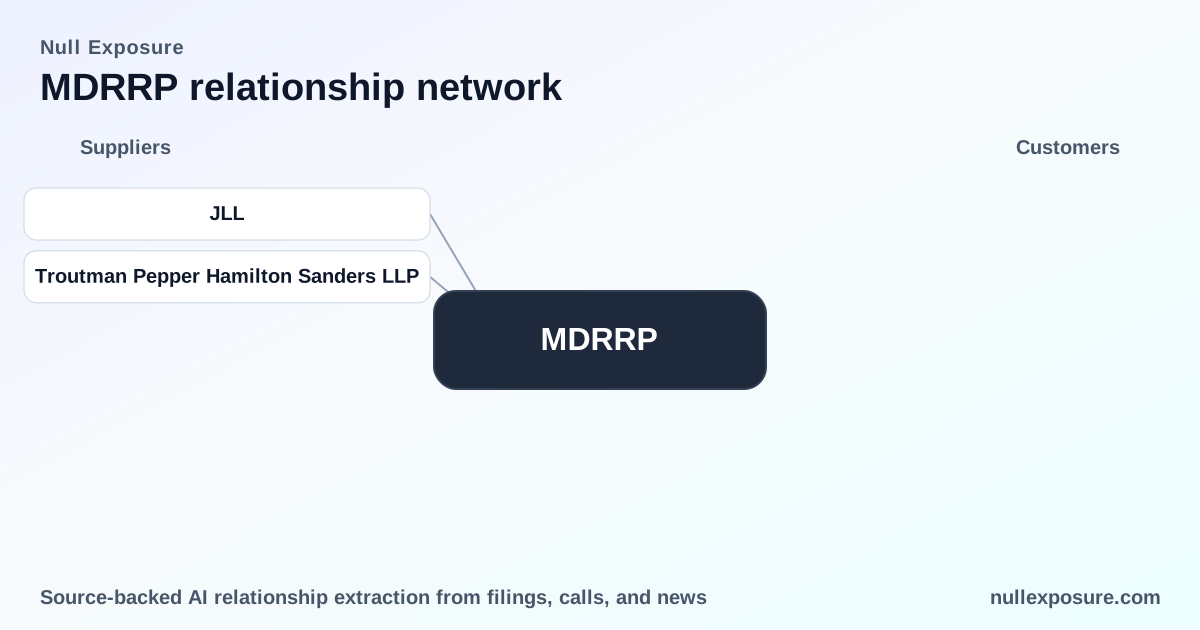
MDRRP: Single-tenant rent rolls powering a preferred payout
Medalist Diversified REIT (preferred shares trading as MDRRP) operates as a small, diversified REIT that monetizes primarily through long-term single-tenant net leases and the cash distributions those leases generate. The preferred tranche captures a high-yield income profile—DividendPerShare $0.13, DividendYield ~7.96%—while the underlying common REIT cash flows are driven by a handful of named tenants on STNL (single-tenant net lease) properties. For investors assessing customer risk and the income durability of MDRRP, the tenant roster, lease structure and concentration dynamics are the critical signals. Explore the issuer profile at https://nullexposure.com/ for a concise vendor view.
Why the tenant list matters more than headline metrics
MDRRP is small by market metrics and presents a concentrated operating footprint: single-tenant net leases mean tenants carry most property-level opex and CapEx risks, so landlord cash flows depend heavily on rent collectability and lease term security. That structure creates two offsetting effects: lease durability and credit concentration. On one hand, long-term NNN leases with national tenants produce predictable rent rolls; on the other, default by a single anchor tenant can materially reduce distributable cash.
From a capital-structure perspective, preferred shareholders sit ahead of common equity for dividend claims but behind secured creditors; the preferred coupon is sustained only so long as the REIT’s cash flow remains sufficient to continue distributions. Company filings through the latest available quarter (latestQuarter 2024-09-30) and public market data confirm modest revenue (RevenueTTM ~$9.9M) and a mixed profitability signal—DilutedEPS TTM negative—which reinforces the need to treat tenant credit as the primary risk lever.
The four customer relationships that drive the rent roll
Below are the tenant relationships mentioned in public coverage of MDRR’s STNL portfolio. Each line summarizes the operative connection in plain language and cites the news summary.
- Citibank — The portfolio includes a Citibank property that contributes a single-tenant net lease rent stream to the REIT’s cash flow. According to a May 2026 news summary on Intellectia, the Citibank property is listed among MDRR’s STNL holdings (Intellectia news summary, FY2025 / May 2026).
- Tesla — MDRR’s STNL inventory includes the Tesla Pensacola property, providing a corporate-backed rent payer on a single-tenant net lease contract. This inclusion is noted in the same Intellectia news summary covering FY2025 holdings (Intellectia news summary, FY2025 / May 2026).
- T‑Mobile — A T‑Mobile property is identified as part of the STNL portfolio, offering a telecom operator as a rent-paying tenant under a net lease arrangement. The tenant is listed in the Intellectia compilation of MDRR’s STNL properties for FY2025 (Intellectia news summary, FY2025 / May 2026).
- East Coast Wings — The East Coast Wings property is included among the STNL assets and represents a restaurant operator tenant whose lease and credit profile differ from the national banks and carriers. This property is cited alongside the other STNL holdings in the Intellectia FY2025 summary (Intellectia news summary, FY2025 / May 2026).
Each relationship is referenced from the same consolidated coverage of MDRR’s single-tenant portfolio on Intellectia (https://intellectia.ai/stock/MDRR), which enumerated the STNL properties and their tenants in May 2026.
What these relationships imply about contracting posture and concentration
- Contracting posture: long-term NNN leases. The STNL label indicates net-leased contracts where tenants assume many operating and capital responsibilities, which reduces landlord variability but increases reliance on tenant credit and lease term lengths for revenue certainty.
- Concentration: materially concentrated. The cited tenant list contains a small number of named lessees; for a small REIT, that concentration translates into high single-tenant exposure, not a diversified retail or multi-tenant portfolio.
- Criticality: tenants are cash flow drivers. With limited revenue sources (RevenueTTM ~$9.9M), each anchor tenant materially impacts distributable cash and therefore preferred dividend coverage.
- Maturity: skewed toward nationally branded lessees but with variability. Tenants like Citibank, Tesla and T‑Mobile increase credit quality expectations; by contrast, a restaurant operator such as East Coast Wings implies a different credit and business-cycle sensitivity, adding a mixed maturity profile to the rent roll.
These are company-level operational signals rather than relationship-specific contractual excerpts; they should inform any underwriting of MDRRP’s preferred distribution reliability.
Risk / return calculus for income-focused investors
Investors in MDRRP’s preferred shares should weigh a compact set of trade-offs:
- Upside: High nominal yield and predictable contract mechanics under NNN leases can support steady preferred distributions as long as tenants perform.
- Downside: Concentration risk and negative diluted EPS at the parent level increase the chance that a tenant disruption or elevated vacancy could pressure distributable cash and preferred coverage. Public filings through Q3 2024 show modest revenue and mixed profitability, reinforcing that tenant continuity is the main risk vector.
- Idiosyncratic tenant risk: A default by any one of the named tenants would have outsized impact given the small revenue base; conversely, credit upgrades or lease roll extensions with the large national tenants would materially de-risk the preferred cash flow.
For a deeper platform view of tenant concentration and relationship signals, review the issuer profile at https://nullexposure.com/.
Bottom line: income utility conditional on tenant stability
MDRRP offers a high-income play backed by STNL rents, but that income is conditional on a small number of tenants and the REIT’s ability to maintain lease continuity. The presence of national names—Citibank, Tesla, T‑Mobile—provides credit upside, while the inclusion of a restaurant operator underscores uneven tenant risk across the portfolio. Preferred investors should prioritize lease terms, remaining lease durations, and tenant covenant strength in their next diligence steps.
Contact your coverage desk or visit the issuer overview at https://nullexposure.com/ for consolidated relationship reporting and primary-source links.