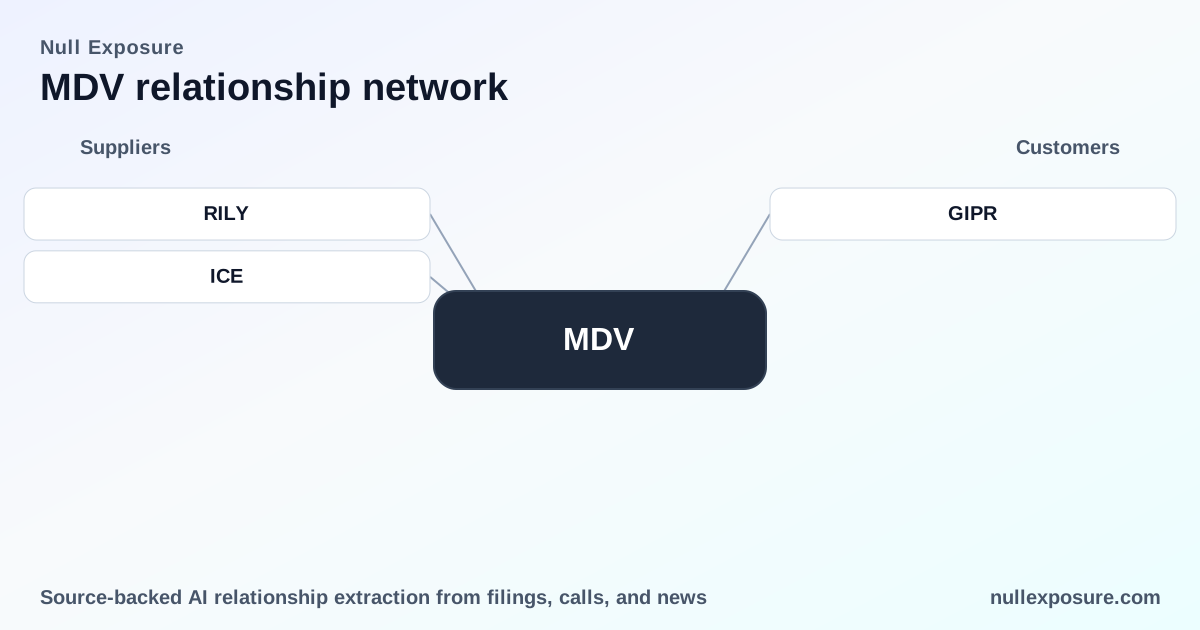
Modiv Inc (MDV) — Customer relationships that drive cash flow and active portfolio rotation
Modiv Inc monetizes through a disciplined REIT model focused on single‑tenant, net‑lease industrial properties: it collects long‑term contractual rent from financially secure tenants, and supplements income and capital returns through tactical dispositions and occasional equity‑for‑asset exchanges. Stable rent rolls, high weighted average lease terms and an active disposition program are the core revenue engines that investors should model when assessing MDV’s cash flow resilience and value‑creation pathway. For a broader view of data and signals behind these customer relationships, visit https://nullexposure.com/.
How these customer ties translate into predictability — and where risk concentrates
Modiv’s operating posture is contractually defensive: company disclosures indicate long‑term lease structures with a WALT near the mid‑teens (approximately 13.8 years excluding renewal options) and examples of explicit lease extensions. That underwriting supports predictable cash flows and a high occupancy profile (reported ~98% by square footage). At the same time, portfolio concentration is material: two tenants account for roughly 23% of annual base rent (ABR) and industrial properties make up the majority of ABR (78%), introducing tenant and sector concentration risk that is not diversified away by geography — the portfolio sits wholly in the United States. These are company‑level signals drawn from Modiv’s filings and investor disclosures around year‑end 2024 and later.
- Contracting posture: long‑term net leases are the norm, supporting durable cash flows.
- Concentration & criticality: industrial manufacturing focus creates sector concentration; two tenants are sizable contributors to ABR.
- Maturity & stage: portfolio is active — high occupancy with continuing dispositions and some lease renewals — indicating practical portfolio management rather than a passive hold strategy.
If you want a compact analytics package to explore these commercial relationships further, see the platform overview at https://nullexposure.com/.
Relationship snapshots — what every named counterparty means for investors
Generation Income Properties, Inc. (GIPR)
Modiv executed a sizable portfolio sale in which it received GIPR Series A preferred stock as part of consideration; Modiv indicated it could receive GIPR common shares in redemption of that preferred stock as the deal inventory converts (press release, Oct 17, 2023). A follow‑up corporate release from January 31, 2024 documents GIPR issuing Series A preferred stock to Modiv OP in connection with the portfolio acquisition, underscoring an ongoing seller‑to‑buyer capital exchange between the companies (ACC/PR release, Jan 31, 2024). https://markets.financialcontent.com/pennwell.renewableenergy/article/bizwire-2023-10-17-modiv-industrial-declares-monthly-cash-distributions-for-common-shareholders-and-anticipates-distributing-gipr-common-shares and https://markets.financialcontent.com/pennwell.industriallaser/article/accwirecq-2024-1-31-generation-income-properties-nasdaq-gipr-issues-2794597-shares-of-its-common-stock
Key takeaway: GIPR is a strategic counterparty in Modiv’s disposition playbook — Modiv has taken non‑cash consideration (preferred equity) and retains exposure to conversion into common shares, a structural element that affects both liquidity and potential upside from the sold portfolio.
Costco (COST)
Costco was identified among key tenants whose lease expirations contributed to an earnings decline; the company called out the Issaquah Costco as an asset that either moved to disposition or awaits redevelopment of its cash flow (earnings call coverage, May 3, 2026). https://www.theglobeandmail.com/investing/markets/stocks/MDV/pressreleases/1016427/modiv-inc-earnings-call-maps-industrial-pivot/
Key takeaway: Loss or disposition of large, low‑risk anchors like Costco reduces near‑term ABR and illustrates Modiv’s willingness to monetize repositioning opportunities rather than hold underperforming lease profiles.
Northrop Grumman (NOC)
Modiv accepted an unsolicited bid for a short‑WALT Northrop property and expects additional dispositions over the coming year, reflecting active capital recycling in response to market interest (earnings call coverage, May 3, 2026). https://www.theglobeandmail.com/investing/markets/stocks/MDV/pressreleases/1016427/modiv-inc-earnings-call-maps-industrial-pivot/
Key takeaway: An unsolicited bid accepted for a Northrop asset signals opportunistic disposition discipline — Modiv will sell short‑WALT or non‑strategic leases to optimize portfolio composition and redeploy capital.
Solar Turbines
Solar Turbines’ lease expiration in San Diego was specifically cited as a factor in recent cash‑flow transitions; the asset either moved to disposition or is positioned for redevelopment (earnings call coverage, May 3, 2026). https://www.theglobeandmail.com/investing/markets/stocks/MDV/pressreleases/1016427/modiv-inc-earnings-call-maps-industrial-pivot/
Key takeaway: Lease expirations at manufacturing sites like Solar Turbines are treated as active portfolio events — they are either monetized via sale or converted through redevelopment to restore or improve cash flow.
What the constraints tell investors about Modiv’s business model
The relationship constraints reported across Modiv disclosures paint a cohesive operating model:
- Long‑term contract bias: Multiple disclosures reference long‑term lease terms (weighted average lease terms cited in filings and extension notices), indicating a business that prioritizes predictable, lease‑driven income. This is a structural strength when discounting cash flows and pricing cap rates.
- US‑centric footprint: The geography signal is explicit — properties are located throughout the United States — lowering international execution risk but concentrating macro and industrial demand exposures to domestic cycles.
- Material concentration risk: The firm itself reports that two tenants account for roughly 23% of ABR and industrial assets form the bulk of ABR; investors must model tenant default and vacancy scenarios for those large contributors when stress‑testing cash flows.
- Active seller role and portfolio rotation: Disposition transactions (including the GIPR deal) demonstrate that Modiv functions as an active seller as well as an owner; this dynamic boosts capital recycling potential but creates variability in near‑term revenue recognition.
- Relationship lifecycle: Most relationships are active with high occupancy and multi‑year contractual commitments, but some are explicitly renewing or being repositioned, which introduces transitional cash‑flow volatility.
Investment implications — how to think about MDV exposure
For portfolio investors and operators, Modiv’s profile is cash‑generative under base case, with meaningful upside from disciplined asset rotation and redevelopment. The key tradeoffs:
- Strengths: Long‑dated leases, high occupancy, and an active disposition capability that can crystallize value or de‑risk exposures.
- Risks: Tenant concentration and industrial‑sector concentration mean downside scenarios require careful stress testing; equity consideration in dispositions (as with GIPR) introduces non‑liquid elements to the balance sheet that influence NAV and leverage metrics.
Bottom line: Model Modiv as a long‑lease industrial REIT with active asset management — value accrues through rent stability plus selective disposals and redevelopment, while concentrated tenants and conversion of non‑cash sale consideration are the principal model risks.
For a concise package of relationship analytics and to explore counterparty signals in more depth, visit https://nullexposure.com/.