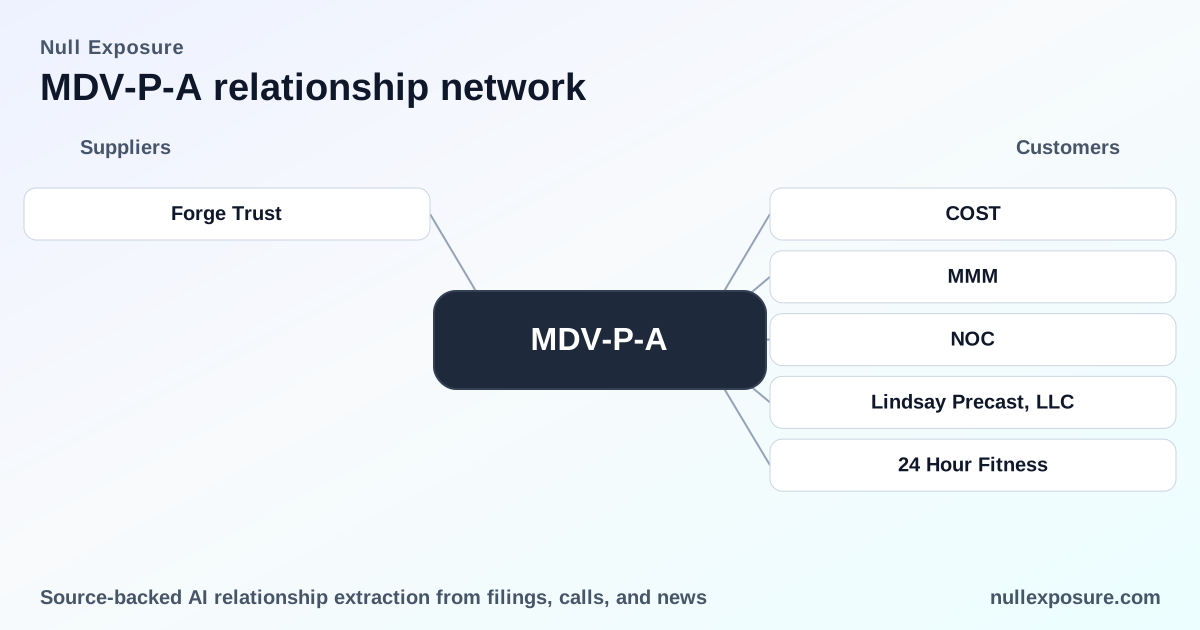
MDV-P-A tenant profile: what investors need to know about Modiv’s customer relationships
MDV-P-A represents preferred equity in Modiv, an internally managed single-tenant net-lease real estate trust that monetizes through long-term rental cash flow, sale-leaseback acquisitions and selective property dispositions. Investors should evaluate Modiv’s tenant mix, lease expirations and weighted average lease term (WALT) because those factors drive preferred dividend coverage and residual asset valuation. For a clean, ongoing view of tenant concentration and lease chemistry visit NullExposure.
How the business actually contracts and turns tenants into yield
Modiv’s operating model is built on acquiring single-tenant industrial and office assets and converting tenant commitments into stable income streams. The company executes a mix of sale-leasebacks (cash up-front, long-term rent) and outright acquisitions of stabilized net-lease properties, then relies on lease tenor and credit quality to underpin distributions to equity and preferred holders.
- Contracting posture: predominantly long-term, triple-net leases with built-in rent escalations where available, which supports predictability for preferred claimants.
- Concentration and criticality: a concentrated tenant roster includes large, investment-grade tenants (Costco, 3M, Northrop Grumman, Fujifilm), which materially improves cash-flow quality but increases sensitivity to a handful of relationships.
- Portfolio maturity: Modiv reports a high portfolio WALT (~14 years), which signals mature, predictable cash flows but also creates duration exposure when major tenants decline renewal or exercise sale options.
- Asset management strategy: management will market non-core assets for sale (for example, post-lease expiration) and completes sale-leaseback acquisitions to recycle capital into long-tenor leases.
These company-level signals emerge from Modiv’s public commentary and deal disclosures across FY2021–FY2026, and they are the primary drivers of how preferred holders should think about risk and upside.
For live monitoring of tenant-level changes and expirations, see NullExposure.
Relationship-by-relationship: what each tenant means for MDV-P-A holders
Costco
Costco’s lease expiration on an Issaquah, Washington office property reduced Modiv’s rental income and the property was sold to KB Home on December 15, 2025; this is a realized cash-event that lowered recurring rent but unlocked disposition proceeds. Source: Modiv earnings call transcript on Investing.com (May 3, 2026).
KB Home
KB Home purchased the Issaquah office property from Modiv on December 15, 2025, a disposition that converted an expiring tenant relationship into sale proceeds. Source: Modiv earnings call transcript on Investing.com (May 3, 2026).
Solar Turbines
Solar Turbines’ lease on a San Diego office expired and Modiv plans to market the asset for sale pending local approvals for a lot split, indicating active asset recycling after tenant turnover. Source: Modiv earnings call transcript on Investing.com (May 3, 2026).
3M Company (MMM)
3M is listed among Modiv’s higher-quality tenants and has been part of multi-year industrial lease activity, including a large distribution-center renewal in Illinois; that tenant quality supports base rent stability. Source: SureDividend commentary (FY2025) and TheRealDeal coverage of a 12-year renewal (Nov 2021).
Northrop Grumman Corp. (NOC)
Northrop Grumman is a mission-critical tenant for Modiv; the trust secured multi-year renewals (including a five-year extension in Florida with modest annual increases), which materially improves near-term cash-flow predictability. Source: SureDividend analysis (FY2025) and CrowdfundInsider coverage (FY2021).
Lindsay Precast, LLC
Modiv completed a $56.1 million sale-leaseback acquisition of the Lindsay Precast portfolio, demonstrating the company’s use of sale-leasebacks to scale industrial exposure and lock in contractual rent streams. Source: CityBiz announcement of the 2022 transaction.
OES (OESX)
Modiv discussed an office property tied to OES that carries a purchase option and is treated as an investment-grade, government-related tenancy; the structure provides Modiv with a near-term decision point on disposition versus hold. Source: Modiv earnings call transcript on Investing.com (May 3, 2026).
Fujifilm (FUJIF)
Fujifilm executed a material lease extension (reported as a 10-year extension), contributing to Modiv’s high WALT (~14 years) and enhancing longer-term cash-flow visibility. Source: TradingView summary of Modiv’s 10-K commentary (May 3, 2026).
Kia (dealership)
Management labeled a Kia dealership asset as “non-core,” signaling intent to divest or reclassify lower-strategic assets rather than prioritize retention—this reduces distraction and concentrates capital toward longer-tenor industrial leases. Source: Modiv earnings call transcript on Investing.com (May 3, 2026).
24 Hour Fitness
Modiv recorded a permanent write-down on a 24 Hour Fitness property following that tenant’s bankruptcy, an example of downside when single-tenant retail operators fail and the landlord bears asset-level impairment. Source: CrowdfundInsider retrospective on Modiv (Apr 2021).
Northrop / Northrop (duplicate references)
Multiple disclosures reference Northrop-related deals and unsolicited offers on Northrop-occupied properties, underscoring that high-quality aerospace & defense tenants both anchor cash flows and can generate third-party demand for assets. Source: Modiv earnings call transcript and TradingView 10-K coverage (FY2026).
What the tenancy profile implies for MDV-P-A investors
- Positive: A constellation of investment-grade tenants and long lease terms produces durable rent rolls that support preferred distributions; sale-leasebacks provide an efficient source of origination and near-term capital. The high WALT (~14 years) is the structural driver behind yield stability.
- Risks: Concentration risk is material—lease expirations (Costco, Solar Turbines) and tenant bankruptcies (24 Hour Fitness) demonstrate that single-tenant portfolios can experience step-changes in rental revenue; management’s willingness to sell non-core assets reduces operational drag but injects transaction and timing risk. TradingView reported total rental revenue of $45.8 million with a $0.7 million decline versus 2024, illustrating sensitivity to expirations (FY2026 commentary).
Investors in MDV-P-A should track three metrics closely: WALT trajectory, tenant credit mix (investment-grade share), and near-term scheduled expirations or purchase options that convert leases into disposition events.
Bottom line: signals that matter for preferred holders
MDV-P-A is supported by long-duration, single-tenant cash flows and selective sale-leaseback origination, but its value is concentrated in a handful of tenants whose leases and disposition decisions determine dividend coverage. Monitor lease expirations and material dispositions, because those events convert rental income volatility into realized gains or cash-flow gaps.
For ongoing, tenant-level surveillance and to integrate these relationship signals into a portfolio view, visit NullExposure.