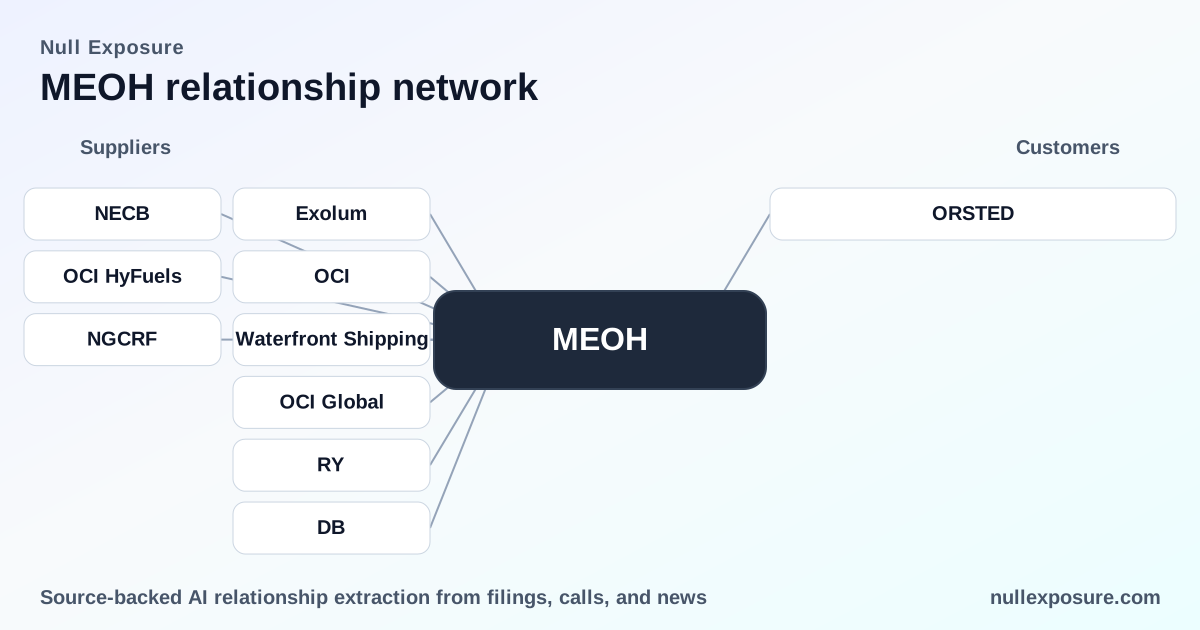
Methanex (MEOH): Commercializing methanol and selling an energy-transition feedstock
Methanex operates the largest global merchant methanol business, producing and selling conventional methanol and increasingly ISCC‑certified biomethanol to industrial and marine customers across North America, Asia Pacific, Europe and South America. The company monetizes through a mix of long‑term supply contracts and merchant sales into spot and indexed markets; earnings derive from plant throughput, feedstock economics and premium pricing for low‑carbon methanol. Revenue trailing twelve months roughly $3.67 billion and EBITDA about $690 million underscore a capital‑intensive, commodity‑exposed business with improving optionality as customers decarbonize.
Explore more at https://nullexposure.com/
Why the Ørsted biomethanol deal matters for investors
Methanex’s supply of ISCC‑certified biomethanol to Ørsted for bunkering at the Port of Immingham is not a one‑off PR item — it signals a commercial avenue to capture premium pricing tied to decarbonization requirements in marine and offshore operations. Marine fuel uptake is a structural growth vector: ships and service vessels need lower‑carbon alternatives, and suppliers that can certify and scale biomethanol will command strategic customer relationships.
- Demand driver: Shipping and offshore maintenance fleets are procuring low‑carbon fuels to meet corporate emission targets.
- Commercial leverage: ISCC certification and Gulf Coast production capacity give Methanex a competitive supply advantage for European bunkering needs.
How Methanex structures customer relationships and what that implies
Methanex runs a hybrid contracting posture: long‑term offtakes for plant utilization paired with merchant sales to capture upside when market methanol prices rise. The company’s global footprint reduces single‑market concentration, but regional feedstock and logistics constraints create pockets of customer criticality where Methanex is a de facto supplier.
- Concentration and criticality: While revenue is diversified across geographies, specific projects — like European bunkering — create high‑value, high‑criticality relationships with individual customers that require reliable, certified supply.
- Maturity and counterparty mix: Institutional ownership (~69%) and stable EBITDA margins indicate a mature industrial operator; customers are strategic industrial and maritime operators rather than retail end users.
- Contracting posture: Expect negotiated commercial terms that balance volume commitments with price linkage; biomethanol delivery likely priced at a premium reflecting certification and feedstock costs.
Customer mentions and the public record — every relationship from the results
Below are each of the relationships surfaced in news results, described in plain English with source context.
Finviz news mention (Orsted) — FY2026
Methanex partnered in a UK commercial bunkering launch that names Orsted as the first user of biomethanol for its North Sea offshore wind farm maintenance vessels, positioning Methanex as a supplier for renewable marine fuel. This was reported by Finviz on March 10, 2026 in coverage of the new bunkering service (FY2026 mention).
Source: Finviz news report, March 10, 2026.
Duplicate Finviz entry (ORSTED) — FY2026
A second Finviz entry references the same collaboration: Ørsted (styled ORSTED) will be the inaugural customer using the biomethanol in North Sea maintenance operations, confirming the initial commercial customer for the bunkering initiative. This duplicate mention reinforces the public visibility of the Ørsted supply arrangement.
Source: Finviz news report, March 10, 2026.
Indian Chemical News report (ORSTED) — FY2026
Indian Chemical News reported that the biomethanol supplied to Ørsted is ISCC‑certified and produced in Methanex’s Gulf Coast facilities from waste feedstocks, and that the fuel reduces greenhouse gas emissions by up to 80% versus conventional marine fuels, framing the transaction as a certified low‑carbon supply chain move (FY2026).
Source: Indian Chemical News, Port of Immingham bunkering launch, March 10, 2026.
Duplicate Indian Chemical News entry (Ørsted) — FY2026
A second Indian Chemical News record reiterates that Methanex’s Gulf Coast‑produced, ISCC‑certified biomethanol is the product supplied to Ørsted for bunkering, emphasizing the origin and certification of the fuel and the emissions reduction claim.
Source: Indian Chemical News, March 10, 2026.
What these customer relationships reveal about Methanex’s operating model
The Ørsted transaction highlights several company‑level signals about how Methanex operates and competes:
- Supply integrity and certification matter. Methanex’s ability to deliver ISCC‑certified biomethanol from Gulf Coast plants indicates mature traceability and compliance processes that larger customers require.
- Strategic customer wins elevate pricing optionality. Securing a name‑brand renewable energy customer like Ørsted for a commercial bunkering service creates both revenue and reputational upside, supporting premium pricing over commodity methanol.
- Logistics and geography are competitive levers. Producing biomethanol in the Gulf Coast and supplying European bunkering demonstrates Methanex’s capability to move product across global value chains — an operational strength but also a source of execution risk if logistics are disrupted.
- Commercial maturity supports transition play. Financials (Revenue TTM $3.67B; EBITDA $690M) and institutional ownership suggest Methanex has the balance sheet and investor base to pursue scaled low‑carbon production.
Investment implications and risk considerations
For investors and operators evaluating MEOH customer relationships, the Ørsted partnership is material for two reasons: it validates Methanex’s low‑carbon product in a commercial marine use case, and it signals a route to higher‑margin sale channels. Key points to weigh:
- Upside: Growing demand for certified low‑carbon fuels creates a sustainable premium opportunity that complements Methanex’s merchant volumes.
- Risk: Methanol remains a commodity tied to feedstock and energy costs; earnings are sensitive to price cycles (Forward P/E ~8.5, EV/EBITDA ~11.2). Execution risk exists in scaling certified biomethanol and coordinating cross‑continental logistics.
- Balance sheet/context: Negative diluted EPS on a TTM basis contrasts with positive operating margins and institutional confidence; investors should track margin conversion as biomethanol volumes scale.
Explore more coverage and signals on customer relationships at https://nullexposure.com/
Bottom line
Methanex’s publicized supply of ISCC‑certified biomethanol to Ørsted is both strategic and commercial: strategic in advancing Methanex’s role in decarbonizing marine fuel chains, and commercial in opening higher‑value customer channels. For investors, the transaction is a concrete data point that reinforces Methanex’s transition narrative while leaving core commodity exposure intact; due diligence should focus on contract scope, pricing, and the company’s ability to scale certified feedstock production.