Mesa Air Group (MESA): partner concentration, contractual economics, and where value hides
Mesa Air Group operates as a regional airline that monetizes by selling flying capacity under long‑term capacity purchase agreements (CPAs) to major carriers and, intermittently, freight integrators. The company runs flights branded as American Eagle and United Express and has pursued episodic cargo and training initiatives; its economics are therefore driven by CPA terms, asset utilization and the portfolio of counterparties that supply route demand. For a compact investor briefing and coverage map, visit https://nullexposure.com/.
Why the counterparty map matters more than the fleet count
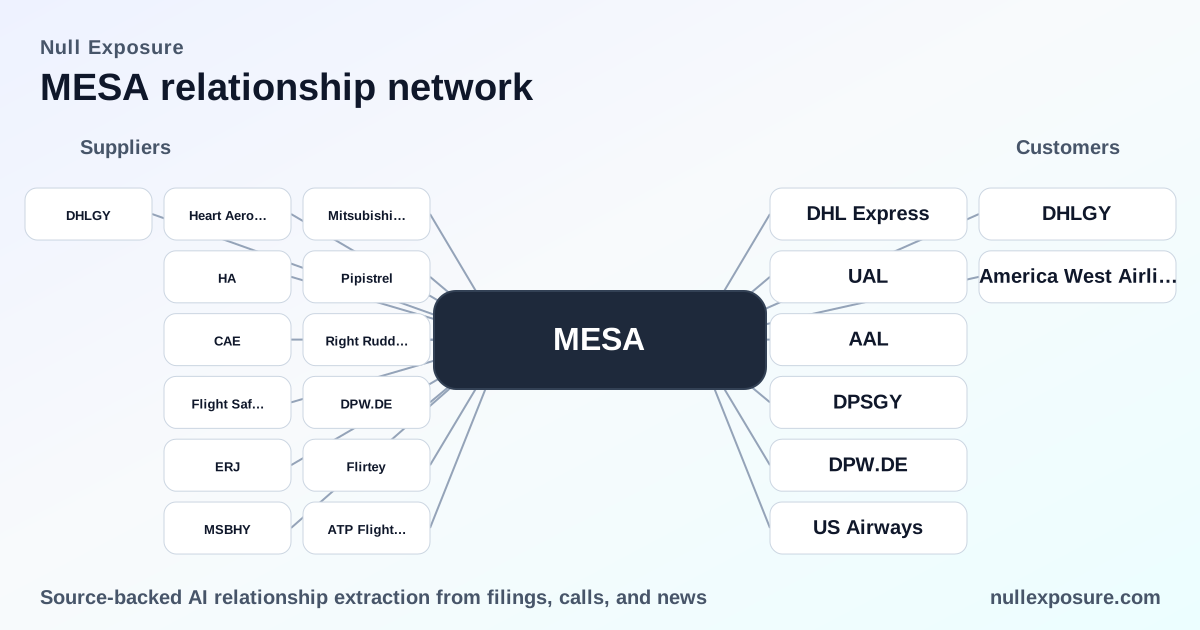
Mesa’s business is not a classic network airline: it is a CPA operator. Revenue and margin volatility flow from the contracting posture of its major partners, the maturity of those contracts, and the degree of concentration. American and United together repeatedly appear across filings and press reporting as the anchors of Mesa’s flying, while DHL has been an intermittent cargo client whose engagement has shifted materially over time. Hotel News Resource and Mesa’s own releases document a new 10‑year CPA with United that materially lengthens contract visibility on a portion of the flying portfolio (FY2025). Meanwhile, cargo operations with DHL that began in FY2020 were later curtailed, illustrating the business’s sensitivity to demand cycles in non‑passenger work. (Sources: Hotel News Resource FY2025 — https://www.hotelnewsresource.com/article139048.html; Stat Times / AirlineGeeks / FreightWaves FY2020–FY2024 — links below.)
For deeper, ongoing monitoring of Mesa’s counterparty events and filings, see our coverage at https://nullexposure.com/.
Relationships that define Mesa’s revenue and risk
Below I list every counterparty relationship that appears in the sample results and provide a concise summary and source for each. These are the commercial anchors you must model.
-
DHL / DHL Express — Mesa contracted to operate Boeing 737‑400F cargo aircraft for DHL beginning in FY2020 and ran revenue cargo flights; the relationship was later terminated one year early due to reduced cargo demand, and Mesa has stopped 737F operations for DHL in FY2024. Source: Stat Times and AirlineGeeks reporting on the FY2020 cargo agreement (https://www.stattimes.com/news/mesa-air-group-to-add-boeing-737400f-fleet-for-dhl-express-air-cargo; https://airlinegeeks.com/2020/07/13/mesa-air-group-signs-contract-with-dhl-adds-boeing-737/). Termination and stoppage reported by FreightWaves and Air Cargo News in FY2024 (https://www.freightwaves.com/news/dhl-express-ends-capacity-agreement-with-mesa-airlines; https://www.aircargonews.net/north-america/mesa-airlines-stops-737f-operations-for-dhl-express/).
-
American Airlines, Inc. (AAL) / American Eagle — Mesa operates regional flying under the American Eagle brand pursuant to CPAs with American; Mesa’s American relationship is a longstanding feeder arrangement central to its network footprint and workforce planning. Source: CityBiz and multiple filings referenced across FY2018–FY2026 press mentions (https://www.citybiz.co/article/225861/mesa-air-group-appoints-christian-daoud-as-vp/; additional market summaries in FY2019–FY2026).
-
United Airlines, Inc. (UAL) / United Express — Mesa runs routes as United Express under capacity purchase agreements and, as part of corporate transactions, secured a newly established 10‑year CPA with United (announced FY2025), which materially extends contract term and route certainty on significant flying. Source: Hotel News Resource and GlobeNewswire FY2025 (https://www.hotelnewsresource.com/article139048.html; https://www.globenewswire.com/news-release/2025/11/21/3192701/0/en/Mesa-Air-Group-Reports-Results-for-the-Three-and-Nine-Months-Ended-September-30-2025.html).
-
United Express (brand) — Separate reporting frequently cites Mesa’s role operating United Express flights across hubs and markets; this brand relationship is the operational channel through which Mesa sells capacity to United. Source: AirlineGeeks and SimpleFlying historical coverage (https://airlinegeeks.com/2018/05/24/inside-the-regionals-mesa-airlines/; https://simpleflying.com/united-airlines-embraer-e175/).
-
American Eagle (brand) — Mesa’s American Eagle operations are cited across regional profiles and press pieces describing Mesa’s hubs and historical service patterns; the brand is the commercial interface to American’s regional network. Source: AirlineGeeks FY2018 and related market coverage (https://airlinegeeks.com/2018/05/24/inside-the-regionals-mesa-airlines/).
-
US Airways — Historical reporting notes Mesa’s earlier contract flying as US Airways Express; this relationship is legacy but evidences Mesa’s long track record as a CPA operator for major network carriers. Source: StarAdvertiser and AZCentral historical articles (https://www.staradvertiser.com/2014/03/17/breaking-news/go-airlines-to-stop-hawaii-operations-on-april-1/; https://www.azcentral.com/story/travel/2014/03/18/mesa-air-to-close-go-subsidiary/6565477/).
-
America West Airlines — Cited in historical summaries of Mesa’s partner history; the item is relevant to institutional memory of the company’s shifting partner set over time. Source: AirlineGeeks FY2018 historical profile (https://airlinegeeks.com/2018/05/24/inside-the-regionals-mesa-airlines/).
Notes on source selection: each relationship summary above is tied to at least one of the URLs found in the results set; readers should consult the original press items for timing and direct language.
What the relationship map tells you about Mesa’s operating model
-
Contracting posture: primarily CPA-driven. Mesa’s core monetization is through capacity purchase agreements that transfer major commercial risk (fares, network scheduling) to the contracting airline while leaving Mesa to supply labor, aircraft and operations. The presence of a newly reported 10‑year United CPA (FY2025) signals an increase in contracted term life on material flying. (Source: Hotel News Resource FY2025).
-
Concentration risk: high. Two network carriers—American and United—recur across results and constitute the primary demand sources for Mesa’s flying, creating single‑counterparty sensitivity that investors must model as a concentration risk.
-
Criticality and maturity: mixed. CPAs create predictable revenue when stable, but Mesa’s cargo pivot with DHL and the subsequent early termination show that adjacent revenue streams (cargo) are opportunistic and demand‑sensitive, not a durable diversification. (Sources: FreightWaves, Air Cargo News FY2024; Stat Times / AirlineGeeks FY2020).
-
Asset and liquidity considerations. Mesa has sold surplus CRJ‑900 aircraft and engines as part of RASPRO financing and has actively adjusted its fleet and utilization to manage leverage and profitability; management has also invested in pilot training aircraft to address crew supply issues. These moves reflect a hybrid asset posture—ownership and disposition used strategically to manage balance sheet stress and contract coverage. (Sources: SimpleFlying FY2024; ABC15 FY2022).
Bottom line for investors
Mesa is a CPA specialist where value is concentrated in contract terms with American and United and in management’s ability to right‑size fleet and costs when non‑core revenue evaporates. Key modeling levers are contract length and yield protections, fleet disposal timing, and utilization under the United 10‑year agreement. Monitor quarterly disclosures for CPA renegotiations, asset sales, and any re‑entry or exit in cargo services.
For ongoing tracking and deeper counterparty analytics, see our full coverage at https://nullexposure.com/.