Ramaco Resources (METC): customer relationships, commercial posture, and the Mulberry MOU
Ramaco Resources monetizes a single, high‑value commodity: metallurgical coal sold principally to integrated steelmakers and coke plants, with a heavy export orientation. The company operates as a pure‑play coal seller, generating cash by producing and selling coal under a mix of short‑term and spot contracts while maintaining forward sales to manage near‑term delivery commitments; recent developments include a December 2025 memorandum of understanding with Mulberry Industries that expands commercial optionality around Brook Mine. For direct access to mapped customer relationships and signal-level detail, see NullExposure’s homepage: https://nullexposure.com/.
How Ramaco runs the economics: commodity seller with export reach
Ramaco is a pure‑play metallurgical coal producer whose primary revenue stream is the sale of coal. The company reported roughly $536.6 million of revenue (TTM) and sells both into North American integrated steel mills and into export markets, where pricing is frequently index‑linked and sales can be transacted on a spot or short‑term basis. According to the company’s disclosure for its 2024 period, 33% of revenues were North American and 67% were export, and the company had forward sales of about 1.5 million tons at year‑end, demonstrating a deliberate but limited use of fixed forward contracts to stabilize near‑term volumes and pricing.
- Key commercial feature: pricing and volumes are predominantly fixed on short (one‑year or shorter) horizons in domestic contracts, and export sales vary from spot cargoes to one‑year terms where pricing is often index‑derived.
- Operational leverage: Ramaco’s reserves and production profile make coal sales the primary cash generator, so customer counterparty risk and short‑term market pricing drive near‑term earnings volatility.
(Disclosure sources: company filings and revenue breakdown as of Dec 31, 2024.)
All identifiable customer relationships (covered)
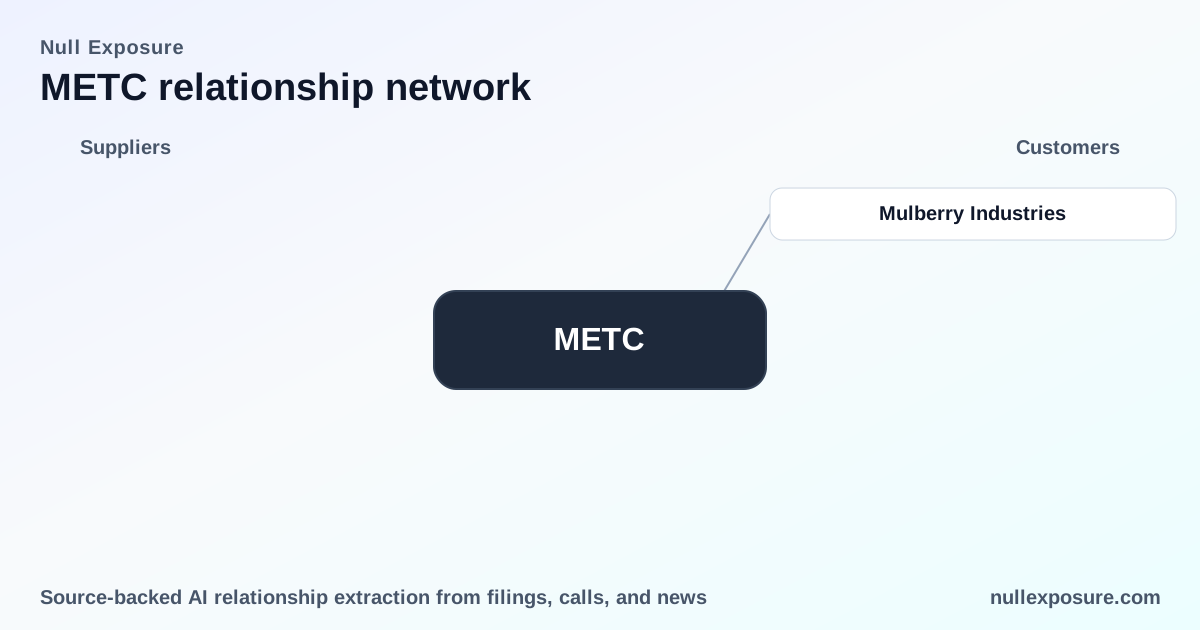
Mulberry Industries — a memorandum of understanding for rare earth oxide offtake
Ramaco entered a memorandum of understanding dated December 23, 2025 with Mulberry Industries to explore potential offtake of rare earth oxides from the Brook Mine, indicating a strategic linkage beyond traditional coal offtake and the potential to monetize Brook Mine geology for value‑added minerals. According to a news report summarizing the development, the MOU is the most relevant recent customer‑facing commercial action in FY2026 for Ramaco. (Source: Sahm Capital news report referencing the Dec 23, 2025 memorandum of understanding; published January 15, 2026.)
That single relationship is the only customer‑side link surfaced in the available results; it represents a potential diversification of product flow from coal into rare earth oxide supply chains if advanced.
What the relationship signals — strategic and commercial implications
The Mulberry MOU signals a strategic tilt: if Ramaco can commercialize rare earth oxide streams from Brook Mine, the company can leverage existing mining infrastructure to access higher‑margin specialty minerals and broaden end markets beyond steel and coke. This would change the company’s customer mix over time, introducing partners with different contracting norms (e.g., longer term, technology or processing off‑take agreements) versus the prevailing short‑term coal trade.
(Source: Sahm Capital reporting on MOU; December 23, 2025 memorandum of understanding.)
Contracting posture, concentration and maturity — how customers transact with METC
Company‑level signals from filings and disclosures establish a clear commercial profile:
- Short‑term and spot orientation: Domestic metallurgical coal contracts are typically 12‑month calendar year contracts with fixed prices and volumes; export sales span spot cargoes through one‑year term contracts, with pricing frequently indexed. This creates earnings sensitivity to near‑term market prices and freight dynamics.
- Export concentration: The firm’s sales are export‑heavy (about two‑thirds of revenue), which exposes Ramaco to freight, port logistics, and international steel demand cycles.
- Materiality and counterparty concentration: Ramaco disclosed that two customers accounted for ~22% of revenue in 2024, making a small number of counterparties material to cash flow even while the broader customer base is dispersed.
- Role and maturity: Ramaco operates as the seller of a core product (metallurgical coal) and is a relatively young pure‑play in the met coal sector in terms of public market life; forward sales and limited multi‑year contracts show commercial maturity measured in short horizons rather than long bilateral partnerships.
(Disclosure sources: company filings and risk‑factor statements for 2023–2024 and related sales disclosures.)
For more detailed relationship mapping and to see how these signals translate into counterparty exposure, NullExposure maintains a structured view of METC customer links: https://nullexposure.com/.
Risk profile for investors and operators
Investors should weigh the following high‑conviction risks and operational constraints:
- Price cyclicality and short contracting terms lead to quarter‑to‑quarter P&L swings; forward coverage is modest relative to annual production.
- Export dependence increases sensitivity to global steel demand, shipping costs, and geopolitical trade frictions.
- Concentration risk from a small number of material customers amplifies downside if one major buyer reduces purchases or experiences a demand shock.
- Regulatory and emissions risk is explicit: changing environmental legislation or emissions interpretation could force operational changes at mines or hamper coal demand from steelmakers, with second‑order effects on customers’ ability to offtake.
These are company‑level constraints derived from public disclosures and risk filings (FY2023–FY2024 periods).
Tactical investor takeaway
- Short‑term contracts and spot sales are core to Ramaco’s go‑to‑market, producing near‑term revenue volatility but preserving flexibility to chase higher spot prices.
- Export markets and a small set of material buyers create both opportunity and concentration risk; monitor shipping costs and steel demand indicators closely.
- The Mulberry MOU is strategically notable: it opens a pathway to diversify product types out of Brook Mine into rare earth oxides, which could materially alter revenue mix and counterparty profiles if commercialized.
For subscribers or asset managers building exposure models, prioritize scenarios that stress export shipping costs and major‑customer demand shocks, and track progress on the Brook‑Mulberry commercial negotiations as a potential structural inflection. For a deeper, continuously updated map of METC customers and counterparty exposures, visit https://nullexposure.com/.
Bold, decisive monitoring of price, export logistics, and the Mulberry engagement will drive the next meaningful reassessment of Ramaco’s commercial risk‑reward profile.