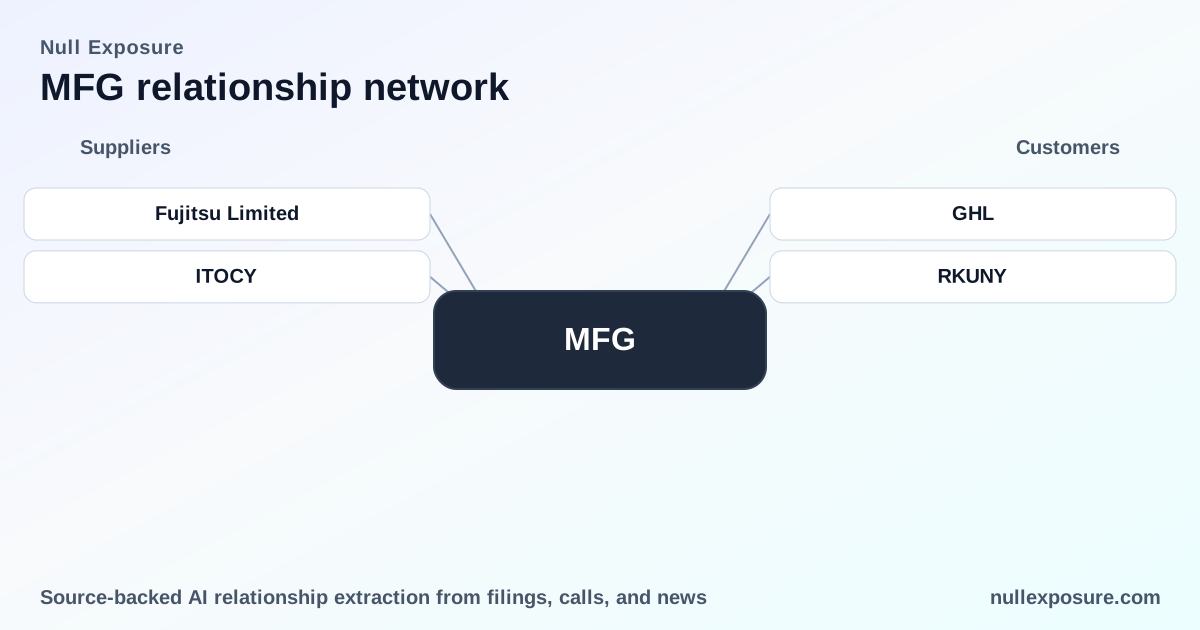
Mizuho Financial Group (MFG): Customer Relationship Map and Strategic Implications
Thesis — Mizuho monetizes a diversified set of capital markets, lending and asset-management services: it underwrites equity and debt offerings, provides secured and unsecured lending facilities, supplies liquidity and structured financing, and invests seed capital through its asset-management arms. Revenue is driven by underwriting and advisory fees, interest income from loan and secured facilities, and recurring asset-management fees; customer relationships range from one-off public-market transactions to multi-year credit and investment partnerships. Explore the coverage at https://nullexposure.com/ for transaction-level detail and tracking.
Why these relationships matter to investors
Mizuho’s role across these customers is transactional and strategic: underwriting and book-running work generate fee income on episodic deals, while lending and structured-finance engagements create higher-margin, longer-duration interest and financing revenue. The breadth of counterparties — from IPO issuers to RMBS counterparties and strategic asset-management partners — reduces single-client concentration but increases operational complexity, as different teams (securities, corporate banking, asset management) execute different contract postures and risk profiles. No explicit policy or constraint entries were captured for the customer scope in this review, which is a company-level signal rather than an omission of specific relationships.
Observed customer relationships (each item from the record)
- ARKO — CSP Daily News (Mar 9, 2026, FY2026): CSP Daily News reported Mizuho serving as a joint book-running manager alongside Capital One Securities for the ARKO Petroleum IPO, underlining Mizuho’s participation in mid‑cap retail energy capital raises.
- ARKO — CSNews (May 2, 2026, FY2026): CSNews likewise cited Mizuho and Capital One Securities as joint book-running managers in ARKO Petroleum’s IPO, confirming repeated media coverage of Mizuho’s underwriting role.
- ARKO — StockTitan (Mar 9, 2026, FY2025): StockTitan’s press stream noted that Mizuho and Capital One Securities were listed as joint book-runners in ARKO’s registration statement filings, reflecting consistency across filings and newswire summaries.
- GHL — Mizuho Q2 2024 earnings call (2024Q2): Management stated that completing the Greenhill acquisition in December opened synergy and collaboration opportunities, indicating Mizuho’s strategic integration of advisory capabilities into its capital markets franchise.
- Greenhill — Mizuho Q2 2024 earnings call (2024Q2): The earnings transcript repeated that the Greenhill acquisition provides new collaborative opportunities, signaling that advisory revenue streams and cross-selling are active priorities.
- GVCI (Green Visor) — Yahoo Finance (FY2021): Yahoo Finance reported that Mizuho Securities USA LLC acted as the sole underwriter on a Green Visor offering, demonstrating Mizuho’s role as lead underwriter in specialized fintech financings.
- ARKO — GlobeNewswire (Dec 2025, FY2025): GlobeNewswire’s registration release again listed Mizuho and Capital One Securities as joint book-running managers, reinforcing Mizuho’s underwriting relationship with ARKO across press releases.
- APC (ARKO Petroleum Corp) — GlobeNewswire (Feb 17, 2026, FY2026): GlobeNewswire announced closing of the APC IPO with Mizuho and Capital One acting as joint book-runners, confirming deal execution through to closing.
- SPARX Asset Management — Hubbis (May 2026, FY2026): Hubbis reported that Mizuho provided seed capital for SPARX AM’s Indian equity investments and will collaborate with Asset Management One, indicating Mizuho’s strategic capital allocation to grow product capabilities.
- PCVX (Vaxcyte) — QuiverQuant (FY2026): QuiverQuant listed Mizuho as a book-runner on a $632.5 million public offering, showing Mizuho’s involvement in large biotech equity raises.
- LFS (Leifras) — SahmCapital (Dec 2025, FY2025): SahmCapital reported a ¥2.5 billion commitment line with Chikuho Bank and Mizuho Bank to support Leifras’ operations, evidencing Mizuho’s credit facility provision to growth-stage corporates.
- ARKO — StockTitan (Mar 9, 2026, FY2026): StockTitan’s pricing notice reiterated Mizuho’s joint book-running role on ARKO Petroleum’s IPO, matching other wire coverage of the transaction.
- CRVS (Corvus Pharmaceuticals) — StockTitan (Mar 9, 2026, FY2026): StockTitan reported Mizuho acting as bookrunner for an upsized public offering, another example of Mizuho’s syndicate activity in pharma capital markets.
- RDZN (Roadzen) — The Globe and Mail (FY2026): The Globe and Mail noted an agreement in principle to extend Roadzen’s $11.5 million senior secured debt facility with Mizuho Securities USA, LLC to mid‑2027, illustrating Mizuho’s role as a secured creditor in venture-to-growth financings.
- AIRO — TradingCalendar (FY2025): TradingCalendar listed Mizuho among the lead underwriters on AIRO’s IPO, showing repeated participation alongside regional boutique and international banks.
- RKUNY (Rakuten) — Mizuho Q2 2024 earnings call (2024Q2): The earnings call referenced growth investments in Rakuten and Rakuten Card, indicating Mizuho’s equity and strategic investments outside pure underwriting.
- ARKO — Manila Times (Feb 3, 2026, FY2026): Manila Times’ press relay also listed Mizuho and Capital One Securities as joint book-running managers, reflecting broad press coverage across wire services.
- SPARX Asset Management — MarketScreener (May 2026, FY2026): MarketScreener summarized Mizuho’s seed capital and collaboration with Asset Management One and SPARX to boost Indian equity product capabilities, corroborating the strategic asset-management initiative.
- ASMB (Assembly Biosciences) — Mintz (FY2025): Mintz reported that Mizuho acted as a book-running manager on Assembly’s underwritten offering, underscoring repeat participation in biotech syndicates.
- ARKO — QuiverQuant (Mar 2026, FY2026): QuiverQuant reported the ARKO roadshow and underwriter list, again naming Mizuho as joint book-runner, which confirms marketing and distribution activity.
- ARKO — QuiverQuant (Mar 2026, FY2026): A QuiverQuant pricing notice confirmed ARKO Petroleum’s IPO price and listed Mizuho as joint book-runner, completing the deal narrative across sources.
- NREF-P-A (NexPoint Real Estate Finance) — The Globe and Mail (Apr 29, 2026, FY2026): The Globe and Mail reported a $375 million senior secured term loan facility with Mizuho Capital Markets LLC, secured by investment assets and maturing in 2029, demonstrating Mizuho’s structured real estate lending.
- AIRO — RenaissanceCapital (FY2025): RenaissanceCapital’s IPO center listed Mizuho Securities as a joint bookrunner for AIRO’s $75 million IPO, aligning with other IPO disclosures.
- ARKO — StockTitan (Mar 9, 2026, FY2026): StockTitan’s launch notice again shows Mizuho in the book-running syndicate for ARKO Petroleum, reflecting multiple wire repetitions of the same underwriting engagement.
- ARKO — CSP Daily News (Mar 9, 2026, FY2026): CSP’s launch coverage repeated Mizuho’s joint book-running role for ARKO Petroleum, adding to the cluster of corroborating notices.
- CRVS — StockTitan (Mar 9, 2026, FY2026): StockTitan’s pricing report reiterated Mizuho as bookrunner on Corvus’ upsized offering, attesting to deal execution continuity.
- APC — Investing.com (May 2, 2026, FY2026): Investing.com confirmed Mizuho and Capital One Securities acted as joint book-running managers on APC’s $200 million IPO, completing external market confirmation of the transaction.
- Rakuten Card — Mizuho Q2 2024 earnings call (2024Q2): The call included questions on collaboration with Rakuten Card as a path to profitability, highlighting cross-business investment and partnership potential.
- NREF (NexPoint) — InsiderMonkey (FY2026): InsiderMonkey noted a re-REMIC transaction with Mizuho where NREF sold a B piece and purchased a horizontal risk retention tranche, signaling Mizuho’s engagement in structured mortgage and securitization markets.
- ORC (Orchid Island Capital) — The Globe and Mail (FY2026): The Globe and Mail listed Mizuho Securities USA LLC among holders/traders in ORC’s RMBS portfolio disclosures, indicating ongoing securities-market intermediation.
- ARKO — GlobeNewswire (Feb 12, 2026, FY2026): GlobeNewswire’s pricing release again listed Mizuho as joint book-runner on ARKO Petroleum’s IPO, mirroring other official press releases.
- ORC — QuiverQuant (FY2025): QuiverQuant’s dividend notice tied Mizuho Securities USA LLC to holdings in ORC’s portfolio listings, a transactional disclosure of securities positions.
- RLMD (Relmada) — GlobeNewswire (FY2025): GlobeNewswire reported Mizuho acting as book-runner on Relmada’s underwritten offering, reinforcing Mizuho’s biopharma syndicate activity.
- IMMX (Immix Biopharma) — SahmCapital (Dec 2025, FY2025): SahmCapital disclosed that Citizens Capital Markets and Mizuho acted as co-managers on Immix’s upsized offering, showing Mizuho’s co-managering roles on small-cap equity raises.
Investment implications and risk checklist
- Underwriting and syndicate fees are a consistent revenue driver. Repeated book-running and co-manager roles across ARKO, PCVX, CRVS, ASMB, RLMD and others signal sustained capital markets fee activity.
- Lending and structured finance provide durable spread revenue. Facilities and term loans with NexPoint, Leifras, and Roadzen plus RMBS/re-REMIC transactions show Mizuho’s credit and structured-finance footprint.
- Asset-management seed capital indicates strategic product development. Seed investment in SPARX’s Indian equity efforts and cross-firm collaboration with Asset Management One point to fee-growth initiatives beyond transaction banking.
- Concentration risk is moderate but present in deal flow clusters. Multiple press items around the ARKO/APC transactions illustrate deal-clustering in specific periods and sectors, which can compress fee volatility.
- Operational complexity and counterparty credit are material considerations. Execution across underwriting, secured lending and securitization requires cross-functional controls; monitoring counterparty credit and syndicate exposure is essential for downside protection.
For transaction-level tracking and a continuously updated relationship feed, visit https://nullexposure.com/ and review the MFG customer coverage.
Bottom line: Mizuho’s customer relationships combine episodic capital-markets fee generation with longer-duration lending and strategic asset-management allocations, creating a balanced but operationally intricate revenue mix that investors should monitor by deal type and counterparty concentration.