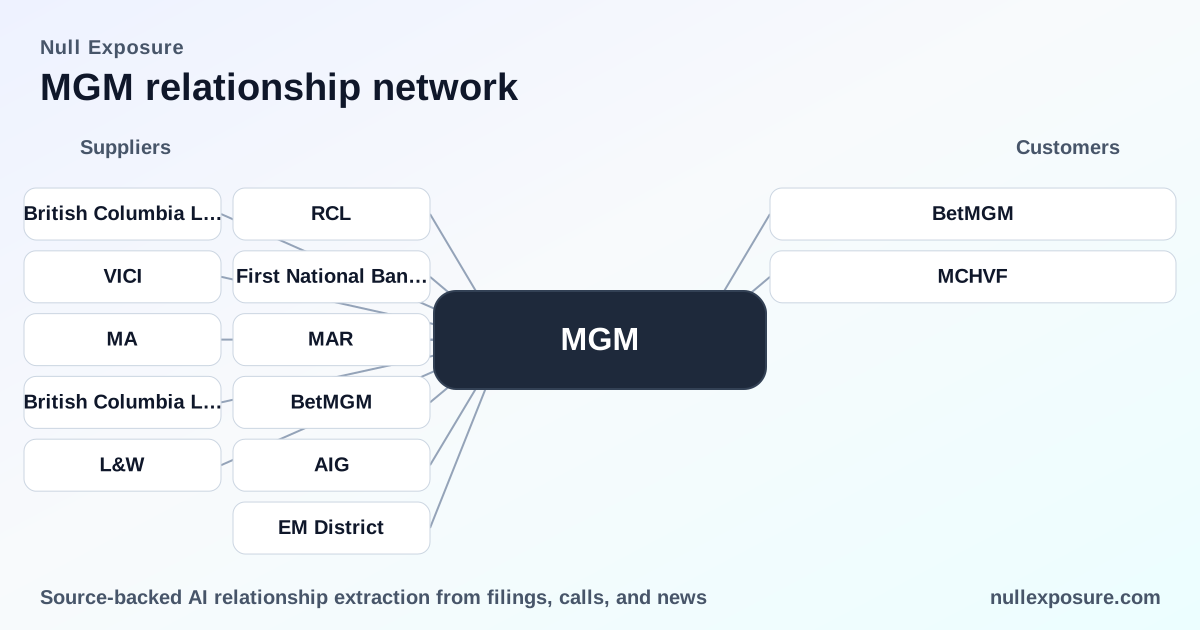
MGM Resorts: customer relationships that drive cash flow and brand leverage
MGM Resorts International operates destination resorts and monetizes through integrated gaming, hotel, food & beverage, entertainment and digital gaming businesses; revenue is generated from direct casino operations, long-term property leases, branding/licensing fees, and digital wagering partnerships including BetMGM. Investors should view MGM as a platform business that converts real estate and brand assets into recurring lease income and fee revenue while retaining operating exposure through select assets and digital ventures. For a closer look at how partner dynamics feed MGM’s revenue mix, visit https://nullexposure.com/.
Why partner relationships matter for MGM’s economics
MGM’s operating model blends asset ownership, third‑party leasing, and brand/licensing relationships. That structure produces a mix of material, recurrent cash flows (leases and licensing) and operating volatility (high‑end gaming customers and property performance). Contracts range from multi‑year leases to strategic exclusivity for digital sports betting, and the balance between owned operations and fee streams is central to valuation and risk assessment.
- Contracting posture: long-term leases and licensing agreements create steady revenue lines; selective asset sales transfer operational risk while preserving recurring fees.
- Concentration & criticality: Las Vegas Strip operations and premium gaming customers generate a disproportionate share of lease and operating income, making certain counterparty and geographic exposures economically important.
- Segment maturity: core resort and gaming services are mature, while digital wagering and international branding/licensing are growth levers with higher margin profiles.
How relationships show up in the field: the roster you need to know
Below I summarize every partner relationship surfaced in the records and what each means for MGM’s revenue and risk profile.
playAWARDS / Playstudios (MYPS)
MGM participates in playAWARDS through a partnership with Playstudios that integrates rewards and promotional programs across properties, contributing to guest acquisition and loyalty economics. According to a Playstudios press release (BizWire, 2024–2023 filings referenced in 2026 notices), playAWARDS lists MGM Resorts among its partners, underscoring cross‑promotional value between digital reward platforms and on‑property spend.
VICI Properties (VICI)
VICI’s 2024 Form 10‑K shows that properties on the Las Vegas Strip generated roughly 45–49% of VICI’s lease revenues across recent years, reflecting heavy Strip concentration; MGM is a major tenant in that geography and thus connected to VICI’s lease economics. VICI’s filing (FY2024) confirms the Strip’s outsized contribution to lease revenue and the importance of long-term tenant relationships.
Clairvest Group (Clairvest / CVG)
MGM completed an all‑cash sale of operations at MGM Northfield Park to private equity funds managed by Clairvest for $546 million, transferring operational control while generating liquidity for MGM. Multiple news outlets (ReadWrite, YogoNet, GamblingNews — May 2026) reported the closing of the Northfield Park transaction and subsequent lease arrangements noted by VICI in Q1 filings.
Ark Restaurants (ARKR)
Ark Restaurants signed a lease with MGM for the New York‑New York property, demonstrating MGM’s role as a landlord to third‑party operators in its resorts and the conversion of in‑house restaurant operations to tenant models. Management commentary in Ark Restaurants’ Q1 2026 earnings call transcript referenced a lease signed “a couple of years ago” with MGM for New York‑New York (Earnings call transcript, May 2026).
BetMGM
BetMGM holds exclusive access to MGM’s U.S. land‑based and online sports betting, major tournament poker, and online gaming businesses, providing MGM with fee and revenue‑share upside from digital wagering while centralizing customer acquisition across channels. MGM’s investor release (Feb 26, 2026) explicitly states BetMGM’s exclusivity for MGM’s U.S. sports betting and online gaming operations.
Century Casinos (CNTY)
Century Casinos partnered with BetMGM under a Missouri license to operate an online and mobile sportsbook, illustrating how MGM’s BetMGM platform enables third‑party licensees to launch wagering under local regulatory frameworks. A Yogonet report (Nov 2025) documented Century’s May 2025 deal to use BetMGM’s platform in Missouri.
RE/MAX (RMAX)
RE/MAX’s global R4 conference is scheduled at the MGM Grand Hotel & Casino, highlighting MGM’s asset utility as a major events and convention venue and the recurring revenue from large third‑party meetings and hospitality bookings. A Finviz news item (FY2026) referenced the R4 event at MGM Grand as RE/MAX’s largest global gathering venue.
Live Nation (LYV)
Live Nation lists shows at MGM venues such as The Theater at MGM National Harbor and The Fillmore Silver Spring, demonstrating MGM’s dependency on third‑party entertainment promoters to fill venue calendars and drive non‑gaming revenue. NBC Washington coverage (FY2026) included MGM venues in Live Nation’s tour listings.
MGM China (MCHVF)
MGM’s Macau affiliate increased branding license fees to the U.S. parent in early 2026, producing an incremental $23 million of intercompany branding fee revenue in 1Q26 and reflecting a sharpened monetization of international brand rights. Reports and market commentary (CDCGaming, Finterra — early 2026) document the licensing rate increase from roughly 1.75% to 3.5% of revenue and the consequent revenue lift to the parent.
What these relationships imply for investors
- Asset‑light monetization works: sales of operating businesses (Northfield Park) and elevated licensing fees (MGM China) show MGM’s ability to convert operations into cash and recurring fees while retaining brand exposure. That reduces capital intensity and stabilizes cash flow.
- Concentration risk is real: Las Vegas Strip leases and a reliance on high‑end gaming customers create revenue concentration and outcome sensitivity to tourism cycles; VICI’s 10‑K quantifies Strip exposure and underscores landlord dependency.
- Digital exclusivity is strategic: BetMGM’s exclusive status across MGM’s U.S. operations is a strategic lever that captures online wagering upside and cross‑sells resort customers into digital wallets—an important retention and margin driver.
- Event and F&B partnerships de‑risk operations: third‑party operators and promoters (Ark Restaurants, Live Nation, RE/MAX events) convert fixed cost venues into contracted revenue streams and broaden non‑gaming income, smoothing volatility.
Constraints and company‑level signals you should factor in
- Counterparty mix: MGM documents significant exposure to individual high‑end gaming customers; credit controls for markers and concentrated customer behavior are operational realities affecting short‑term cash collection.
- Geographic exposures: material revenue is split across North America and APAC (Macau) with US ~$12.4bn and China ~$4.46bn in 2025 on the company’s regional revenue presentation—this creates correlated geopolitical and tourism risks.
- Global digital reach: MGM Digital (consolidated LeoVegas) operates internationally, primarily in Europe and Brazil, indicating a diversified but complex regulatory footprint.
- Materiality and segment profile: gaming, hospitality and digital services are the core services segments, and high‑end customers generate meaningful operating income swings, making top‑line stability dependent on both mass and premium demand.
Bottom line and next steps
MGM’s partner ecosystem—leases with institutional landlords, exclusive wagering via BetMGM, international licensing with MGM China, and operator/promoter relationships—translates brand strength into recurring fee streams while enabling selective asset rationalization. Investors should evaluate MGM on the combined metrics of lease and licensing cash flows, exposure to Las Vegas Strip concentration, and digital wagering upside through BetMGM. For comprehensive partner intelligence and to monitor changes in these relationships, see https://nullexposure.com/.
Key takeaway: MGM’s balance between owned operations and third‑party relationships provides predictable fee income and optionality, but tourism concentration and high‑end customer dependence remain primary risk levers.