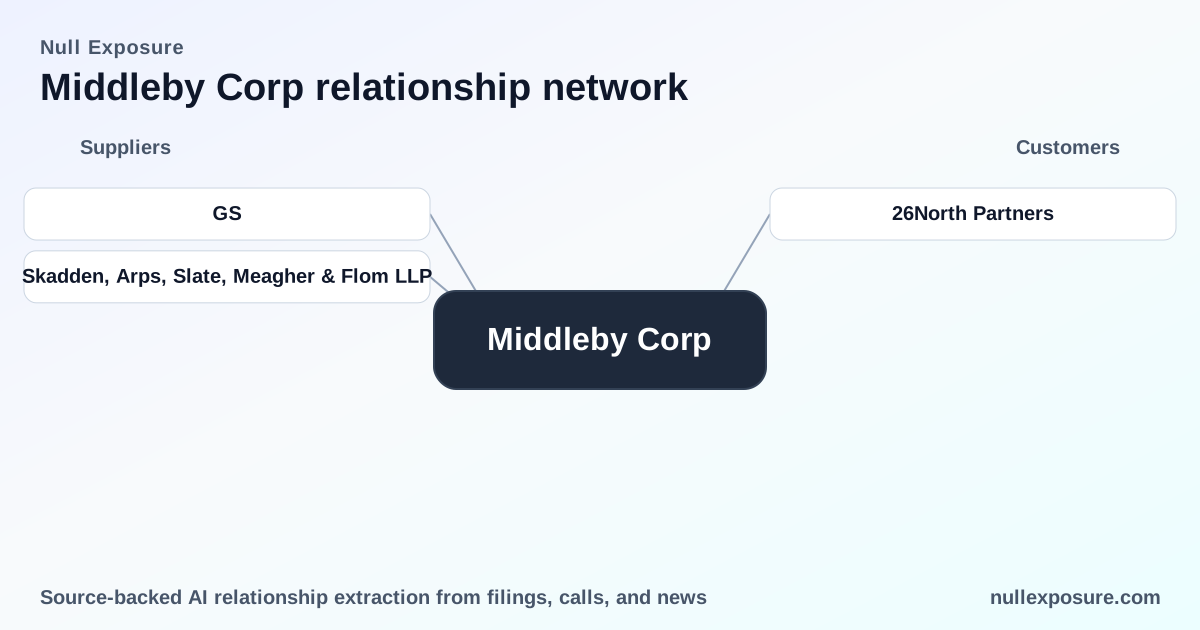
Middleby Corp (MIDD): Customer relationships, operating posture, and what investors should price in
Middleby is a manufacturer and distributor of commercial foodservice, food processing and premium residential kitchen equipment that monetizes through equipment sales, long-term contractual manufacturing programs, and aftermarket service and parts. The business combines capital equipment sales with installed-base service economics and global distribution, creating a mix of episodic high-value transactions and recurring service revenue. For investors, the key question is how recent portfolio moves, large enterprise customers and geographic exposure change cash generation and margin durability. Learn more at https://nullexposure.com/.
How Middleby actually gets paid — an investor’s view of the operating model
Middleby sells hardware (ovens, conveyors, refrigeration, TurboChef automation) and complements those sales with installation, warranty work and IoT-enabled service offerings. Revenue recognition includes long-term contracts—the company recognizes revenue over time for equipment manufactured under multi-stage contracts—so booked orders and backlog are meaningful leading indicators of future cash flow. The customer base is globally diversified across North America, EMEA, APAC and LATAM; sales flow through a mix of direct channels and independent dealers and distributors.
Several company-level signals define the business model and risk profile:
- Contracting posture: Long-term manufacturing contracts exist in parts of the portfolio and revenue for those programs is recognized over time, indicating multi-year delivery horizons and manufacturing exposure rather than purely spot sales.
- Counterparty concentration: Large multinational restaurant chains and institutional customers are material to results, but the company reports that no single customer accounts for more than 10% of net sales, limiting single-counterparty concentration risk.
- Criticality and maturity: Equipment is mission-critical to restaurant and processing customers, supporting durable aftermarket service revenue and replacement cycles; the installed base supports higher-margin service and parts.
- Geographic breadth: The company reports material revenue from North America, EMEA, APAC and Latin America—global distribution reduces market concentration but increases exposure to FX and regional cyclicality.
- Segment mix: Middleby combines hardware, manufacturing services, software/IoT solutions and post-sale services; this hybrid model balances capital intensity with recurring aftermarket economics.
Active and cited customer relationships that matter
Below are the relationships surfaced in the recent coverage, with a concise plain-English take and the original source context.
26North Partners — Residential Kitchen divestiture (news, March 10, 2026)
Middleby is selling a significant portion of its Residential Kitchen segment to 26North Partners in a transaction valuing the business at $885 million, signaling a strategic portfolio reshuffle and a near-term cash inflow that reduces exposure to the premium residential channel. StocksToTrade reported this transaction on March 10, 2026 and characterized the deal as a major divestiture of the residential unit.
EAT / Brinker International — TurboChef automation cited (news, March 9, 2026)
Analyst coverage noted that Brinker’s North of Six initiative includes kitchen automation (TurboChef rollout) as a lever for throughput and labor efficiency, implicitly highlighting Middleby’s product footprint in large casual-dining chains. A Simply Wall St article dated March 9, 2026 described TurboChef adoption and process improvements as contributors to sustained operating margin gains.
EAT / Brinker International — follow-up emphasis on process gains (news, May 2, 2026)
A later Simply Wall St piece on May 2, 2026 reiterated that TurboChef rollout, labor optimization and process improvements are expected to drive ongoing throughput gains and cost reduction, which reinforces Middleby’s role as a supplier of automation that improves customer unit economics and operating margins.
What these relationships imply for revenue, margins and risk
The 26North transaction is material for portfolio composition: selling a large residential block for $885 million converts part of the firm from equipment and residential aftermarket exposure into liquidity and potentially allows redeployment into higher-margin commercial programs or debt reduction. For investors, that changes the revenue mix and may improve margin visibility if proceeds are used to focus on foodservice and processing segments.
The Brinker references demonstrate product-level commercialization: TurboChef and other kitchen automation products are being incorporated into chain-level efficiency programs. That is important because automation drives higher utilization of installed equipment and increases the economic value of Middleby’s aftermarket services.
Operationally, expect the following dynamics:
- Backlog and long-term contracts matter because some revenue is recognized over the production timeline; order flow is a leading indicator of near-term revenue.
- Aftermarket services are a stabilizer—installation, warranty work and parts sales smooth revenue between large equipment cycles.
- Geographic diversification reduces single-region risk, but the company remains exposed to restaurant-industry cycles and capex decisions by large chains and institutions.
Balance of opportunity and downside for investors
Key strengths:
- Global reach and scale across commercial and processing markets.
- Installed-base economics that create recurring service margins.
- Strategic product placements (for example TurboChef in major chains) that increase share of wallet.
Key risks:
- Cyclicality tied to restaurant and processing capital expenditure; revenue will ebb and flow with equipment capex cycles.
- Execution risk on divestiture proceeds—how the company deploys $885M from the 26North sale will determine whether margin and return profiles improve.
- Regional exposures (NA and EMEA are large contributors) mean macro slowdown in key markets could pressure orders.
Bottom line: what investors should price in now
Middleby is a capital-equipment manufacturer with recurring aftermarket economics and significant exposure to large enterprise restaurant chains and institutions; the sale of the residential kitchen unit to 26North repositions the company toward its core commercial foodservice and processing businesses while generating substantial liquidity. Brinker’s adoption of TurboChef-style automation confirms the revenue opportunity embedded in chain-level efficiency programs, underscoring the strategic value of Middleby’s product portfolio. For detailed relationship mapping and further signals on customer exposures, visit https://nullexposure.com/.
For institutional readers evaluating counterparty risk and revenue durability, the takeaways are clear: model long-term contract recognition, emphasize installed-base service revenue, and treat disposals as balance-sheet events that materially affect future growth and margin assumptions.