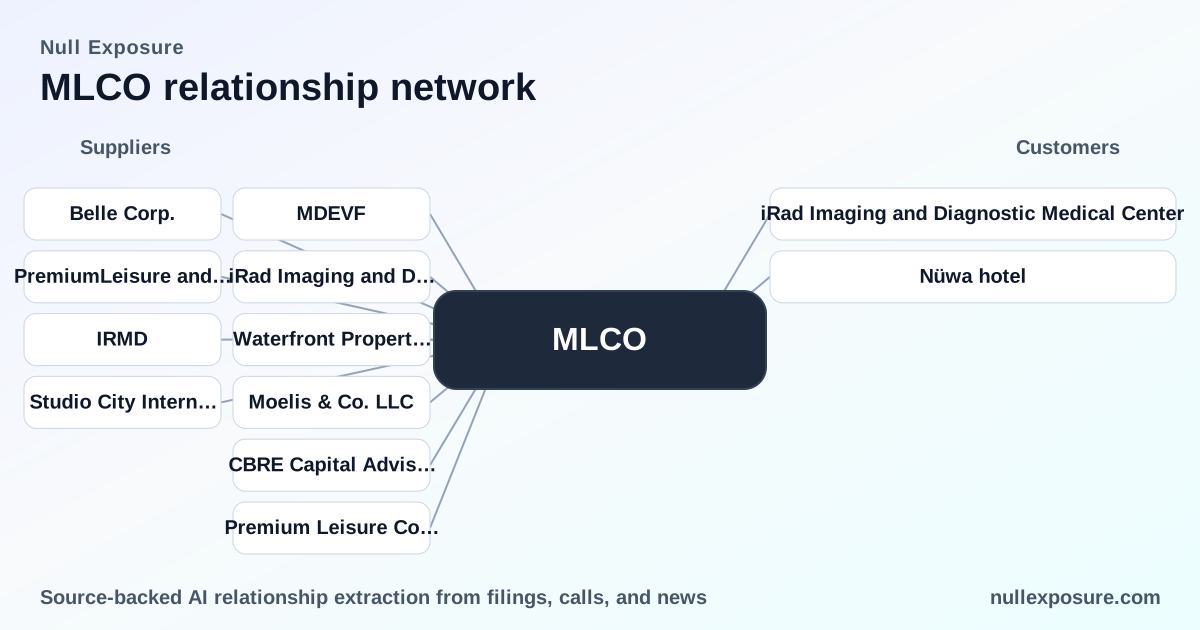
Melco Resorts: customer links that shape near-term cash flow and operational optionality
Melco Resorts & Entertainment operates integrated resort destinations that monetize through gaming revenues, hotel rooms, retail and F&B, and fees from third-party operations running on Melco-controlled property; its customer relationships are therefore not only revenue lines but levers of cash conversion and operating flexibility. Investors should view Melco’s customer arrangements as a mix of fixed-fee leasing/management contracts and intercompany service charges that reduce operating leverage while preserving gross visitation upside. For a strategic gateway into how those contracts influence earnings quality, see Nillexposure’s research hub: https://nullexposure.com/.
How Melco’s commercial model converts foot traffic into predictable cash
Melco’s core business converts visitor demand into multiple monetizable streams: gaming tables and electronic gaming, hotel room revenue, retail and F&B concessions, and third‑party operators paying rent or management fees to Melco’s resort platforms. The company’s public metrics show material scale — roughly $5.3 billion in trailing revenues and $1.24 billion in EBITDA on the latest twelve months — which anchors the capacity to absorb concessions or fixed-fee partnerships without endangering core operations. Contracts that transfer real-estate or equipment risk to partner operators reduce volatility in operating margin while also creating recurring base rental income.
One practical implication for investors: when a partner operates a service on Melco property under a base fee plus turnover fee structure, Melco substitutes operating margin volatility for steadier rent and equipment-use fees — a conservative cash-flow posture that supports capital-intensive resort economics.
Customer relationships that matter (documented sources and plain-English takeaways)
Studio City / MSC — intercompany and shared service charge flows
Melco records intercompany and shared‑service charges between Studio City International Holdings and subsidiaries of Melco, reflecting routine billing for fees and centralized services that flow across the group. According to Studio City International’s unaudited Q2 2025 earnings release on GlobeNewswire, such intercompany charges include fees and shared service charges billed between the reporting company and certain subsidiaries of Melco. A separate recap of Studio City International’s Q3 2025 results amplified that same description in a QuiverQuant summary of the company’s financial results, confirming the recurring nature of intercompany service flows. These arrangements reduce standalone cost volatility at the resort level while concentrating administrative functions within the group (GlobeNewswire Q2 2025; QuiverQuant Q3 2025).
iRad Imaging and Diagnostic Medical Center — concession with base fee plus turnover and future management fees
Melco’s Studio City Retail Services Limited will purchase and install medical equipment for iRad’s private hospital at Studio City, with iRad paying Melco a base monthly fee of MOP$694,981 (approximately US$86,700) covering rent and equipment use, plus a turnover fee of 1.5% of monthly turnover if that exceeds the base, and a management fee beginning in year four. An industry report on AsGam covering Melco’s non‑gaming concession commitments describes the structure and commercial economics of this agreement, highlighting how Melco captures a hybrid revenue mix: guaranteed cash via base rent and upside via turnover and eventual management fees (AsGam, September 17, 2025).
Nüwa hotel — management services and on‑going hotel operations revenue
Melco provides management services to the Nüwa hotel at City of Dreams Sri Lanka, which opened to the public on July 15, 2025; the relationship was disclosed in Melco’s unaudited fourth‑quarter 2025 earnings release covered by ManilaTimes/GlobalNewswire. This arrangement positions Melco to monetize hotel operations through management and operating fees rather than direct ownership, accelerating brand roll‑out while limiting capital deployed in early market stages (ManilaTimes / GlobeNewswire, Q4 2025 disclosure).
What these relationships reveal about Melco’s operating posture
These documented customer ties show a deliberate operating posture: Melco favors contractual structures that trade direct operating risk for recurring fee revenue and group-level service cost recovery. Taken together, the relationships demonstrate:
- Contracting posture: Emphasis on base fees and formalized intercompany charging reduces earnings volatility tied to single-site operating performance.
- Revenue concentration and diversification: Core gaming revenue remains principal, but third‑party concessions (medical services, hotel management) diversify cash flow and reduce single-source exposure.
- Criticality: Partnerships that run essential guest services (hotel management, medical facility on-site) are strategically important to the guest experience and therefore operationally critical.
- Maturity and scalability: The mix of intercompany charges and external concessions suggests a mature platform leveraging centralized services and replicable commercial frameworks for new properties.
These are company‑level signals and are not assigned to any single partner unless a contract excerpt explicitly names it.
Investment implications and risk factors
- Cash stability improves through contracted fees. Base rent and equipment‑use fees from third parties create a floor under certain non‑gaming revenues and reduce short‑term EBITDA volatility relative to pure operating models.
- Earnings still sensitive to overall visitation and gaming cycles. Even with increased fee-based revenue, Melco’s profitability remains linked to macro travel and gaming demand; the fee structures mitigate but do not eliminate cyclicality.
- Operational complexity increases. Managing intercompany billing and hybrid third‑party concessions requires governance and robust transfer‑pricing discipline; failures here affect reported margins and minority partner relations.
- Geographic and partner diversification is constructive. Expanding management and concession models into new jurisdictions accelerates brand reach while limiting capital intensity, but it also exposes Melco to local regulatory and partner-credit risk.
Key takeaway: Melco is shifting a portion of non‑gaming service economics into contractual, fee-based relationships that support recurring cash flows and scalable expansion, while preserving upside exposure to visitor recovery and gaming demand.
Signals investors should track next
- Contract renewals and fee escalators for on‑site concessions, which determine how much of future revenue growth accrues to Melco.
- Intercompany charge trends and allocation methodologies, which affect consolidated margins and free cash flow.
- Performance metrics at partner‑operated services (occupancy for Nüwa, turnover for iRad) that trigger upside fees.
For a concise view of Melco’s evolving partner strategy and how these customer contracts feed into valuation scenarios, visit Nillexposure’s research at https://nullexposure.com/.
Final read
Melco’s customer relationships are a deliberate instrument to de‑risk capital intensity while maintaining exposure to tourism-driven recovery. Investors should value the stability of base fees and intercompany charge recoveries against remaining reliance on gaming and travel cycles — the net is a company that has broadened cash‑flow sources without ceding the core earnings engine.