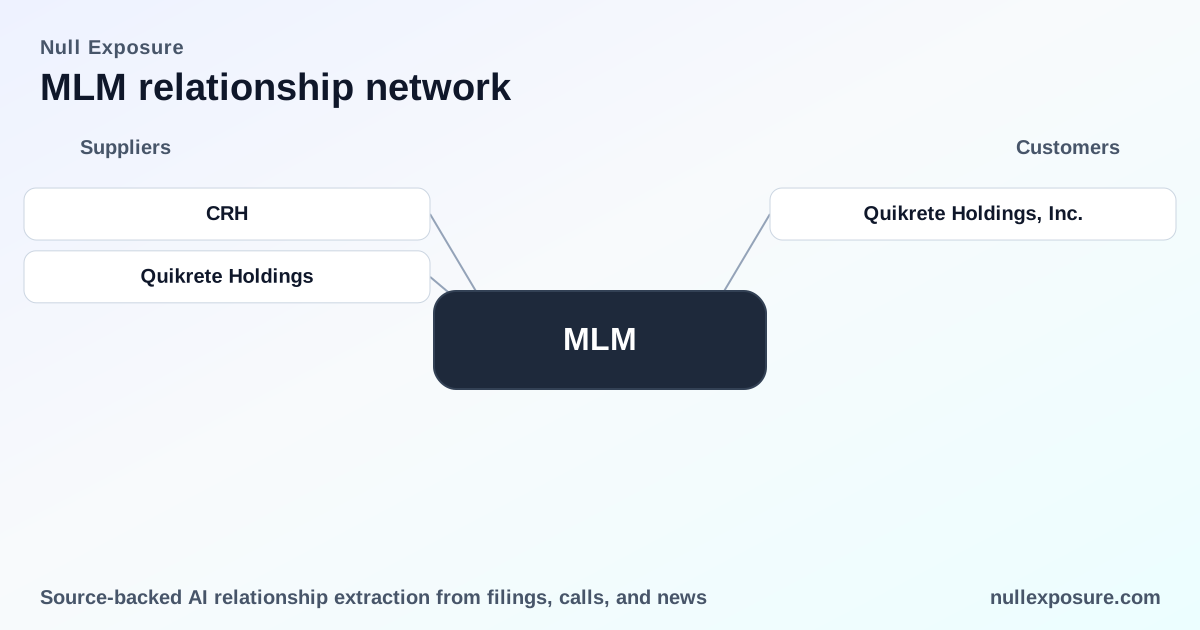
Martin Marietta Materials (MLM): Customer relationships that underpin durable cash flow
Martin Marietta is a vertically integrated supplier of aggregates, cement and specialty lime products that monetizes through a mix of spot product sales, distributed quarry output and multi-year service contracts (paving, ready-mix, and bulk materials logistics). The company captures margin via asset control (390 quarries and distribution yards across North America and the Caribbean), selective long-term contracts with price escalators for infrastructure projects, and opportunistic M&A to consolidate regional supply; investors should value MLM as a cash-generative materials operator whose revenue mix is predominantly spot-driven but buttressed by recurring service contracts and targeted strategic transactions. For a quick portfolio view and counterparty mapping visit https://nullexposure.com/.
Business model in plain English: how contracts and customers drive cash flow
Martin Marietta sells crushed stone, sand, gravel and related building products primarily to the private construction market while operating an adjacent services business (paving and ready-mix). Revenue arises from three distinct channels: point-in-time product sales (the bulk of aggregates), multi-period service contracts (paving recognized over time), and specialty chemical/lime exports. That mix produces predictable seasonality but also sensitivity to near-term construction cycles.
- Contracting posture: a hybrid of spot and multi-year. The company routinely sells aggregates on receipt of orders, but it also executes multi-year infrastructure contracts that include pricing escalators, and paving agreements that extend up to two years and are recognized under percentage-of-completion accounting. The firm reports unsatisfied performance obligations that can extend up to 36 months, signaling measurable recurring revenue from services.
- Concentration and criticality: Martin Marietta reports that no single customer or small group is material to the consolidated business, yet the Building Materials segment is the dominant profit and revenue engine—an internal concentration that increases the company's exposure to construction demand while reducing counterparty concentration risk.
- Geography and maturity: Operations are North America-centric with global reach for specialized magnesia products. Aggregates and heavy materials are low-tech, capital-intensive businesses with mature cashflow profiles and localized pricing power where quarry ownership creates durable competitive advantage.
Material customer and partner relationships investors should note
Port Arthur LNG — a construction customer on large-scale energy infrastructure
Martin Marietta is actively supplying aggregates to the Port Arthur LNG project, reflecting participation in large energy-related public works that require heavy materials logistics and steady volumes. According to the Q1 2026 earnings call transcript published by Benzinga (May 2026), the company cited Port Arthur LNG among ongoing projects it is supporting (https://www.benzinga.com/insights/news/26/04/52178474/transcript-martin-marietta-materials-q1-2026-earnings-conference-call).
Quikrete Holdings — a transformational asset exchange that repositions regional footprints
Martin Marietta completed an asset exchange with Quikrete that materially reshaped asset portfolios: Martin Marietta acquired aggregates operations producing approximately 20 million tons annually and received $450 million in cash, while Quikrete took Martin Marietta’s Midlothian cement plant, related terminals and certain ready-mixed concrete assets in Texas. The transaction transfers production capacity and cash between the companies and reduces Martin Marietta’s exposure to cement operations in exchange for scale in aggregates (news coverage and company release, March–May 2026). See the GlobeNewswire press release (Mar 10, 2026) and subsequent reporting by Investing.com (May 2026) for transaction detail (https://www.globenewswire.com/news-release/2026/02/23/3243067/0/en/martin-marietta-completes-asset-exchange-with-quikrete-holdings-inc.html; https://m.za.investing.com/news/stock-market-news/martin-marietta-names-chris-samborski-as-chief-operating-officer-93CH-4233765?ampMode=1).
(Note: the GlobeNewswire release and contemporaneous press commentary describe the same exchange; both sources confirm the asset swap and cash consideration.)
What these relationships reveal about strategic posture and risk
The Port Arthur LNG engagement and the Quikrete asset exchange together illustrate Martin Marietta’s dual strategy: participate in long-duration infrastructure projects that stabilize volumes while using M&A to concentrate downstream aggregate supply. That strategy produces several investor-relevant dynamics:
- Contracting mix stabilizes top-line volatility. Spot product sales dominate near-term revenue, but multi-year infrastructure and paving contracts (with pricing escalators) and backlog extending up to three years improve revenue visibility and margin protection.
- Asset swaps reduce operational redundancy and sharpen regional pricing power. The Quikrete transaction increases Martin Marietta’s aggregate scale in certain geographies while divesting cement assets that are less central to its core aggregates franchise.
- Low counterparty concentration but high end-market cyclicality. Management’s disclosure that no single customer is material lowers counterparty default risk, but the company remains cyclically exposed to public and private construction demand—a classic tradeoff for building-materials operators.
- Geographic mix matters. While aggregates are largely North American, specialty magnesia products have global reach—diversifying demand drivers but adding logistics and FX sensitivity in modest measure.
Investor implications and risk factors to watch
- Demand sensitivity: The business is levered to the construction cycle; infrastructure spending ramps provide upside, while a pullback in nonresidential or residential construction compresses volumes quickly because a large share of product is sold at point-of-sale.
- Margin resilience from asset control: Quarry ownership confers localized pricing power, making margins more defensible than pure commodity sellers, but high fixed costs and capital intensity mean downturns hit earnings materially.
- Contract profile reduces near-term revenue volatility: Presence of multi-year contracts and paving services reduces revenue volatility compared with pure spot sellers; unsatisfied performance obligations through 36 months create a measured revenue backlog.
- Transaction execution risk: The Quikrete exchange brings integration and operational shift risk, even as it improves scale where Martin Marietta sees higher return potential.
For a concise counterparty map and scenario analysis that contextualizes these relationship dynamics across the supply chain, visit https://nullexposure.com/.
Bottom line for allocators and operators
Martin Marietta is a capital-intensive, regionally entrenched supplier whose cash generation is anchored by quarry ownership, supplemented by service contracts and selective M&A. The company’s customer relationships—ranging from spot purchases to multi-year infrastructure contracts and strategic asset exchanges—create a balanced revenue mix that reduces single-counterparty risk while leaving the firm exposed to construction cyclicality. Investors should underwrite earnings with an eye to backlog conversion rates, regional price realizations and the impact of recent portfolio shifts like the Quikrete exchange on marginal returns.