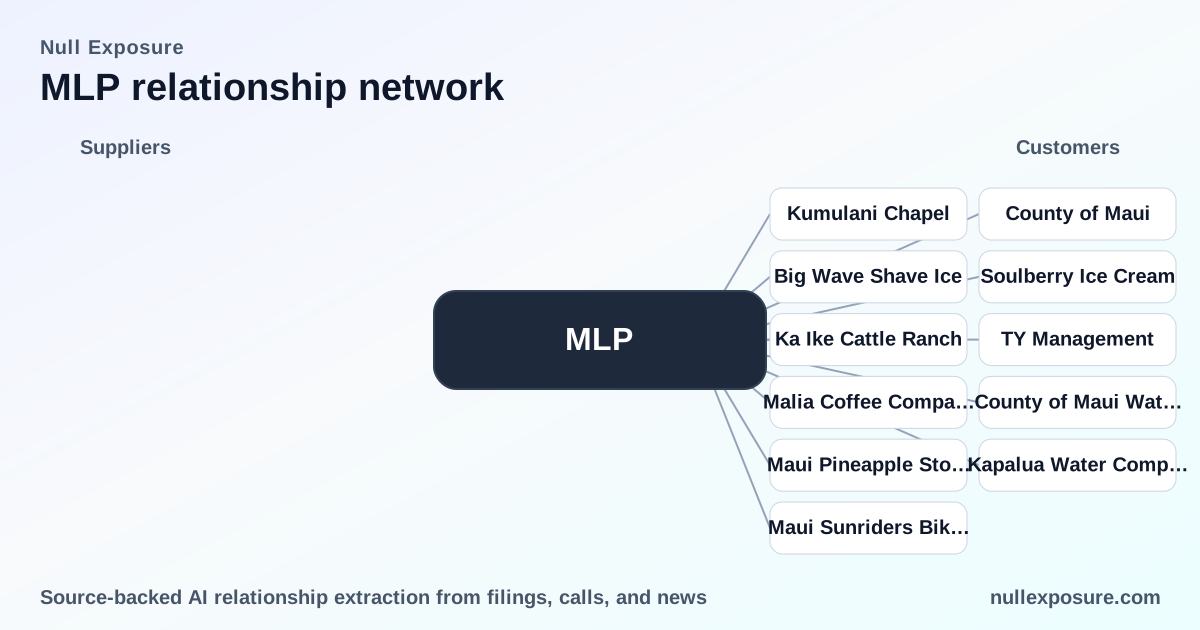
Maui Land & Pineapple (MLP): customer map and commercial exposure
Maui Land & Pineapple monetizes a concentrated real-estate platform: it owns and manages land, commercial buildings and water transmission assets in West and Upcountry Maui, and generates the bulk of cash flow from long-term leasing (restaurants, retail, agriculture and industrial tenants), supplemented by resort amenity fees, trademark licensing royalties and intermittent land sales. For investors, the company functions as a landlord and local infrastructure owner with leasing driving roughly 83% of operating revenue, making tenant mix and government water contracts the primary commercial levers. Learn more about how we assemble customer intelligence at the company level: https://nullexposure.com/
How MLP actually makes money and why customer relationships matter
Maui Land & Pineapple is an owner-operator of real assets in a geographically concentrated market. The operating model is simple and high‑leverage:
- Long-term leases across retail, restaurant, industrial and agricultural users produce predictable minimum rents and percentage rent upside; leases extend into 2048 for many tenants, creating duration on revenue.
- Licensing of trademarks and service marks creates a small recurring royalty stream and occasional lump-sum receipts.
- Water and transmission assets position MLP as a local infrastructure counterparty to the County and other municipal users, adding a quasi‑government revenue line and strategic optionality for asset disposition.
- Land sales and development act as episodic cash generators and portfolio recycling.
These features produce a landlord-like risk profile: high concentration of revenue in leasing, counterparty mix that includes government entities, and a combination of long-term contractual cashflows and one-off development sales. For active investors, assessing tenant stability, lease escalation mechanics, and the regulatory posture of county water customers are the dominant credit and operational questions. If you want a deeper relationship and revenue‑level view, visit our home page: https://nullexposure.com/
Operating constraints and company‑level signals
The public record and company filings reveal structural constraints that shape customer credit risk and revenue durability:
- Contracting posture — long-term leases. The company discloses multi-decade operating leases (through 2048) for commercial and agricultural tenants, with minimum rents, percentage rentals and expense reimbursement — a revenue model with embedded duration and indexed upside.
- Licensing role — licensor and occasional lump-sum royalties. MLP operates as a licensor for trademarks tied to resort amenities and golf operations; the company has recognized straight-line revenue from a $2.0 million single payment royalty.
- Counterparty mix includes government. MLP owns water wells, ditches and transmission systems that serve both private users and the County of Maui — giving the company a strategic relationship with municipal entities.
- Materiality concentrated in Leasing. Leasing accounted for approximately 83% of operating revenues for year-end 2024, while Resort Amenities and Land Development were respectively ~12% and ~5% — making tenant continuity the critical financial driver.
- Relationship role signal. The company explicitly operates as licensor on trademarks used by third parties; licensing is a formalized, if smaller, revenue stream.
Collectively these constraints indicate a mature, landlord-centric business with concentrated revenue and a mix of regulatory and local public-sector exposure.
Who rents and uses MLP assets — itemized customer relationships
Below is a concise, source-linked breakdown of the customer relationships called out in the company’s public mentions. Each entry is a plain-English summary with the citation context and period.
- State of Hawai‘i — MLP incurred $3.376 million of direct costs on a Relief Housing Project that were reimbursed by the State, indicating a reimbursable project relationship with state authorities (company fiscal update, FY2025 GlobeNewswire release, Nov 14, 2025).
- Kumulani Chapel — Kumulani Chapel agreed to purchase more than six acres in Kapalua to establish a permanent campus, reflecting a land sale to a long-standing community institution (news report on MauiNow, Dec 9, 2025).
- Maui Pineapple Store — MLP welcomed the Maui Pineapple Store as a new commercial tenant in Hāliʻimaile, expanding its retail footprint across Upcountry properties (company FY2025 results press release, GlobeNewswire, Nov 14, 2025).
- Maui Sunriders Bike Shop — MLP added Maui Sunriders as a Kapalua tenant, showing tenant diversification into experiential retail and tourism-facing services (company FY2025 results press release, GlobeNewswire, Nov 14, 2025).
- Big Wave Shave Ice — Big Wave Shave Ice opened in Kapalua under a new tenancy agreement, reflecting demand for small F&B tenants on resort land (company FY2025 results press release, GlobeNewswire, Nov 14, 2025).
- Ka Ike Cattle Ranch — A 1,000+ acre lease to Ka Ike Cattle Ranch in West Maui indicates material agricultural/land-lease activity on MLP holdings (company FY2025 results press release, GlobeNewswire, Nov 14, 2025).
- Malia Coffee Company — Malia Coffee Company established a presence in Hāliʻimaile as a commercial tenant, reinforcing Upcountry retail momentum (company FY2025 results press release, GlobeNewswire, Nov 14, 2025).
- Harvest at Kumulani Chapel — MLP entered into a $10 million purchase and sale agreement with Harvest at Kumulani Chapel for a 6.5-acre Kapalua property, showing a nearby nonprofit purchasing land for community use (investing.com summary of SEC filing, FY2026).
- (Duplicate entry) Harvest at Kumulani Chapel — Separate reporting also described the $10 million land sale agreement to Harvest at Kumulani Chapel, corroborating the transaction in FY2026 (MauiNow / investing.com coverage, FY2026).
- Soulberry Ice Cream — Soulberry Ice Cream joined Hāliʻimaile as a local tenant in FY2026, expanding MLP’s mix of community-focused food tenants (MauiNow coverage, Feb 6, 2026).
- County of Maui — The County purchased 51.3 acres from MLP in West Maui for park development, and the County is also a recipient and counterparty for MLP water assets, showing both one-off land sales and ongoing municipal relationships (Maui County announcements and company reporting, FY2022 and FY2025).
- TY Management — TY Management (associated with Yanai) filed claims alleging MLP breached a water-supply agreement tied to golf courses sold earlier, representing a litigation/contract dispute over water obligations (Civil Beat reporting, Sep 2025).
- County of Maui Water Treatment Facility — The West Maui ditch and water infrastructure operated by MLP supply the County Water Treatment Facility and other municipal users, confirming MLP’s role as a local water source (company release on ditch repair, May 2020).
- Kapalua Water Company, Ltd. — Kapalua Water Company is identified as a user of the West Maui ditch water, positioning it as a recurring commercial counterparty for MLP’s water assets (company release on ditch repair, May 2020).
- (Duplicate entries covered under the GlobeNewswire multi-tenant listing) Several tenant entries such as Maui Pineapple Store, Malia Coffee, Maui Sunriders, Big Wave Shave Ice and Ka Ike Cattle Ranch were all listed together in the company’s FY2025 operational summary, reinforcing the tenant additions noted above (company FY2025 results press release, GlobeNewswire, Nov 14, 2025).
Investment implications and risk checklist
- Concentration risk: Leasing drives roughly 83% of operating revenue, so tenant attrition or meaningful rent concessions would hit EBITDA disproportionately.
- Counterparty mix: Exposure to municipal customers for water creates both stability (municipal payments) and political/regulatory risk around asset valuation and transfer.
- Contract maturity: Long-term leases through 2048 provide revenue duration, but they also lock in terms that can lag inflation unless percentage-rent clauses are significant.
- Operational complexity: The portfolio blends retail/resort tenants, agricultural land leases and water systems — each requires a different operating skillset and counterparty management.
- Event risk: Litigation over water agreements (TY Management) and concentrated local economic shocks could materially affect cash flow given geographic concentration.
Bottom line
Maui Land & Pineapple is a landlord-first business with leasing dominance, meaningful government water relationships and a modest licensing business; tenant quality and the terms of municipal water arrangements determine near- to medium-term cash generation. For investors and operators assessing customer credit and commercial durability, focus diligence on lease schedules, percentage rent exposure, the County’s water contracting posture, and any contingent litigation tied to prior asset disposals.
If you want a structured customer relationship extract and portfolio exposure view for diligence or underwriting, start here: https://nullexposure.com/