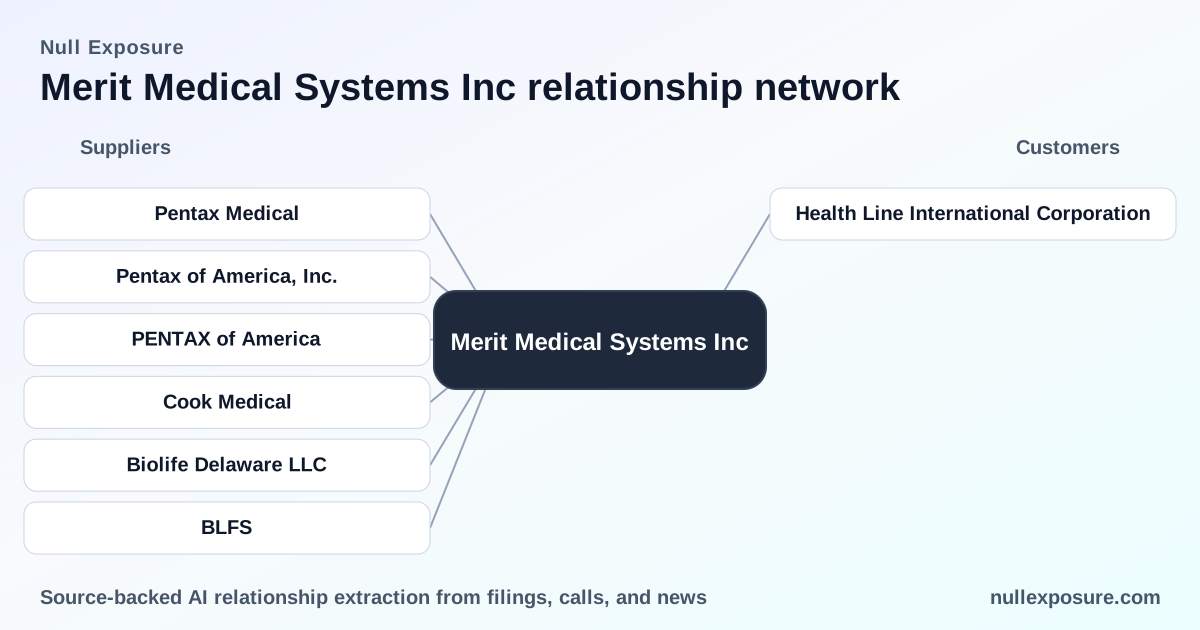
Merit Medical (MMSI): Distribution partnerships and customer flows that shape growth
Merit Medical manufactures disposable devices used across interventional cardiology, radiology, oncology and related specialties and monetizes by selling high-margin disposable products through a mixed direct and partner-distribution model. Revenue derives from direct sales to hospitals and physicians in the U.S., complemented by OEM and distribution relationships that extend global reach and scale—a hybrid operating model that drives recurring consumable revenue while allowing selective portfolio pruning through asset sales. Learn more about coverage and relationship analytics at https://nullexposure.com/.
Quick investor takeaways
- Medtronic is an important commercial channel and OEM customer: distribution agreements and component supply for spine/kyphoplasty products amplify Merit’s addressable end market.
- Asset monetization is active: the Dual Cap product line was sold for $28 million, a signal of portfolio focus and near-term cash crystallization.
- Geographic mix and go-to-market: roughly 59% U.S. / 41% international sales, with direct U.S. coverage and distributor/partner channels internationally—supporting both concentration in the U.S. and global currency exposure.
Relationship roll call: what the sources reported (each result covered)
Medtronic — InsiderMonkey article on distribution agreement (InsiderMonkey, May 3, 2026)
InsiderMonkey reported that on March 24, 2026 Medtronic announced a distribution agreement to offer ViaVerte, a minimally invasive basivertebral nerve ablation system supplied by Merit, formalizing a commercial distribution arrangement. Source: InsiderMonkey article covering the March 24, 2026 press release (https://www.insidermonkey.com/blog/merit-medical-systems-mmsi-acquires-view-point-medical-for-140m-1733566/).
Medtronic — Merit Q1 2026 earnings call transcript mention (InsiderMonkey transcript, May 3, 2026)
In Merit’s Q1 2026 earnings call transcript, Merit’s management confirmed a relationship with Medtronic and characterized Medtronic as an OEM customer, reinforcing that the two companies transact beyond simple reseller activity. Source: Q1 2026 call transcript reported on InsiderMonkey (https://www.insidermonkey.com/blog/merit-medical-systems-inc-nasdaqmmsi-q1-2026-earnings-call-transcript-1752201/).
Medtronic — SahmCapital overview of the ViaVerte deal (SahmCapital, Mar 28, 2026)
SahmCapital summarized Medtronic’s March 24 distribution announcement and explicitly noted the deal extends an existing supply relationship between Merit and Medtronic for spine-related products. Source: SahmCapital commentary, March 28, 2026 (https://www.sahmcapital.com/news/content/the-bull-case-for-merit-medical-systems-mmsi-could-change-following-medtronic-viaverte-distribution-deal-learn-why-2026-03-28).
Medtronic — MedTech Intelligence on product supply for Kyphon devices (MedTechIntelligence, 2026)
MedTechIntelligence reported that Merit supplies Kyphon Xpander inflation syringes and KyphoFlex steerable balloon catheters for Medtronic’s kyphoplasty portfolio, documenting a supplier/OEM role that predates the ViaVerte distribution announcement. Source: MedTechIntelligence article on the Medtronic–Merit agreement (https://medtechintelligence.com/news_article/medtronic-and-merit-medical-systems-enter-into-agreement-to-offer-new-viaverte-basivertebral-nerve-ablation-treatment-for-chronic-lower-back-pain/).
Health Line International Corporation — Marketscreener: Dual Cap assets sale (MarketScreener, Mar 10, 2026)
MarketScreener reported Health Line International completed the acquisition of certain assets relating to Merit’s Dual Cap product line for $28 million, signaling Merit’s active portfolio optimization and cash-generative divestitures. Source: MarketScreener earnings-flash item (https://www.marketscreener.com/news/earnings-flash-mmsi-merit-medical-systems-inc-posts-q4-adjusted-eps-1-04-per-share-vs-factset-ce7e5cdad18df123).
Health Line International Corporation — MarketScreener: earlier asset purchase notice (MarketScreener, FY2025)
A related MarketScreener notice covering the asset purchase agreement referenced the same Dual Cap asset transfer, indicating transaction coverage spanning FY2025–FY2026 reporting windows. Source: MarketScreener asset-purchase article (https://www.marketscreener.com/news/merit-medical-signs-asset-purchase-agreement-with-pentax-medical-to-acquire-c2-cryoballoon-technolog-ce7d5adfdd81f426).
Medtronic — SahmCapital follow-up: broader distribution access (SahmCapital, Apr 10, 2026)
SahmCapital followed up on the Medtronic tie-up and noted Merit broadened its distribution agreement with Medtronic, increasing access to Merit products through Medtronic’s channels—an amplification of commercial reach rather than a simple one-off listing. Source: SahmCapital commentary, April 10, 2026 (https://www.sahmcapital.com/news/content/merit-medical-weighs-growth-potential-of-view-point-deal-and-medtronic-tie-up-2026-04-10).
Medtronic — InsiderMonkey stock roundup referencing March 24 press release (InsiderMonkey, May 3, 2026)
InsiderMonkey’s stock-screen piece reiterated the March 24 Medtronic distribution announcement in a roundup of Nasdaq names, underscoring market attention to the channel development. Source: InsiderMonkey roundup (https://www.insidermonkey.com/blog/5-best-52-week-low-nasdaq-stocks-to-buy-now-1732489/).
How these relationships combine into Merit’s operating model
- Contracting posture: Merit uses direct sales in the U.S. and leverages large enterprise partners and OEM customers internationally, evidenced by the Medtronic distribution/OEM interactions and public descriptions of direct U.S. sales teams. This hybrid posture reduces go-to-market cost while maintaining direct customer intimacy where margins are highest.
- Concentration and geography: Merit’s sales are US-heavy (about 59% of net sales) with meaningful international exposure (~41%), creating currency and market diversification but also concentration risk tied to U.S. hospital demand. Evidence: company sales breakdown for 2024 and multi-year international trends.
- Criticality and maturity: OEM supply to an industry leader like Medtronic and reciprocal distribution broaden Merit’s clinical footprint and shorten market adoption cycles for new devices; these are strategically critical, mature commercial ties, not early-stage pilots.
- Portfolio discipline: The $28 million sale of the Dual Cap product assets to Health Line International reflects active reallocation of capital away from non-core lines, improving focus on higher-growth or higher-margin franchises.
Investment implications: risk and upside
- Upside: Expanded distribution with Medtronic accelerates adoption curves for therapy-level devices (e.g., ViaVerte) and leverages Medtronic’s global sales infrastructure—a high-leverage commercial multiplier that supports mid-cycle revenue growth without proportionate SG&A increases.
- Risk: Reliance on channel partners for international reach concentrates counterparty exposure; any disruption in OEM or distribution relationships would have outsized revenue impact given Merit’s mixed supplier/reseller roles. Additionally, international sales denominated in foreign currencies create FX exposure, especially in Chinese yuan and euros.
- Capital allocation signal: The Dual Cap divestiture is evidence of disciplined capital allocation, converting lower-priority inventory into cash and tightening focus on core procedural platforms.
Final perspective and next steps
Merit’s customer footprint is characterized by a two-track strategy: direct U.S. sales to clinical end users for higher-margin consumables, and strategic OEM/distribution alliances—most notably with Medtronic—to scale device adoption internationally. For investors, the Medtronic tie-up is the principal commercial development to monitor, while asset sales like the Dual Cap transaction show management executing portfolio optimization. For a deeper, relationship-focused view of Merit and peer comparisons, visit https://nullexposure.com/.
For bespoke research or to request a relationship map for other healthcare equipment companies, see https://nullexposure.com/ for contact and service information.