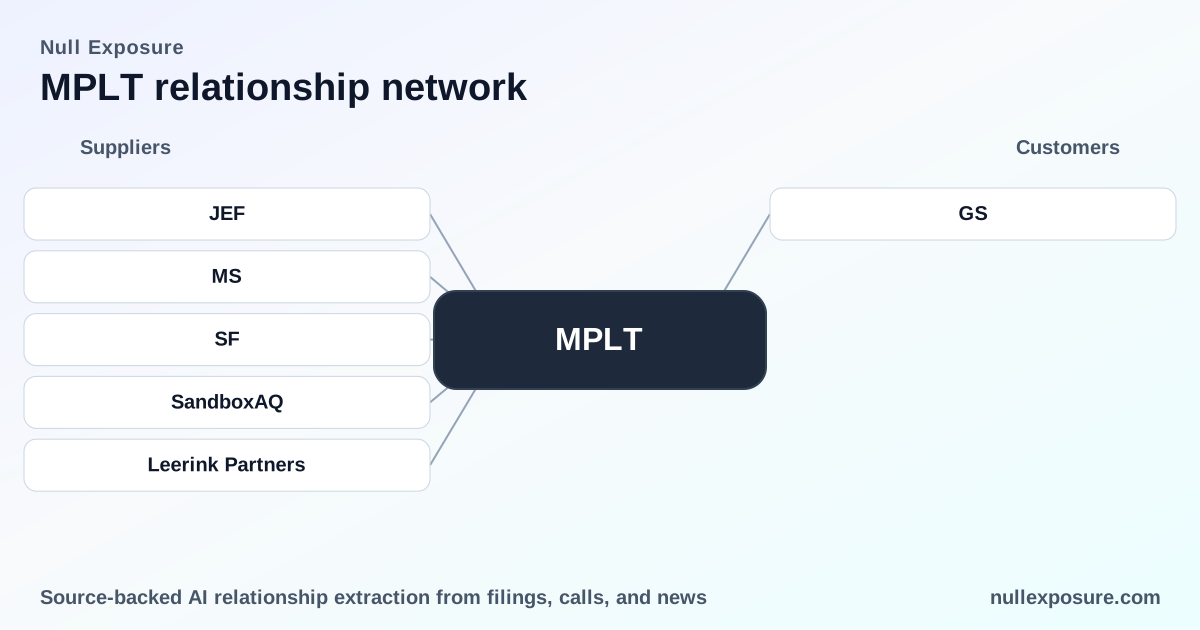
MapLight Therapeutics (MPLT): Customer Relationships and Strategic Signals
MapLight Therapeutics develops next‑generation neurotherapeutics and currently monetizes through equity markets, strategic placements and future licensing or product commercialization once clinical milestones are achieved. The company has no reported product revenue to date and finances clinical development largely through capital markets and institutional investors — a classic clinical‑stage biotech operating model where financing counterparties and anchor investors are functionally critical to execution. For continued monitoring of counterparty exposures and corporate filings, visit https://nullexposure.com/.
Quick company snapshot investors should keep top of mind
MapLight is a NASDAQ‑listed biotechnology company headquartered in Redwood City, California, with a market capitalization in the low‑billion range and no reported revenue through FY2025. Public filings through the December 2025 quarter show negative profitability metrics and high research and development spend, while ownership is meaningfully concentrated: insiders and institutions each account for roughly half of the equity base. These structural facts frame risk and upside — value will be driven by clinical readouts and the company’s ability to secure institutional capital or licensing deals.
How MapLight actually operates and what constrains the model
MapLight’s operating model is that of an advancing clinical‑stage biotech: it invests heavily in R&D today and relies on external capital or strategic partnerships to fund trials and commercialization prep. Key characteristics investors must treat as constraints and not isolated statistics:
- Contracting posture: Predominantly issuer‑led financings and private placements tied to underwriters and institutional investors, rather than recurring commercial contracts.
- Concentration: Revenue sources are currently non‑existent; financing relationships are the dominant commercial dependencies and therefore concentrated.
- Criticality: Capital providers and anchor investors are mission‑critical counterparties — their participation directly affects runway and program timelines.
- Maturity: Early clinical maturity implies binary program risk and high cash burn until regulatory or out‑licensing events materialize.
These constraints are company‑level signals derived from MapLight’s business stage and publicly documented financing activity through FY2025–FY2026, not from any single counterparty.
Customer relationships and what each connection reveals
Below I cover every relationship flagged in the public record for MPLT and explain the investor implications.
Goldman Sachs & Co. — anchor private placement tied to the IPO (PR Newswire, Mar 10, 2026)
MapLight disclosed a proposed concurrent private placement of 476,707 shares to affiliates of Goldman Sachs & Co., including funds managed by Goldman Sachs & Co. LLC, executed alongside its initial public offering. According to the PR Newswire release on March 10, 2026, this structure places Goldman‑affiliated funds in the role of an anchor buyer supporting the capital raise and stabilizing the offering syndicate.
GS — duplicate entry of the Goldman placement (PR Newswire, Mar 10, 2026)
A separate mentions record lists GS using the same PR Newswire filing language about the proposed 476,707‑share private placement to Goldman affiliates; this is the same transaction captured under an alternate name. The duplicate entry reinforces that Goldman’s involvement was a material element of the IPO financing as documented March 10, 2026.
T. Rowe Price Investment Management (TROW) — substantial Q4 2025 position reported (MarketBeat, Apr 21, 2026)
Institutional filings show T. Rowe Price acquired a new position in MapLight during Q4 2025 valued at approximately $49.15 million, reflecting a significant institutional stake reported in April 2026. MarketBeat’s coverage on April 21, 2026, highlights that this purchase represents a meaningful long‑only investor endorsement of MapLight’s programmatic potential ahead of public listing activity.
What those relationships mean for investors and operators
The documented counterparties signal two important financial dynamics:
- Institutional underwriting and anchor buying are central to MapLight’s capital structure. The Goldman private placement executed alongside the IPO demonstrates the company’s reliance on investment bank affiliates to provide distribution and anchor liquidity at listing.
- Large asset managers are engaged as strategic shareholders. T. Rowe Price’s multi‑dozen million dollar position signals institutional conviction and establishes a potential long‑term shareholder base that can be supportive in future equity raises or on strategic votes.
Operationally, these relationships reduce near‑term financing execution risk relative to a company without anchor investors, but they do not eliminate program risk tied to clinical outcomes. Access to reputable institutional capital is a positive signal for runway and credibility, yet the company’s cash requirements remain a fundamental sensitivity.
Risk considerations framed by the relationships and company profile
- Financing dependency: With no product revenue, MapLight’s timelines and program continuity are contingent on periodic access to capital and on continued institutional support.
- Concentration of counterparties: The prominence of a few large financial institutions as financing sources increases counterparty concentration risk; a shift in market sentiment could compress alternatives.
- Governance dynamics: High insider and institutional ownership suggests concentrated voting power that can accelerate strategic decisions but can also crystallize conflicts if performance diverges from expectations.
- Binary program risk: Clinical readouts will materially re‑rate valuation; institutional support reduces execution risk but does not alter biological outcomes.
Investment takeaways
- Capital‑markets relationships are a core economic moat for now — MapLight monetizes through equity support and will likely continue to do so until it achieves either product revenue or large licensing exits.
- Goldman’s anchor placement and T. Rowe Price’s sizable position are pragmatic endorsements of market access and investor appetite, but both are complements to, not substitutes for, clinical success.
- For diligence on counterparty exposure and ongoing updates, see https://nullexposure.com/.
Key investors will weigh these financing relationships against the binary clinical risk profile: strong institutional support improves financing flexibility; clinical readouts will determine long‑term value.