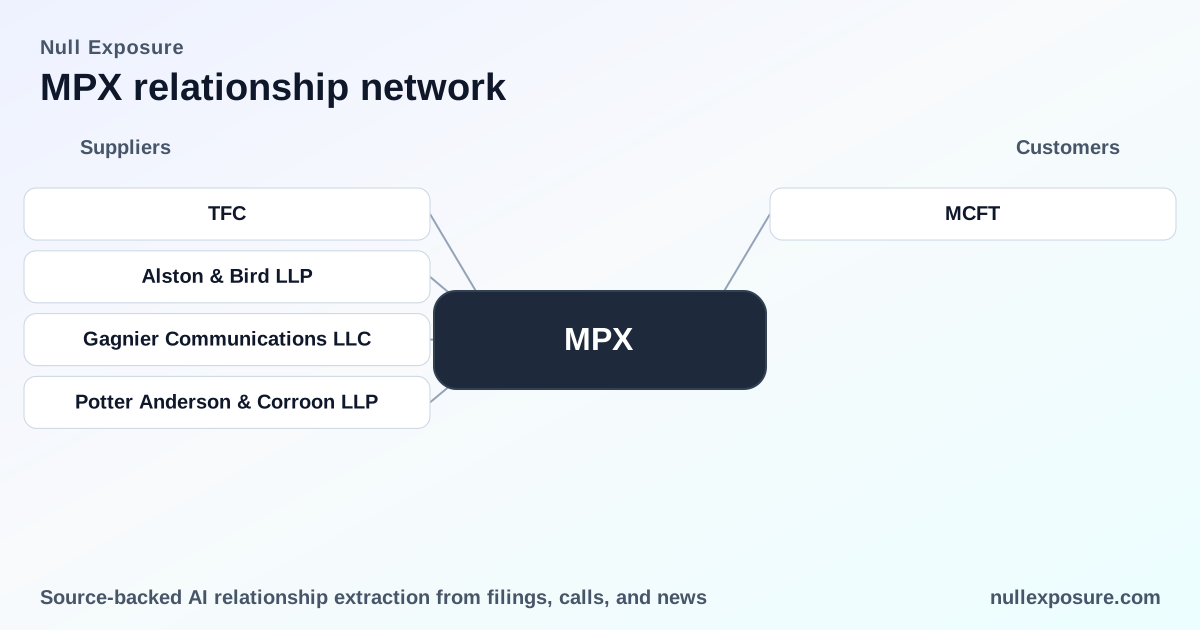
Marine Products (MPX): Customer relationships and the MasterCraft transaction — what investors need to know
Marine Products Corporation designs, manufactures and sells fiberglass recreational boats through an independent authorized dealer network and supports sales with selective financing guarantees; the company monetizes by wholesale and retail boat sales, aftermarket parts and service, and limited floor-plan guarantee arrangements. The critical near-term event for customer relationships is the announced sale to MasterCraft Boat Holdings (MCFT), a deal that converts MPX’s dealer-facing business into an acquirer-controlled asset and replaces standalone public equity economics with a mix of cash and MasterCraft stock consideration. Learn more at https://nullexposure.com/.
The transaction that reshapes customer exposure
MasterCraft agreed to acquire Marine Products for $2.43 in cash plus 0.232 shares of MasterCraft common stock per MPX share, according to published coverage of the deal. This consideration structure implies immediate cash value to shareholders plus an equity stake in the consolidated acquirer, transferring the commercial relationships (dealers, distributors and floor-plan arrangements) into MasterCraft’s operating fold. A Finviz news post reported the transaction details in March 2026 (Finviz, March 10, 2026).
Why this matters for customers and operators
- Dealer economics and distribution control will be consolidated under MasterCraft’s strategy, altering negotiation leverage with independent dealers.
- Floor-plan guarantees and third-party lender arrangements that MPX currently maintains will either be novated or renegotiated as part of integration, changing counterparty risk for lenders and dealers.
Observed relationship mentions in the record
Below are every relationship mention surfaced in the results feed, stated plainly with source notes.
MasterCraft Boat Holdings, Inc. — Finviz article (306552)
Marine Products’ sale to MasterCraft was reported with the terms $2.43 per share cash and 0.232 MasterCraft shares per MPX share; the report frames the transaction as the principal customer-relationship event for MPX in FY2026. Source: Finviz news article (ID 306552), published March 10, 2026.
MCFT (inferred symbol for MasterCraft) — Finviz article (306552)
The same Finviz story repeats the transaction under the ticker MCFT, confirming that the reported buyer is MasterCraft Boat Holdings and restating the consideration split between cash and stock. Source: Finviz news article (ID 306552), March 10, 2026.
MasterCraft Boat Holdings, Inc. — Finviz article (314741)
A second Finviz post carries the identical deal description—again citing $2.43 cash plus 0.232 MasterCraft shares per Marine Products share—which reinforces the market dissemination of the transaction terms in early March 2026. Source: Finviz news article (ID 314741), March 10, 2026.
MCFT (inferred symbol) — Finviz article (314741)
That duplicate mention under the MCFT symbol reiterates the buyer identity and deal economics, underscoring the single dominant customer/ownership change cited across coverage. Source: Finviz news article (ID 314741), March 10, 2026.
Company-level signals and operating model constraints investors should price
The relationship feed and company disclosures together reveal a distinct operating posture:
- Dealer-centric go-to-market: The company sells through 202 domestic and 88 international independent authorized dealers, which creates a channel-dependent revenue model and modest geographic diversification across dealers (company filing language).
- Distributor/reseller roles: Marine Products functions as a manufacturer-distributor and seller to dealers rather than a direct retail operator; the company explicitly describes dealer resale as its core commercial route.
- Active, mature commercial relationships: The relationships are operationally active across its network, and the firm reports a single reportable segment—Powerboat Manufacturing—indicating a mature, focused business.
- Selective financing guarantees: Marine Products has agreements with dealers and selected third‑party floor-plan lenders to guarantee certain dealer debt obligations, which creates contingent liabilities tied to dealer credit performance and lender relationships.
- Legal risk assessed as immaterial: Management stated that pending lawsuits will not have a material adverse effect on the company’s financial position (company filings), which signals current litigation exposure is not judged severe.
- Geography nuance: Although operations are broadly domestic for certain fiscal/tax considerations (“no recorded effects for Pillar Two due to our operational jurisdiction being wholly domestic” as of Dec 31, 2024), the dealer network includes significant international reach—this creates operational complexity while keeping the company fiscally oriented toward domestic jurisdiction.
Collectively, these constraints indicate concentrated channel dependence, predictable manufacturing economics, and finite contingent liabilities from floor-plan support—factors that matter to both buyers integrating MPX and lenders underwriting dealer exposure.
Risks, integration issues and investor takeaways
- Integration risk: The MasterCraft acquisition will reprice dealer and lender relationships; integration execution determines whether revenue synergies or dealer attrition dominate post-close.
- Counterparty concentration: While no single dealer dominates revenue, the model’s dependence on a finite network of authorized dealers concentrates commercial risk in channel performance rather than in single large customers.
- Contingent liabilities from guarantees: Existing floor-plan guarantee arrangements create off-balance-sheet economic exposure that acquirers must assess and either absorb, reprice, or unwind.
- Financial profile remains narrow: MPX reports a single reportable manufacturing segment and modest margins and profitability metrics, so strategic moves by MasterCraft will materially influence consolidated margins and capital allocation.
Final read for investors
The MasterCraft deal is the defining customer-relationship event for MPX in FY2026 and transfers the company’s dealer network, lender guarantees, and distribution economics to MasterCraft. For investors and operators evaluating customer exposure, focus on how MasterCraft plans to integrate dealer terms, manage floor-plan guarantees, and preserve aftermarket and service economics. For ongoing monitoring and deeper vendor-insight research, visit https://nullexposure.com/.
Sources: Finviz news coverage (March 10, 2026) for transaction terms; company filing disclosures (2024–2025 filings) for dealer counts, floor-plan guarantee language and Pillar Two statement.