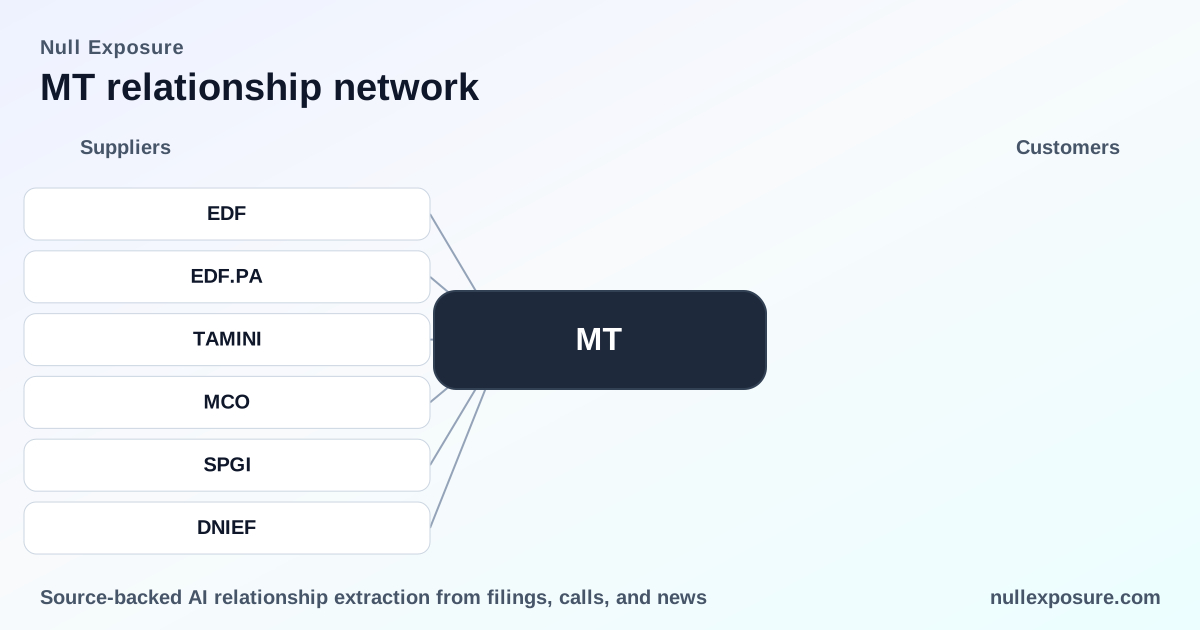
ArcelorMittal (MT) — Customer relationships and the commercial pivot to low‑carbon steel
ArcelorMittal operates a global steel and mining platform that monetizes primarily through the sale of steel products and raw materials across energy, automotive, infrastructure and industrial end markets. The company combines large integrated mills and mine assets with product innovation (notably the XCarb® low‑carbon steel family) to capture both volume and premium pricing on sustainability‑oriented orders, while selectively monetizing non‑core plants through disposals. For investors assessing counterparty risk and revenue durability, the customer landscape shows a deliberate shift toward strategic, co‑development contracts for decarbonized products alongside legacy transactional slab‑supply relationships that can be renegotiated or terminated.
For a concise overview of our analytical coverage, visit the firm homepage: https://nullexposure.com/
What the customer moves tell investors about the business model
ArcelorMittal is executing a two‑track commercial strategy: scale production and asset optimization on one hand, and premium low‑carbon product partnerships on the other. That duality creates a mixed contracting posture — long‑running co‑development and serial supply agreements for XCarb products sit beside commodity slab contracts that are shorter‑term and more price‑sensitive. The combination supports margin resilience when low‑carbon premiums are captured, but it preserves exposure to contract terminations and asset rationalizations when cycle pressure returns.
As a company‑level signal, these developments imply:
- Contracting posture: Active pursuit of strategic OEM and energy partnerships for engineered, low‑carbon steels while remaining exposed to transactional slab markets.
- Concentration & criticality: Key relationships with automakers and energy equipment suppliers increase revenue credibility where product differentiation exists; commodity customers still drive volume and cyclical earnings.
- Maturity of relationships: Movement from pilot projects to serial production for low‑carbon auto steels signals commercial maturation in certain product lines.
- Portfolio reshaping: Recent asset sales in Romania illustrate capital redeployment away from lower‑return or non‑strategic plants.
Customer relationships you need to price into MT
Below are the counterparties flagged in recent coverage; each entry is a concise, plain‑English description with source attribution.
Corinth Pipeworks
Corinth Pipeworks has expanded a long‑standing collaboration with ArcelorMittal to start using XCarb® recycled and renewably produced steel in its energy‑sector pipe production, marking a transition to low‑carbon inputs for a specialized industrial customer. This development was reported at industry events and covered by World Pipelines and Eurometal in early May 2026. (World Pipelines, May 3, 2026; Eurometal, May 2026)
Renault Group
ArcelorMittal has moved from pilot to serial supply with Renault, delivering XCarb® Usibor® 1500 for hot‑stamped structural components in several electric models — a clear example of a manufacturing OEM adopting low‑carbon steel at scale. Multiple outlets documented the partnership and serial production roll‑out in May 2026. (Automotive Manufacturing Solutions, May 2026; Yieh, May 2026; Eurometal, May 2026)
Cleveland‑Cliffs (CLF)
Cleveland‑Cliffs terminated an index‑based slab supply contract with ArcelorMittal and allowed an onerous contract to expire at the end of 2025, reflecting the transactional, price‑sensitive nature of some slab supply relationships and the operational response to weak conditions. This was disclosed in Cliffs’ earnings commentary and reported in sector press in early 2026. (CLF 2025 Q4 earnings call, March 2026; SteelMarketUpdate, Feb 2026; StockTwits coverage, March 2026)
UMB Steel / UMB Group
Regulatory approval was granted for UMB Steel, a unit of the UMB Group, to acquire the ArcelorMittal Hunedoara assets, indicating a completed divestment of certain regional operations and transfer of plant ownership. The Romanian Competition Council approval was reported in May 2026. (IndexBox and SteelRadar reporting, May 2026)
Metinvest Group
Metinvest completed the acquisition of the ArcelorMittal Tubular Products Iasi SA plant in Romania on Dec. 16, 2025, demonstrating ArcelorMittal’s ongoing program of selling non‑core or regionally focused assets to strategic local buyers. (NV.UA English business report, Dec 2025 / reported May 2026)
Interpipe
Ukrainian maker Interpipe finalized the purchase of a Romanian pipe plant from ArcelorMittal on Apr. 2, 2026, further illustrating asset monetization in the tubular products footprint and local industry consolidation. (NV.UA English business report, Apr 2026)
Suncoke Energy (SXC)
Suncoke Energy operates the ArcelorMittal Brazil coke‑making facility in Vitória for an ArcelorMittal subsidiary, evidencing outsourced or third‑party operated inputs in the company’s Brazil segment and a dependence on specialist contractors for certain upstream supply functions. This operational arrangement was referenced in Suncoke’s first‑quarter 2026 materials. (MarketScreener summary of Suncoke filings, Q1 2026)
How these relationships translate into investable risks and opportunities
The customer map shows clear upside where ArcelorMittal captures a premium for low‑carbon steel — Renault and Corinth are practical examples of moving from trials to serial supply. That progression supports a higher‑value, differentiated revenue stream that defends margins against commodity cycles.
Offsetting that, the CLF contract termination and the expiration of an onerous slab contract are evidence of contract volatility on the commodity side; transactional relationships remain subject to indexation, renegotiation and termination in down cycles. The series of plant sales in Romania to UMB Steel, Interpipe and Metinvest signals active portfolio optimization and capital redeployment, reducing operational drag but also lowering capacity and exposure in certain regional markets.
Outsourcing of coke production to Suncoke reflects operational pragmatism: the company uses third‑party operators where outsourcing improves capital efficiency or operational focus. That structure reduces fixed cost commitments in some geographies but introduces contractor counterparties that investors should monitor.
Investment takeaways for buyers and operators
- Growth lever: Serial supply agreements for XCarb products with OEMs and energy suppliers are a material route to margin expansion.
- Cyclical exposure: Commodity slab markets and index‑linked contracts continue to present earnings volatility and counterparty termination risk.
- Balance‑sheet actions: Recent divestments indicate active capital rotation toward higher‑return segments or debt reduction.
- Operational mix: A hybrid model of integrated assets and outsourced operations reduces fixed cost but distributes counterparty risk.
For a practical guide to tracking counterparties and commercial signals across ArcelorMittal’s footprint, visit our research hub: https://nullexposure.com/
ArcelorMittal’s customer profile is therefore a study in strategic repositioning — premiumization through low‑carbon products balanced against legacy commodity exposure and regional asset rationalization. Investors should underwrite revenue forecasts with explicit assumptions about the pace of XCarb adoption and the likelihood of further transactional contract renegotiations.