Matador Resources (MTDR): Customer Relationships and Commercial Posture
Matador Resources operates as an integrated upstream and midstream energy company that explores, develops and produces oil, natural gas and NGLs, while also operating midstream gathering, processing and water services. The company monetizes through spot sales of hydrocarbons to a concentrated set of buyers and by capturing midstream margin where it provides services to third parties and supports its own production. For investors and operators, the commercial profile is defined by high buyer concentration, predominantly spot-priced commodity sales, and selective midstream integration that both mitigates and concentrates commercial risk.
For a concise relationship map, visit the Matador customer overview at NullExposure.
Executive takeaway: concentrated buyers, spot pricing, midstream optionality
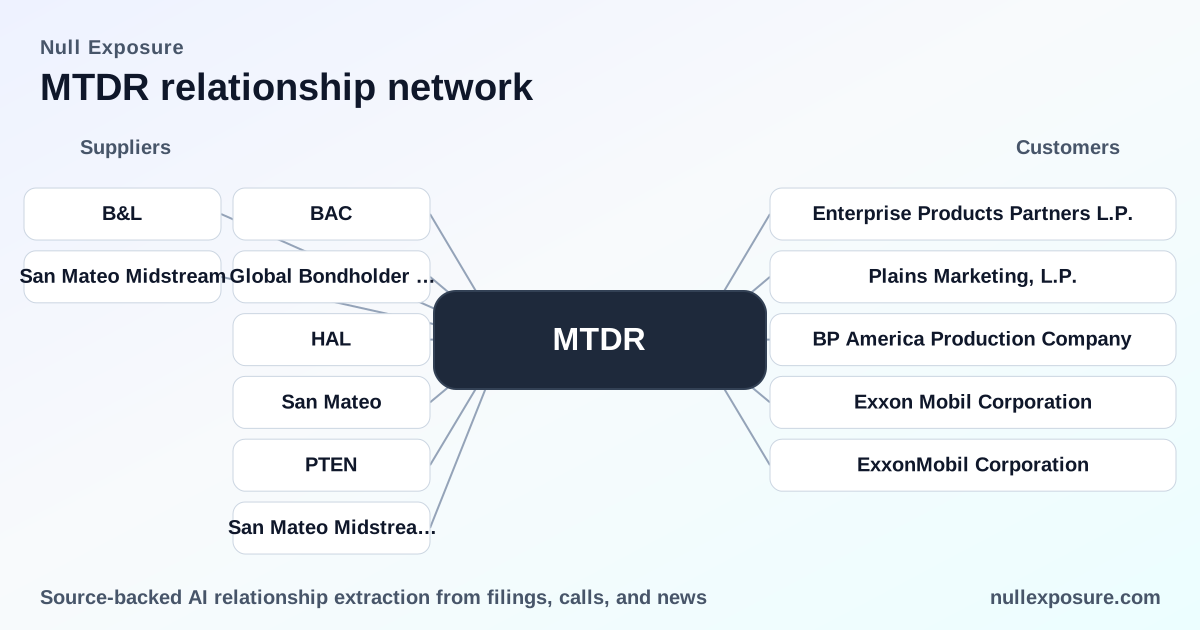
Matador reported that three purchasers accounted for 79% of oil, natural gas and NGL revenues in FY2024, with Plains Marketing representing 53%, Exxon Mobil 15% and Enterprise Products Partners 11%. That level of concentration creates material counterparty dependence and pricing exposure because Matador sells substantially all production in the spot market or on contracts tied to spot prices, according to its FY2024 Form 10‑K. These dynamics shape the company's revenue volatility and bargaining power with large midstream/marketing counterparties.
How the relationships line up (each documented relationship)
Below are the documented counterparties from Matador’s FY2024 filings, with a plain-English summary for each relationship and the cited source.
Plains Marketing, L.P.
Plains Marketing is Matador’s dominant purchaser, accounting for 53% of oil, natural gas and NGL revenues in FY2024, and it is also a strategic midstream partner through a 400,000‑acre joint development area in Eddy County, New Mexico for gathering and related services. According to Matador’s 2024 Form 10‑K, Plains both buys a majority share of production and participates in joint development that ties Matador into regional infrastructure and economics (FY2024 10‑K).
Exxon Mobil Corporation
Exxon Mobil purchased 15% of Matador’s oil, natural gas and NGL revenues in FY2024, making it the second-largest counterparty by spend. Matador cites Exxon in its FY2024 Form 10‑K as a material purchaser under customer concentration disclosures (FY2024 10‑K).
Enterprise Products Partners L.P.
Enterprise Products accounted for 11% of Matador’s oil, natural gas and NGL revenues in FY2024; the 10‑K also notes that on October 28, 2024 a business called “Pi on” was acquired by an affiliate of Enterprise, which may affect midstream connectivity and counterparty dynamics in the regions where Matador sells products (FY2024 10‑K).
BP America Production Company
BP America is referenced in Matador’s customer concentration and revenue-from-customer taxonomy in the FY2024 10‑K, indicating its role as a recognized purchaser or counterparty under Matador’s disclosure framework, although the filing does not quantify BP’s share alongside the top three purchasers (FY2024 10‑K).
ExxonMobil (taxonomy reference)
Matador’s FY2024 disclosure also references ExxonMobil using taxonomy terms for customer concentration, reiterating Exxon’s inclusion among material purchasers and the formal recognition of that relationship in Matador’s 10‑K customer concentration disclosures (FY2024 10‑K).
What the commercial constraints tell investors
Matador’s 10‑K provides directional constraints that illuminate the company-level operating model beyond individual counterparties:
- Contracting posture — predominantly spot: Matador states that substantially all oil, natural gas and NGL sales are executed in the spot market or under contracts based on spot prices, indicating high revenue sensitivity to commodity price moves and limited fixed-price hedging embedded in customer contracts (FY2024 10‑K).
- Geographic concentration — New Mexico focus: Midstream expansions and transactions are concentrated in Eddy and Lea Counties, New Mexico, where Matador and its affiliates (San Mateo, Pronto) closed new midstream agreements expected to drive future volumes, underscoring regional operating concentration (FY2024 10‑K).
- Role duality — service provider and operator: Matador runs midstream operations both to support its own production and to provide natural gas processing, oil transportation, gathering and produced water services to third parties, positioning the company as both producer and midstream service provider in its operating basins (FY2024 10‑K).
These are company-level signals from the FY2024 filing and shape how counterparty concentration, price sensitivity and midstream ownership interact to produce cash flow outcomes.
Strategic implications and investment considerations
- Counterparty concentration is the principal commercial risk. With 79% of revenue tied to three purchasers, buyer negotiation leverage is asymmetric. This concentration amplifies downside when a major purchaser reduces offtake or when spot prices compress relative to Matador’s cost base.
- Spot-dominated sales increase volatility but preserve upside. The predominantly spot contract profile exposes Matador directly to commodity swings, which benefits investors when prices rally but transmits downside in soft markets; this contrasts with firms that lock volumes into fixed-price or long-term take-or-pay agreements.
- Midstream participation is a risk-mitigation lever and a concentration vector. Joint development with Plains and Matador’s third‑party midstream services create higher margin optionality, but also deepen commercial interdependence with the same counterparties that buy production.
Risk vs. reward for premium finance investors
Premium finance strategies that underwrite receivables or provide working capital should underweight single-buyer concentration and prefer facilities that include covenants addressing counterparty diversification, price floor triggers, and collateral revaluation tied to spot prices. The largest single-credit exposure is to Plains Marketing, and underwriting should reflect that counterparty’s share and the regional infrastructure linkages in New Mexico.
For a full map of Matador’s counterparty relationships and tailored exposure analysis, explore the company overview at NullExposure.
Final read
Matador’s FY2024 disclosures present a clear commercial profile: concentrated buyers, spot-priced sales, and midstream involvement that both de‑risks operations and deepens counterparty links. That mix delivers cyclical upside but requires active credit and market-risk management for investors and lenders focused on premium finance or receivables underwriting.