Maris‑Tech (MTEK): Edge‑AI payload wins point to mission‑level revenue and strategic credibility
Maris‑Tech Ltd designs and manufactures digital audio/video hardware and embedded AI software for military, IoT and space customers, monetizing through the sale and integration of mission‑grade payloads, recurring software/firmware support and one‑off integration contracts for spacecraft and defense platforms. Recent press coverage ties Maris‑Tech to spaceflight customers — a revenue mix dominated by discrete, high‑value integrations that also generate strategic optionality for higher‑margin software and support services. Learn more about tracking customer signals at https://nullexposure.com/.
Why the customer news matters to investors now
Maris‑Tech’s go‑to‑market is project and mission driven: the company secures single‑program hardware contracts for edge video and AI, then cross‑sells firmware, analytics and long‑tail support. That model produces lumpy near‑term revenue but high strategic value for future, recurring software monetization. The recent items in the newsflow underline two critical operating model characteristics:
- Contracting posture and criticality: Maris‑Tech operates as an integrated payload supplier — its hardware is mission‑critical for customer platforms, turning product wins into timing‑sensitive revenue tied to launch schedules and integration milestones.
- Concentration and maturity: Publicly visible relationships are few but high‑profile, indicating concentrated customer exposure; successful prior flight heritage (Beresheet) signals engineering maturity that lowers integration risk for new partners.
- Disclosure posture: Our relationship feed contains no contract‑level constraints or filings; that absence is itself a company‑level signal about limited public disclosure of revenue terms and dependencies.
Customer relationships — the complete list from public reporting
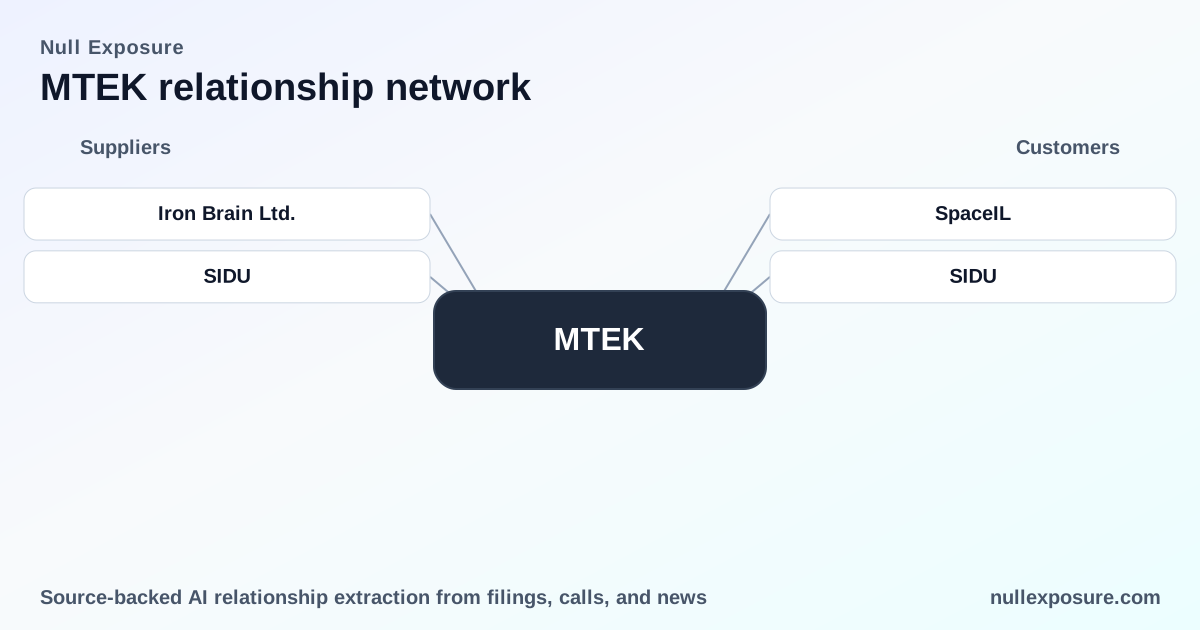
Sidus Space (SIDU)
Maris‑Tech’s advanced AI and video edge‑computing payload is scheduled to fly aboard Sidus’ LizzieSat‑4 mission, and the companies announced an integration milestone as hardware testing and platform integration began ahead of the planned launch later in 2026. According to Sidus’ integration announcement and coverage on March 10, 2026, the payload is a contracted mission component for LS4 (reported by Finviz and SahmCapital).
Sources: Sidus press release and news coverage (Mar 10, 2026; Finviz; SahmCapital), plus earlier reporting on the payload schedule (SahmCapital, Jan 26, 2026).
SpaceIL (Beresheet heritage)
Maris‑Tech’s Neptune‑Space video system was previously deployed on SpaceIL’s 2019 Beresheet mission, establishing flight heritage for its space‑grade video systems. GlobeNewswire’s February 2, 2026 release and subsequent coverage cite the 2019 deployment as evidence of Maris‑Tech’s mission experience. Sources: GlobeNewswire (Feb 2, 2026) and related news coverage (March 2026).
What these relationships mean for revenue, risk and valuation
- Revenue profile: Wins such as LizzieSat‑4 are discrete program revenues with near‑term recognition tied to integration and launch milestone achievement; follow‑on opportunities exist for software licensing and ongoing support, which convert one‑time events into recurring cash flow. Maris‑Tech’s public financials show Revenue TTM of $3.38M and negative EBITDA, illustrating that mission wins are still working through the P&L rather than producing stable profitability.
- Strategic value and de‑risking: Flight heritage from Beresheet is a meaningful credibility enhancer for securing new space and defense integrations, lowering perceived technical risk for customers that require proven systems in hostile environments.
- Concentration risk: A small number of high‑impact relationships creates single‑program exposure: a delayed launch or failed integration materially affects near‑term revenue, given the company’s limited revenue base.
- Operational leverage potential: Successful payload integrations create avenues for higher‑margin software and analytics sales; Maris‑Tech’s business model converts engineering IP into services revenue if it executes on support and analytics commercialization.
Operational constraints and where investors should focus
Our relationship feed contains no disclosed contract‑level constraints. The absence of constraints in the public relationship dataset is itself actionable as a company‑level signal: Maris‑Tech currently provides limited public detail on contract duration, revenue cadence and dependency terms, which increases investor reliance on milestone announcements and third‑party reporting.
Investor checklist:
- Confirm launch schedule and integrated‑payload milestones for LizzieSat‑4; milestone slippage is the primary execution risk.
- Assess revenue concentration and model upside from software support and analytics following payload deployment.
- Monitor disclosures for contract length, warranty and support terms that convert one‑time hardware sales into recurring revenue.
- Validate flight heritage claims and technical performance post‑deployment; prior Beresheet deployment improves probability of successful integration.
For ongoing monitoring of Maris‑Tech’s customer signals and integration milestones, visit https://nullexposure.com/.
Bottom line: strategic credibility outweighs current scale, but execution is timing‑sensitive
Maris‑Tech is a specialized supplier whose value to customers is mission‑critical and whose revenue will remain lumpy until software and support revenues scale. The Sidus LizzieSat‑4 integration and Beresheet heritage deliver both immediate commercial relevance and a pathway to higher‑margin recurring business, but the company’s small revenue base and negative EBITDA make it sensitive to launch timing and a small number of customer outcomes. Investors should treat current wins as proof points for capability and future optionality, while actively monitoring milestone delivery, contract disclosure and the company’s ability to convert one‑time integrations into sustainable service revenue.