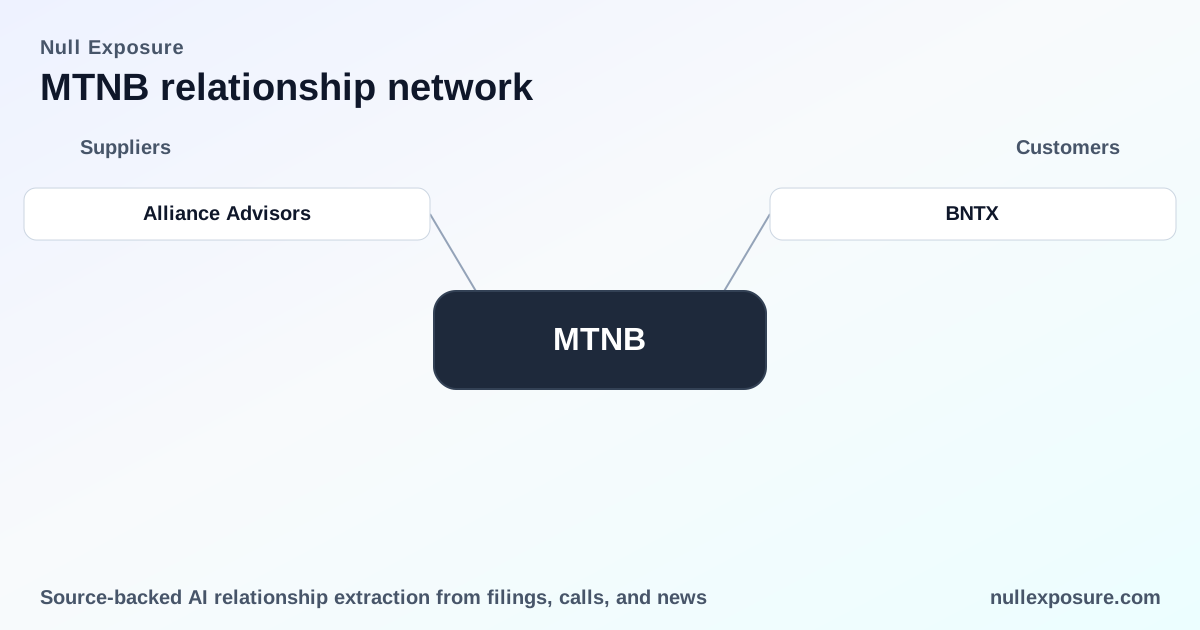
MTNB: How Matinas Monetizes Through Short, High-visibility Collaborations
Matinas BioPharma (MTNB) operates as a clinical‑stage biopharmaceutical company developing lipid‑based drug candidates and commercializing technology primarily through research collaborations, license grants and one‑off development arrangements with larger biopharma partners. The company recognizes revenue as upfront license fees and contract research payments are earned over defined performance periods, and its balance sheet and public filings show revenue is episodic rather than recurring — a business model that produces binary valuation outcomes tied to partner milestones and program progression. For a quick look at the source material behind this summary, see NullExposure’s MTNB coverage: https://nullexposure.com/.
Why the partner list matters to investors
Matinas’ customer relationships are not volume contracts; they are strategic, concentrated and episodic. That contract profile drives high revenue volatility, compressed operating leverage and outsized sensitivity to individual partner milestones. The public record for MTNB highlights one material partner relationship repeatedly in filings and press: BioNTech SE (BNTX). Below I walk through each relationship mention in the available results and then translate the contractual constraints into investor‑relevant signals.
What the filings and press say — itemized relationship entries
1) BioNTech SE in the FY2024 10‑K (filed 2024)
Matinas’ FY2024 10‑K states that the contract counterparty, BioNTech SE, is a customer based on the arrangement structure, meaning the company evaluated the collaboration under revenue recognition standards and treated BioNTech as a purchaser of defined promises. This characterization is documented in the company’s 2024 Form 10‑K.
Source: Matinas BioPharma 2024 Form 10‑K filing (FY2024).
2) BNTX entry duplicated from the FY2024 10‑K (filed 2024)
The filing repeats the identification of BNTX (BioNTech) as the counterparty and customer under the arrangement, confirming the same contractual conclusion using ticker shorthand in the footnotes and contract discussion. The recognition treatment and contract structure are described in the same FY2024 10‑K.
Source: Matinas BioPharma 2024 Form 10‑K filing (FY2024).
3) BioNTech revenue mention in a Q2 2022 press summary (CityBiz)
A 2022 press recap of Matinas’ second quarter results notes $1.1 million of revenue from a research collaboration with BioNTech SE, indicating that the partnership generated material, reportable research revenue in earlier periods. The CityBiz article covers Matinas’ Q2 2022 financial highlights and revenue drivers.
Source: CityBiz coverage of Matinas’ Q2 2022 financial results (reported 2022).
4) BNTX mention repeating the Q2 2022 press reference (CityBiz)
The CityBiz item is also referenced under the BNTX ticker label in news aggregation, again noting the $1.1 million of collaboration revenue and illustrating that BioNTech work has been an identifiable line item in prior quarters. This repeat underscores the same 2022 revenue disclosure.
Source: CityBiz coverage of Matinas’ Q2 2022 financial results (reported 2022).
Contractual signals and what they reveal about MTNB’s operating model
The explicit excerpts and constraint tags in Matinas’ public materials produce clear operating signals for investors:
-
Short‑term revenue recognition: The company recorded a $2,750 license fee as deferred revenue and recognized it over a 12‑month performance period, indicating the firm often structures license receipts with near‑term performance obligations rather than multi‑year recurring royalties. This pattern produces front‑loaded but short‑duration revenue rather than long, annuitized streams.
-
Licensee/collaboration posture with BioNTech: Matinas assessed the BioNTech Agreement under ASC 808 and ASC 606 and identified two material promises — an exclusive research license and clinical research services — which the company treated as deliverables to the counterparty. That treatment makes Matinas the grantor of intellectual property rights plus a service provider in that relationship.
-
Completed/terminated program signals: Corporate disclosures note the company completed obligations for staged molecules, and the term of a referenced agreement expired on April 8, 2023, indicating at least some collaborations are finite, milestone‑driven programs that conclude rather than convert into long‑term commercial deals.
-
Evidence of buyer/developer transactions with other large partners: An excerpt referencing a Genentech agreement states Genentech paid Matinas a nominal fee ($100 total) for development of three molecules, recognized upon obligation fulfillment — an example of transactional development payments versus significant upfront licensing, signaling the company engages in diverse commercial structures with large peers.
Together these constraints define a company whose commercial model is concentrated on discrete collaboration agreements, short contract durations, and program completion events rather than ongoing product sales or royalty streams.
Investment implications — concentrated upside, concentrated risk
-
Revenue volatility is structural. The combination of short recognition windows and terminated collaborations means quarters with partner milestones will show temporary revenue bumps (as in 2022’s $1.1 million) while other periods show near‑zero revenues; Matinas’ reported RevenueTTM is zero in the latest public snapshot and GrossProfitTTM is modestly negative, reflecting this episodic pattern.
-
Valuation is binary and partner‑dependent. With a modest market capitalization (~$4.3M per the latest overview) and negative operating metrics (EBITDA and EPS losses), value realization depends critically on the timing and structure of future collaborations or licensing exits. Discovery or success with a single large partner can re‑rate the company, while failure to secure follow‑on deals preserves downside.
-
Contracting posture reduces long‑term predictability. Short‑term license recognition and finite collaboration terms mean investors cannot assume multi‑year cash flows from existing contracts; due diligence must focus on pipeline sequencing and the company’s ability to convert completed programs into follow‑on engagements.
-
Operational leverage is high but constrained by scale. Given the small share count and low institutional ownership, any single material partner update will move investor perception dramatically, but funding needs and cash runway remain material risks for an early‑stage biotech with episodic partner receipts.
If you want a consolidated view of MTNB’s public partner relationships and the contract characteristics that drive revenue recognition, NullExposure’s MTNB customer profile collects the filings and press references in one place: https://nullexposure.com/.
Final takeaways for investors
- BioNTech is the dominant publicly documented customer relationship in the record set and was treated as a customer under accounting rules, with material revenue recognized in prior periods.
- Matinas’ revenue model is collaboration‑driven, short in duration, and program‑centric, which produces high volatility and binary valuation outcomes.
- Active monitoring of new collaboration announcements, milestone receipts and any transition from finite research arrangements to longer‑term licensing or commercialization is essential for risk‑adjusted valuation.
For ongoing tracking of MTNB’s customer relationships, partner milestones and filing‑level signals, visit NullExposure’s MTNB hub: https://nullexposure.com/.