MV Oil Trust (MVO): Counterparty Concentration and Short-Term Sales Drive Cash, Not Growth
MV Oil Trust acquires and maintains net profit interests in oil and gas properties owned by MV Partners, LLC and monetizes exclusively through receipts from production sales and ensuing distributions to trust holders. The business model is a cash-distribution vehicle, heavily dependent on a single purchaser relationship and short-term, market‑sensitive sales contracts, which concentrates both revenue and counterparty risk but also delivers a predictable, dividend-oriented cash profile when commodity prices and production hold. For a focused provider view and relationship analytics, visit https://nullexposure.com/ for primary source consolidation and monitoring.
How the Trust actually gets paid: a simple commercial chain
MV Oil Trust does not operate fields; it holds net profit interests tied to production from MV Partners’ properties. The operational mechanics are straightforward: production is sold to third-party purchasers and receipts are passed through to the Trust, which then distributes cash to holders. This is not a growth company — it is a yield vehicle whose value is a function of oil production volumes, realized commodity prices, and the stability of sales arrangements.
Key operating facts from the Trust filing:
- Production for FY2024 was overwhelmingly oil — approximately 99% oil and 1% natural gas and NGLs, concentrating price exposure squarely on oil prices, per the company’s FY2024 Form 10‑K.
- The Trust reported a high dividend yield relative to price (Dividend per share $0.805; Dividend yield ~32.5%), illustrating the distribution-focused nature of returns.
Counterparty profile: who buys MV Oil Trust production
MV Purchasing, LLC — the dominant purchaser
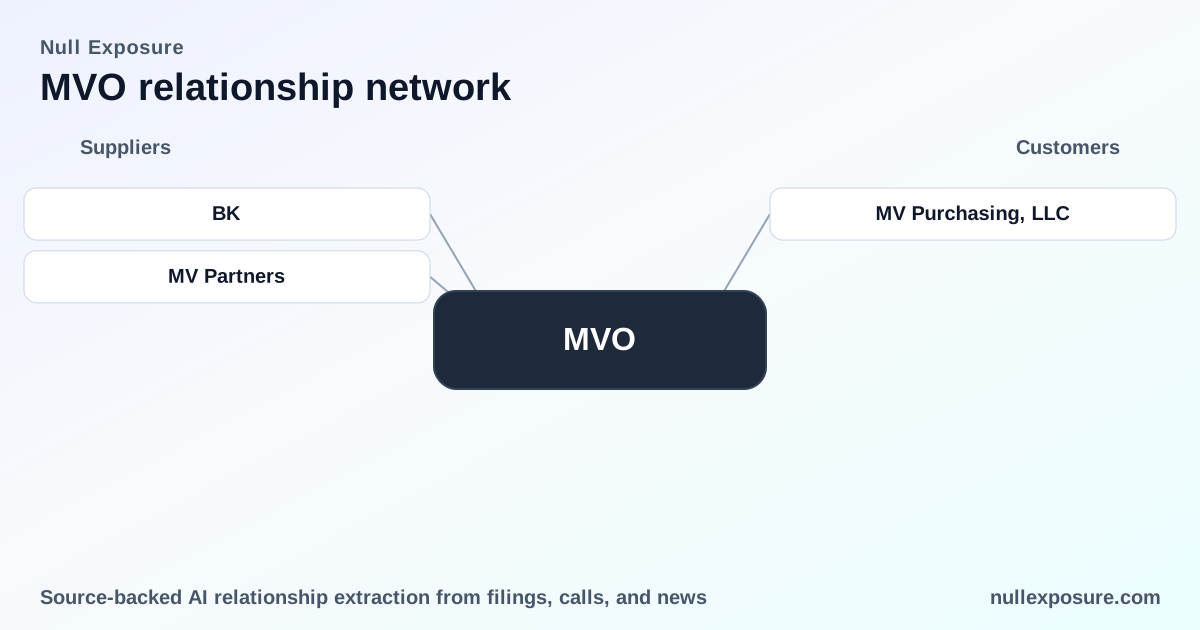
MV Purchasing, LLC bought 74% of the production sold from the underlying properties for FY2024 (74% in 2022, 73% in 2023, and 74% in 2024), making it the single largest purchaser of production tied to the Trust. According to MV Oil Trust’s Form 10‑K for the year ended December 31, 2024, MV Purchasing accounted for roughly three-quarters of production sales, a concentrated revenue relationship that heavily influences realized cash flows.
Source: MV Oil Trust Form 10‑K, fiscal year ended December 31, 2024 (purchase percentages for 2022–2024).
What the contract terms imply for risk and cash flow
The company’s disclosures make three operational constraints explicit and material to investor analysis:
-
Short-term contracting posture with market-sensitive pricing. The filings state sales to purchasers are under terms ranging from one month to six months and use market-sensitive pricing. Because these contracts are short-dated and repriced frequently, realized revenue tracks spot oil markets closely, increasing sensitivity to price volatility but preserving upside when oil rallies. The same filing explicitly ties this short-term posture to MV Purchasing where referenced, creating a direct operating linkage between the dominant counterparty and short-term contractual terms.
-
High counterparty concentration and credit sensitivity. The Trust’s reliance on a single dominant purchaser creates elevated concentration risk: a material failure to pay by a major purchaser would have a significant adverse impact on the operator (MV Partners) and, by extension, the Trust. That exposure is called out in the 10‑K as a source of operational and cash distribution risk.
-
Core product concentration into oil. Production volumes are overwhelmingly oil (about 99% of volume), which concentrates commodity risk and simplifies the pricing exposure but also reduces diversification benefits from gas or NGL receipts.
Together, these constraints define the Trust’s operating model: highly concentrated counterparties, short-duration sales contracts, and concentrated commodity exposure. Those factors create a business that is cash-yielding but materially exposed to acute commodity swings and counterparty payment disruptions.
How each relationship in the filing matters to investors
- MV Purchasing, LLC: This purchaser acquired approximately 74% of production sold in FY2024, establishing it as the Trust’s principal buyer and the primary channel for monetization. The high share of purchases places concentrated counterparty and price risk on MV Purchasing’s performance and payment discipline. Source: MV Oil Trust Form 10‑K, fiscal year ended December 31, 2024.
(There are no other purchaser relationships disclosed with comparable materiality in the FY2024 filing; the Trust’s disclosures single out MV Purchasing as the dominant purchaser for the periods reported.)
Risk / reward implications for investors and operators
The Trust’s commercial structure creates a distinct investor profile:
-
Reward: Predictable cash distributions when production and oil prices are stable; limited capital reinvestment needs because the Trust holds net profit interests rather than operating assets. The high dividend yield reflects current cash distribution expectations, making MVO suitable for income-oriented allocations where investors accept commodity-driven volatility.
-
Risk: Concentration risk is the principal vulnerability. The dependence on one purchaser for roughly three quarters of sales, combined with short-term, market-sensitive contracts, means short-lived pricing protection and meaningful downside if the purchaser reduces offtake or fails to meet payment obligations. Operational interruptions at MV Partners or catastrophic price declines would transmit quickly to distributions.
-
Contractual maturity: Short-term contracts reduce counterparty lock-in and increase exposure to spot price swings; they also increase operational flexibility for the operator but create earnings volatility for the Trust.
Investor actions and monitoring cadence
Investors should focus on a small set of signals that disproportionately affect value:
- Monitor MV Purchasing’s payment and offtake behavior and any changes in the percentage of production it purchases; a meaningful decline from the ~74% level materially changes concentration risk.
- Track realized oil prices on monthly/quarterly settlement cycles given the short-term contract structure; small price moves feed directly into cash receipts.
- Watch MV Partners’ operational reports for production stability and any maintenance or shut-in notices that would impair volumes.
For relationship-level tracking, NullExposure consolidates filings and extracts counterparty metrics that matter to investors; see https://nullexposure.com/ for relationship intelligence and automated monitoring.
Bottom line
MV Oil Trust is a cash-distribution vehicle whose value derives from oil production receipts sold predominantly to a single counterparty under short-term, market‑sensitive contracts. That commercial design delivers attractive current yield but concentrates counterparty and commodity risk, making MVO a binary play on continued stable production, consistent offtake by MV Purchasing, and oil prices. Active monitoring of purchaser concentration, contract tenor, and monthly pricing realizations is the most effective way to manage investment risk in this security.