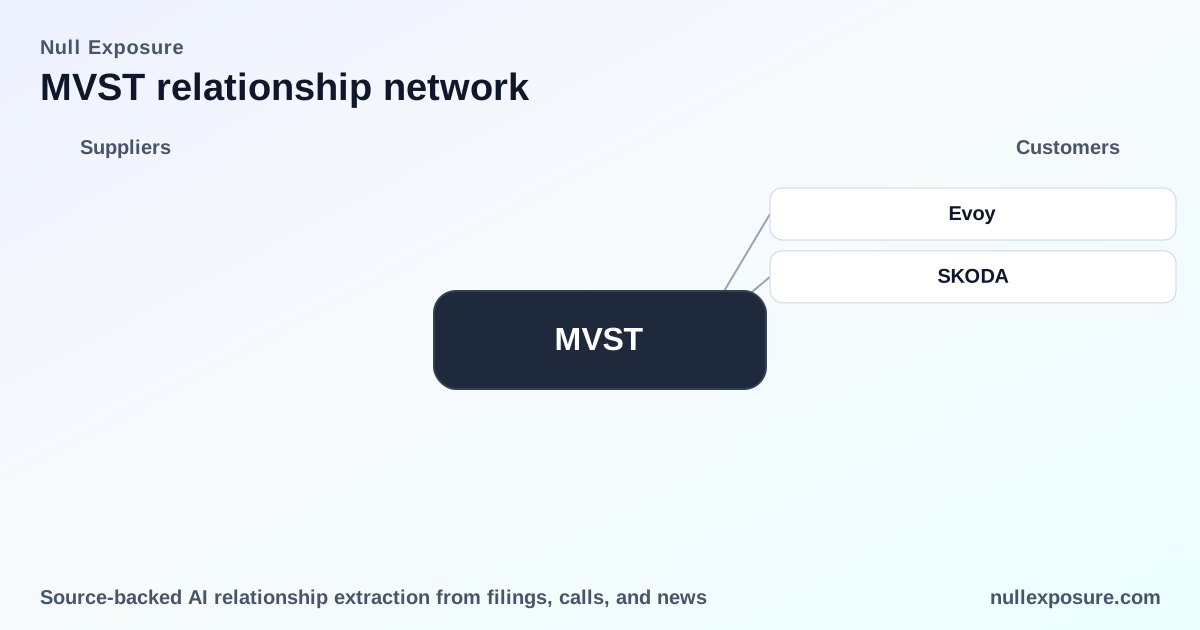
Microvast’s customer map: validated OEM relationships, concentrated revenue, and an execution-focused supply model
Microvast Holdings Inc. designs, manufactures and sells high-power lithium‑ion battery systems for commercial EVs and utility-scale energy storage, monetizing through direct product sales, sales‑type leases and multi-year supply agreements with vehicle OEMs and system integrators. The company’s revenue profile is driven by large-enterprise OEM partnerships, a material order backlog, and a mix of long‑term framework agreements plus spot sales, positioning Microvast as a supplier of strategic battery modules to bus, truck, rail and marine platforms. For deeper vendor and counterparty signals, see Null Exposure’s platform: https://nullexposure.com/.
Customer relationships you need to price in now
Below I list every customer relationship pulled in the source set and summarize what each link means for Microvast’s commercial footprint. Each entry is brief, plain-English, and sourced to the underlying press or call that reported the relationship.
Iveco Group N.V. (IVG) — BatteriesNews report
Microvast supplied battery systems for the IVECO eDaily project using VDA modules and 52Ah cells, underscoring an OEM integration that began in commercial light‑duty applications. Source: Batteries News coverage of the Microvast–Iveco collaboration (May 3, 2026).
Iveco Group — InsiderMonkey recap
Microvast and Iveco expanded a partnership that has been active since 2017 and has delivered multiple generations (MV‑I Gen 1 and Gen 2) of battery packs integrated into IVECO BUS platforms and the IVECO S‑eWay heavy‑duty truck lineup. Source: InsiderMonkey article summarizing the partnership (reported May 2026).
Iveco Group N.V. — GlobeNewswire press release
A corporate release announced the next‑generation battery technology milestone and recapped earlier work on the IVECO eDaily, further confirming an ongoing strategic supplier relationship with staged product generations. Source: GlobeNewswire press release (March 19, 2026).
IVECO BUS — GlobeNewswire product integration detail
GlobeNewswire notes the MV‑I Gen 1 battery pack was assembled at the FPT ePowertrain plant in Turin and integrated into the IVECO BUS vehicle platform, signaling systems‑level supply and co‑manufacturing touchpoints with the OEM ecosystem. Source: GlobeNewswire press release (March 19, 2026).
Evoy — Globe and Mail coverage
Evoy plans to integrate Microvast’s MV‑I high‑power battery packs into its leisure boat product line, reflecting Microvast’s traction outside road vehicles and into marine propulsion where safety and reliability are premium attributes. Source: The Globe and Mail coverage (March 10, 2026).
Evoy — Finviz news brief
A strategic partnership announcement reiterated that Evoy will source MV‑I battery packs for leisure boat applications, reinforcing a marine channel relationship in addition to commercial vehicle OEMs. Source: Finviz press summary of the partnership (March 10, 2026).
SKODA / Skoda Group — Microvast earnings call (2025 Q3)
Management disclosed a partnership with Skoda Group for rail and public‑transport battery projects, validating Microvast technology in extreme‑duty and high‑safety rail applications. Source: Microvast 2025 Q3 earnings call transcript (2025 Q3).
What these relationships collectively tell investors
- OEM integration is deep and multi‑generational. The Iveco relationships show product evolution (Gen 1 → Gen 2) and co‑assembly with OEM‑adjacent plants, indicating integration beyond one‑off module sales into sustained product roadmaps.
- Customer mix extends beyond road vehicles. Marine (Evoy) and rail (Skoda) wins demonstrate application breadth that raises average selling price potential and positions Microvast for cross‑sector demand.
- Commercial posture blends long‑term frameworks and transactional sales. Company disclosures record both long‑term supply/framework agreements without minimum purchase obligations and point‑in‑time revenue recognition for discrete transfers of control. This hybrid posture supports recurring revenue from OEM programs while preserving spot sales flexibility.
Operating constraints and business‑model signals investors must price
Microvast’s public disclosures and the relationship set create an integrated portrait of how the company operates and where execution risk concentrates:
- Contracting posture: The company engages in long‑term supply or framework agreements for commercial EV programs, yet also recognizes revenue at a point in time for spot or discrete deliveries. The mix creates predictable backlog while preserving transactional upside.
- Concentration risk is material. Management reported that one customer accounted for 39% of net revenues in 2024 and the top five customers contributed 60%, a clear concentration signal for revenue volatility and pricing leverage.
- Counterparties are large enterprises. The business sells into leading global EV manufacturers and system integrators, which implies extended qualification cycles and enterprise procurement practices.
- Geographic footprint is global with EMEA and APAC bias. Revenue breakdowns and disclosures show activity across EMEA, APAC, North America and India, with significant exposure to Europe and Asia—this affects demand cycles, local content requirements, and FX/regulatory risk.
- Relationship stage and execution: Management cites an order backlog (~$401.3m) expected to be fulfilled in 2025–2026, indicating active, near‑term revenue conversion but also dependence on manufacturing execution.
- Role stack: Microvast is simultaneously manufacturer, seller and supplier/buyer partner—building hardware, delivering systems, and occasionally offering sales‑type leases—so capital intensity, inventory and receivables management are core operational levers.
- Core product focus: The company’s revenue is concentrated in battery components and systems for commercial EVs and energy storage, making product performance and safety critical competitive differentiators.
Risks, operational levers and what to watch next
- Revenue concentration is the primary financial risk. A single large customer accounting for close to 40% of revenue demands monitoring of order cadence, contract renewal terms and payment performance.
- Execution on backlog is a second‑order risk. The $401.3m backlog converts to revenue only if manufacturing scale, supply chain and quality controls hold—these are the proximate drivers of margin expansion or contraction.
- Product diversification reduces single‑sector exposure. Wins with Skoda (rail) and Evoy (marine) mitigate pure commercial‑vehicle cyclicality and enhance the company’s addressable markets.
- OEM program cadence and generational upgrades are value multipliers. Multi‑generation integration with Iveco suggests embeddedness; future pricing, content per vehicle and after‑sales service will determine long‑run revenue per OEM.
Bottom line for investors and operators
Microvast is not a pure commodity cell seller; it operates as an integrated systems supplier that signs long‑term frameworks with large OEMs while supplementing revenue with spot deals and leasing arrangements. The company’s value hinges on converting backlog, deepening OEM integrations (as with Iveco), and managing concentrated counterparty exposure. For further intel on third‑party relationships and supply‑chain signals, visit Null Exposure: https://nullexposure.com/.
Bold, active relationships with Iveco, Skoda and marine integrators position Microvast to capture differentiated, higher‑value battery system revenue — but investors must underwrite execution and concentration risk as the primary determinants of near‑term returns.