PLAYSTUDIOS (MYPSW): How distribution partnerships and player economics drive revenue
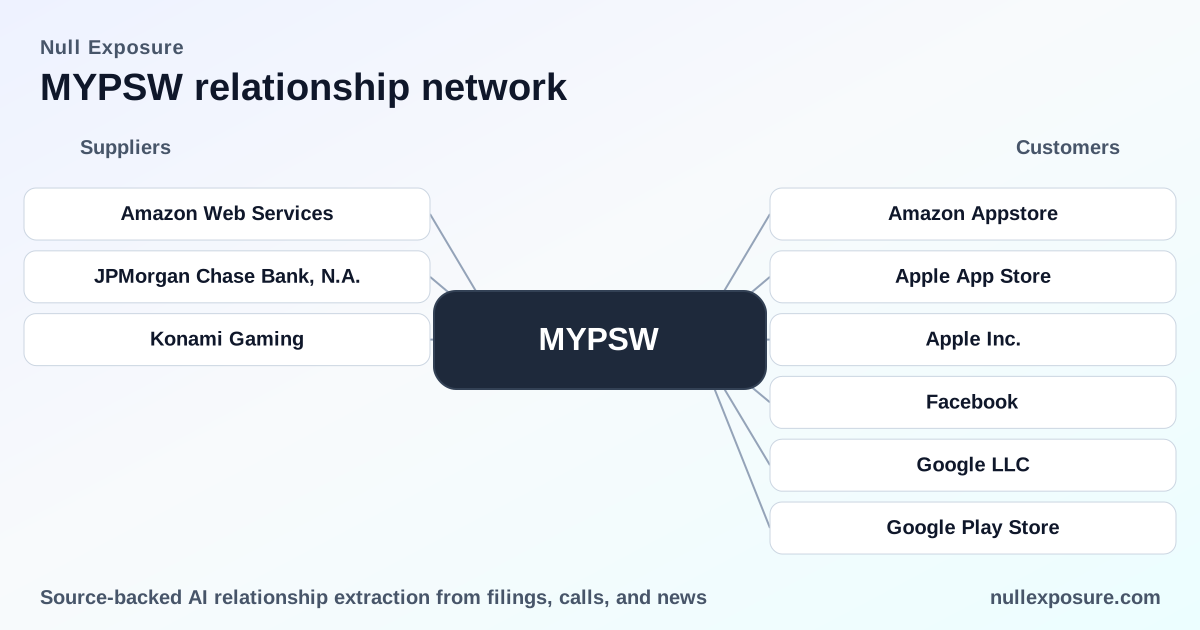
PLAYSTUDIOS operates as a mobile-first social casino publisher that monetizes through in‑game purchases of virtual currency, advertising placements, and offer-based revenue, distributing its titles through third‑party platforms and social channels that collect and remit game revenues. The company’s commercial footprint is concentrated in the app-store ecosystem and social platforms, which function as both distribution partners and critical revenue collection points. For a consolidated view of these customer relationships and implications for operators and investors, visit https://nullexposure.com/.
The business model in one line: player spending plus ad inventory sold through platform channels
PLAYSTUDIOS sells virtual currency directly to individual players inside its games and recognizes advertising and offer revenue at the point in time the ad or offer is delivered. The company’s economics therefore combine consumer micro‑transactions (repeatable, high-margin when engaged) with transactional advertising revenue that is sensitive to platform distribution and inventory pricing.
Why app stores and social platforms matter to MYPSW
PLAYSTUDIOS makes its games available through major third‑party platforms and collects the revenues generated on those platforms. Distribution partners are not optional channels — they are the primary commercial interface between PLAYSTUDIOS and its paying customers worldwide. Platform policy, fee structures, and discoverability directly influence monetization and growth.
Customer relationships on record (what the 2024 10‑K lists)
Below are every customer or platform relationship referenced in PLAYSTUDIOS’ FY2024 disclosures, with a concise plain‑English takeaway and source note.
Apple App Store
APPLE APP STORE is listed as a core distribution channel for PLAYSTUDIOS’ games; the company relies on the App Store to make titles available and to collect revenues generated there. According to PLAYSTUDIOS’ 2024 Form 10‑K, the App Store is a primary third‑party platform used to distribute and monetize games (FY2024 10‑K).
Google Play Store
GOOGLE PLAY STORE serves the same distribution and revenue‑collection role on Android devices, meaning Google’s store mechanics and fee policies materially affect MYPSW top‑line performance. The 2024 Form 10‑K identifies Google Play as a principal third‑party marketplace for the company’s mobile titles (FY2024 10‑K).
Amazon Appstore
AMAZON APPSTORE is included among the third‑party platforms PLAYSTUDIOS uses to reach players and capture in‑app revenue, extending the company’s reach beyond the major Apple/Google duopoly. This reliance is documented in the company’s FY2024 10‑K distribution disclosures (FY2024 10‑K).
FACEBOOK is cited as a social platform the company uses to make games available and collect associated revenues, reflecting PLAYSTUDIOS’ multi‑channel distribution strategy that includes social network placements. The FY2024 10‑K lists Facebook among third‑party platforms supporting game availability and revenue collection (FY2024 10‑K).
Apple Inc. (customer concentration / accounts receivable)
APPLE INC. is named explicitly in customer concentration/account receivable disclosures for FY2024, signaling a material billing or settlement relationship captured in the company’s financial filings. PLAYSTUDIOS’ 2024 Form 10‑K includes Apple Inc. in its customer concentration information for the 2024 reporting period (FY2024 10‑K).
Google LLC (customer concentration / accounts receivable)
GOOGLE LLC is likewise listed in the FY2024 customer concentration/account receivable disclosures, indicating a material counterparty relationship on the company’s reported receivables. PLAYSTUDIOS’ 2024 Form 10‑K records Google LLC in its customer concentration and accounts receivable schedules for 2024 (FY2024 10‑K).
How these relationships translate into operating constraints and model characteristics
The filing‑level excerpts and disclosure patterns reveal several structural features of PLAYSTUDIOS’ operating model:
-
Contracting posture — largely transactional. Advertising and offer revenue are recognized at a point in time when the advertisement or offer completes; this creates a transactional revenue profile for that stream rather than a long‑duration contract flow. That recognition posture creates quarter‑to‑quarter volatility tied to ad inventory fills and campaign timing.
-
Counterparty mix — individuals drive spend; platforms collect and remit. The company sells virtual currency directly to individual players (the primary revenue source for playGAMES), while app stores and social platforms act as distribution and collection intermediaries for those transactions. PLAYSTUDIOS therefore faces both consumer‑facing retention challenges and platform counterparty risk.
-
Geographic footprint — global distribution with North American concentration. The company reports worldwide virtual‑currency revenue but states that revenue is largely concentrated in North America, producing a regional concentration risk inside an otherwise global distribution footprint.
-
Relationship stage — deep, active user base underpins commercial ties. PLAYSTUDIOS reports over 100 million downloads and 13.1 million monthly active users for the year ended December 31, 2024, indicating mature, ongoing engagement that supports both in‑app purchases and ad inventory monetization.
-
Role dynamics — dual seller/buyer posture in different contexts. PLAYSTUDIOS acts as a seller of in‑game virtual currency to individual players and treats certain advertising counterparties as customers for ad placements within its games, establishing the company’s role as an intermediary supplier of audience access.
Investment implications and risk focus for operators and allocators
-
Platform concentration is a primary operational risk. Apple, Google, Amazon and Facebook are both distribution gatekeepers and funds‑collection conduits; changes in store policies, fee structures, or app discovery mechanics would directly compress revenue or increase customer acquisition costs.
-
Ad revenue volatility is intrinsic. Point‑in‑time ad recognition indicates short‑duration revenue that fluctuates with advertiser demand and fill rates, which complicates topline predictability even when active user metrics are strong.
-
Consumer retention drives durable revenue. The company’s core asset for monetization is an engaged player base that converts free currency to paid virtual currency; retention and spend per active user will continue to be the most material driver of revenue growth.
-
Regional concentration necessitates monitoring of macro and regulatory shifts in North America. Despite global reach, heavy North American revenue concentration increases sensitivity to regional economic cycles and regulatory action affecting digital gambling‑style offerings.
Bottom line: what investors and operators should track
PLAYSTUDIOS’ commercial viability hinges on player engagement and favorable distribution economics within major app ecosystems. Monitor active user trends, in‑app spend per DAU/MAU, and any policy or fee changes from Apple and Google; watch ad fill rates and advertiser demand for a read on short‑term revenue volatility. For deeper relationship-level monitoring and structured data on counterparties, see ongoing updates at https://nullexposure.com/.
Overall, PLAYSTUDIOS combines a steady stream of player micro‑transactions with transactional ad revenue that is highly dependent on platform distribution — a hybrid monetization model that rewards scale and engagement but is exposed to concentrated platform counterparty risk.