NewAmsterdam Pharma (NAMSW): Licensing the Path to Commercialization
NewAmsterdam Pharma operates as a clinical-stage biopharmaceutical company focused on therapeutics for cardiometabolic disease, monetizing primarily through out‑licensing of its lead candidate and related intellectual property to regional commercialization partners. The company’s revenue to date is concentrated in a single licensing arrangement that converts R&D value into near-term cash via an upfront payment and an expected future royalty/supply cadence. For investors and operators evaluating customer relationships, the Menarini license is the central commercial lever that both finances operations and defines go‑to‑market risk. Explore the underlying relationship map at https://nullexposure.com/ for a concise view of counterparties and filings.
How NewAmsterdam captures value and how that shapes the business
NewAmsterdam’s model is built on scientific development followed by non‑exclusive-to-exclusive licensing transactions that transfer commercialization responsibilities and market access to third parties while retaining upside via royalties and supply arrangements. The company granted a license that is exclusive, royalty‑bearing and sublicensable for most European countries, shifting local commercialization costs to the licensee while preserving an ongoing revenue stream if the product reaches market. According to public filings, that licensing arrangement has already generated the company’s only recorded revenue to date. (See the FY2024 10‑K and the June 23, 2022 license agreement language.)
This structure produces several operational characteristics that investors must weigh:
- High revenue concentration. One licensing contract accounts for the company’s recorded revenue, concentrating execution and cash realization risk in a single counterparty and geography.
- Capital conversion via upfront payment. The company recognized a material non‑refundable upfront payment at contract inception, providing near‑term liquidity but not eliminating development or regulatory risk.
- Commercial transfer of cost burden. The license transfers local development, regulatory and commercialization costs to the counterparties in the licensed territory, reducing NewAmsterdam’s near‑term cash burn tied to those activities while preserving supplier obligations for product supply once commercial.
The Menarini relationship in plain English
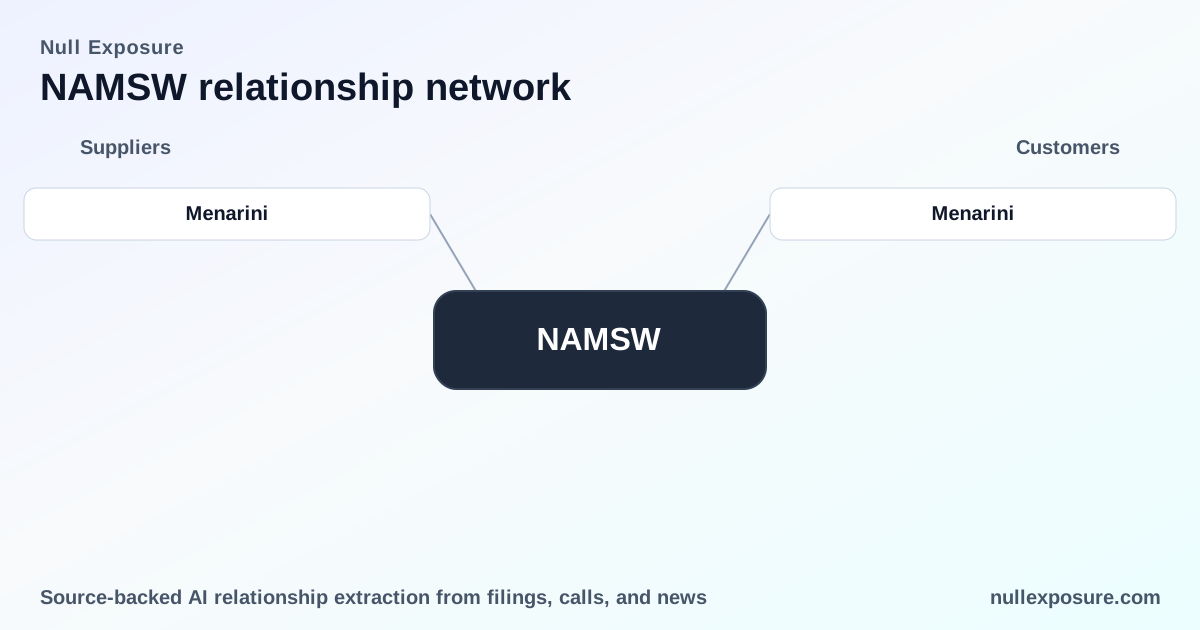
A. Menarini International Licensing S.A. holds an exclusive, royalty‑bearing, sublicensable license from NewAmsterdam for obicetrapib and fixed‑dose combinations in the majority of European countries; the license grants Menarini responsibility for post‑approval development and commercialization in its territory. This licensing agreement was executed on June 23, 2022 and forms the principal commercial relationship disclosed by the company (license documentation and company filings, June 23, 2022 and FY2024 10‑K).
To date, the Menarini License is the only source of recorded revenue for NewAmsterdam and all such revenues derive from Italy, per the company’s FY2024 filing. (FY2024 10‑K.)
Menarini is also positioned to purchase Licensed Products from NewAmsterdam under a supply agreement to be executed prior to commercialization, which positions NewAmsterdam as the supplier and creates manufacturing and logistics obligations that will materialize if the candidate is approved and commercialized in the Menarini territory (license agreement language, June 23, 2022).
Every customer relationship on record (single counterparties section)
- Menarini: Menarini holds an exclusive, royalty‑bearing and sublicensable license to commercialize obicetrapib in most European countries and is responsible for local post‑approval development and commercialization activities; the Menarini License has been the company’s only reported revenue source and those revenues derive from Italy, according to NewAmsterdam’s FY2024 10‑K and the June 23, 2022 license agreement.
Financial and operational consequences of the license structure
The company’s reported financials show modest revenues relative to ongoing operating losses, which positions the Menarini license as a crucial financing event rather than a full commercial revenue stream at scale. NewAmsterdam reported RevenueTTM of $22.5 million and a negative EBITDA of approximately $225.5 million in the latest filings, underlining the gap between development costs and recurring commercial cash flow (company financials, latest quarter 2025‑12‑31). The company also noted the receipt of a substantial non‑refundable upfront payment at contract inception — a material cash inflow recorded as part of its transaction price assessment — which provided immediate liquidity for continued R&D (company assessment of transaction price; July 2022 payment).
Because the spend/exchange excerpt does not explicitly name the licensee in the payment sentence, treat the upfront receipt as a company‑level monetization signal rather than an attribution to any single counterparty.
Contracting posture and commercial implications
The licensing agreement is characterized by:
- Exclusivity in territory (majority of European countries), which preserves commercial upside for NewAmsterdam if the product succeeds while allowing the licensee to control local commercialization.
- Sublicensing rights for the licensee, which increases the odds of regional sub‑partnering and potentially accelerates market access if the licensee elects to delegate commercialization.
- Supplier/buyer future dynamics, with NewAmsterdam positioned to supply licensed products under a forthcoming supply agreement that will determine margin profile and operating obligations at commercialization.
These contractual features reduce NewAmsterdam’s direct commercial burden in EMEA while creating concentration and operational dependencies tied to the counterparties’ execution, regulatory approvals, and manufacturing readiness.
Upside, risks, and what to monitor
Investors and operators should track a limited set of high‑signal items that will materially change the relationship profile and valuation stance:
- Regulatory milestones for obicetrapib in the Menarini territory and any regulatory filings or approvals in Europe.
- Execution of the supply agreement prior to commercialization and the commercial pricing/volume terms embedded in that contract.
- Any royalty or milestone payments recorded beyond the upfront, and the geographic footprint of recognized revenue (Italy vs. broader Europe).
- Potential sublicenses or secondary partnerships executed by Menarini within the Menarini Territory.
- Clinical progress and cash burn vs. liquidity runway given the company’s negative operating margins and historical EBITDA loss profile.
For an operational view on counterparties and to monitor future updates to the Menarini license or new arrangements, visit https://nullexposure.com/.
Bottom line: concentrated commercialization with a financing lifeline
NewAmsterdam has monetized R&D through a single, material licensing arrangement that supplies near‑term cash and transfers commercialization execution to a regional partner. That relationship de‑risks local commercial spend but concentrates revenue and operational outcome risk in one counterparty and geography. The value outcome for shareholders depends on regulatory success, the structure of the forthcoming supply agreement, and the licensee’s execution. Investors should treat forthcoming regulatory milestones and supply agreement disclosures as the principal drivers for re‑rating the company’s commercial prospects.