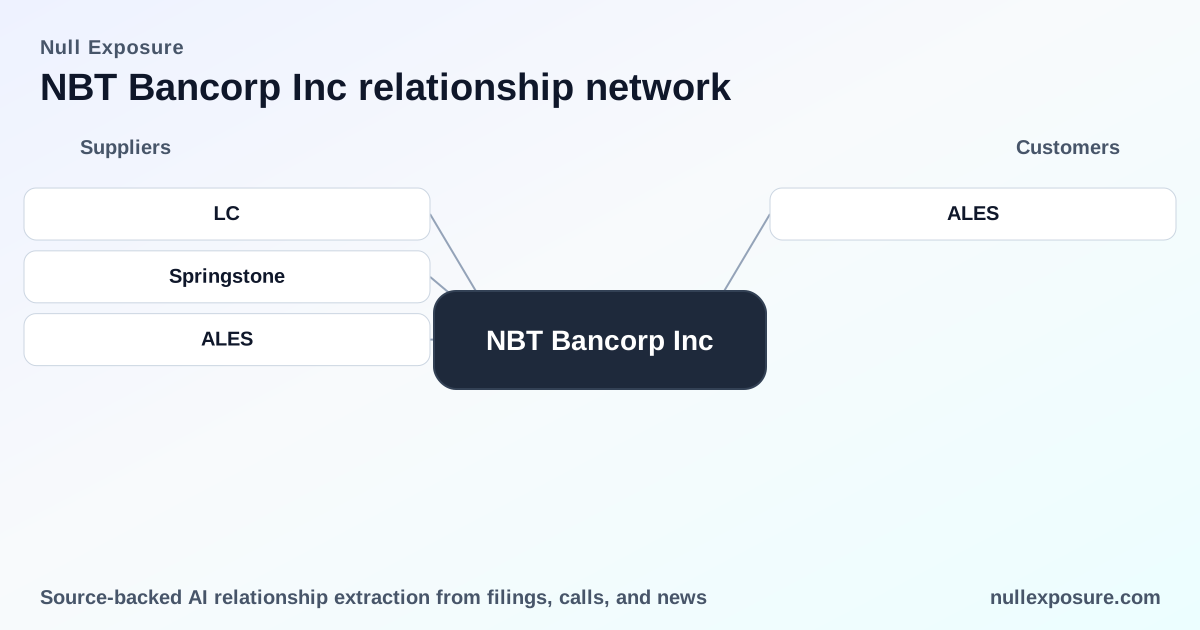
NBT Bancorp (NBTB) — Customer relationships that define a regional bank’s revenue mix
NBT Bancorp operates a tightly focused regional banking franchise headquartered in Norwich, NY, that monetizes through net interest income on a commercial and mortgage loan book, fee income from wealth management and insurance, and loan servicing revenue. The company leverages local deposit funding and third‑party servicing contracts to generate stable cash flow while expanding non‑interest income via acquired wealth and insurance channels. For investors evaluating customer counterparty exposure, the most relevant facts are concentration in a New England/Northeast footprint, a predominance of short‑term lending commitments and a meaningful loan‑servicing business that creates both fee income and counterparty touchpoints. Learn more at https://nullexposure.com/.
How NBTB’s customer relationships shape its operating model
NBTB runs a community‑bank operating model built for regional scale: local deposit gathering funds lending and wealth services sold through branch and advisory channels. Several constraints from recent filings and disclosures are useful as company‑level signals for underwriting customer relationships and counterparty risk:
- Contracting posture: short‑term. The bank’s commitments to extend credit and unused line exposures largely expire within one year and are typically renewed only after annual review. This structure reduces long‑dated contractual lock‑in and increases sensitivity to funding and cyclical credit conditions.
- Customer mix: municipalities and individuals matter. Public sector and individual customers are explicit parts of NBTB’s client base, reflecting the bank’s role as a regional lender to municipalities, small businesses and retail consumers across its footprint.
- Geographic concentration: Northeast/upper‑Mid‑Atlantic focus. The company’s loan collateral and client base are concentrated in upstate New York, northeastern Pennsylvania, southern New Hampshire, western Massachusetts, Vermont, southern Maine and parts of Connecticut—this creates correlated regional economic exposure but also deep local client relationships.
- Service orientation: provider and servicer. NBTB acts as a service provider—originating and servicing loans for unrelated third parties (nearly $1.0 billion of loans serviced at year‑end), and operating wealth and insurance subsidiaries that produce fee revenue and cross‑sell opportunities.
- Materiality profile: community services dominate; some non‑bank lines are immaterial. Wealth management is combined with banking for reporting purposes while insurance revenues are disclosed as immaterial for separate segment reporting.
- Spend and concentration signals: large servicing footprint. Loan servicing volumes place NBT among regional servicers, with counterparty cash flows and operational dependencies consistent with a $100m+ spend band for third‑party servicing activity.
These characteristics together define a liability‑light, service‑augmented banking model: core margins come from lending and deposits, with incremental stability provided by fee income, but the short‑term contract posture increases cyclicality in credit accommodations and renewals.
Active customer relationships in the public record
Below are every customer relationship surfaced in the public record for NBTB, summarized in plain English with source citations.
NY CREATES — a local lending and activity partner
NBTB provides a lending facility to NY CREATES and benefits from the economic activity that facility generates in the region, indicating a direct commercial lending relationship with a named local counterparty. According to an earnings call transcript (Investing.com, Q1 2026 earnings call, May 3, 2026), management described an active lending relationship and the ancillary benefits from activity on that account.
ALES — wealth and insurance customer base expansion
A SahmCapital research piece (March 5, 2026) highlights NBT’s strategic push to expand wealth management and insurance services, noting access to ALES/Evans’ customer base as a contributor to growing fee‑based revenue and a more resilient earnings profile; this indicates an acquisition or partnership linkage used to broaden non‑interest income.
Evans — channel for fee income growth
The same SahmCapital note (March 2026) references Evans as a customer channel that supports NBTB’s plan to expand advisory and insurance offerings, reinforcing that Evans’ client relationships are being integrated to increase recurring fee revenues.
What these relationships imply for revenue, risk and execution
Collectively, the disclosed relationships illuminate three structural dynamics for investors:
- Fee diversification is strategic and advancing. The ALES/Evans linkage is explicit evidence that management is executing on a strategy to shift revenue mix toward wealth and insurance fees, reducing reliance on interest spread volatility.
- Loan servicing is a material operational line. With nearly $1.0 billion of loans serviced for third parties, servicing fees are a persistent revenue stream and a source of counterparty dependency—operations and third‑party servicing scale are critical to preserve cash flow.
- Regional concentration concentrates macro risk. Geographic exposure to the Northeast ties asset performance to regional employment and CRE trends; underwriting should price in correlated credit cycles given the short‑term nature of many commitments.
Key takeaways for investors and operators
- NBTB is a regional lender that is actively diversifying into fee businesses to stabilize earnings. The ALES/Evans relationships are revenue‑side moves that change the long‑term mix in a measurable way.
- Short‑term credit commitments increase renewal risk but preserve balance‑sheet flexibility. This contracting posture works well in stable deposit markets but requires disciplined capital and liquidity management during stress.
- Loan servicing scale is both a source of durable fees and an operational dependency. The nearly $1.0 billion servicing footprint makes operations and vendor/technology reliability critical to earnings stability.
Risk notes (read as firm statements): regional economic weakness will compress NIM and increase renewals; any operational failure in servicing functions would directly hit fee income; and insurance revenue remains immaterial for reporting but strategically significant for margin diversification.
Conclusions and next steps
For institutional investors and operating partners, NBTB represents a low‑beta regional bank with active diversification into wealth and insurance alongside a sizable servicing business that supports recurring fees. Evaluate credit exposure with emphasis on regional macro trends and monitor execution on wealth/insurance integration for an updated view on earnings quality.
For deeper relationship maps and commercial diligence on NBTB’s counterparties, visit https://nullexposure.com/ to access structured customer intelligence and tracking for regional financial services firms.