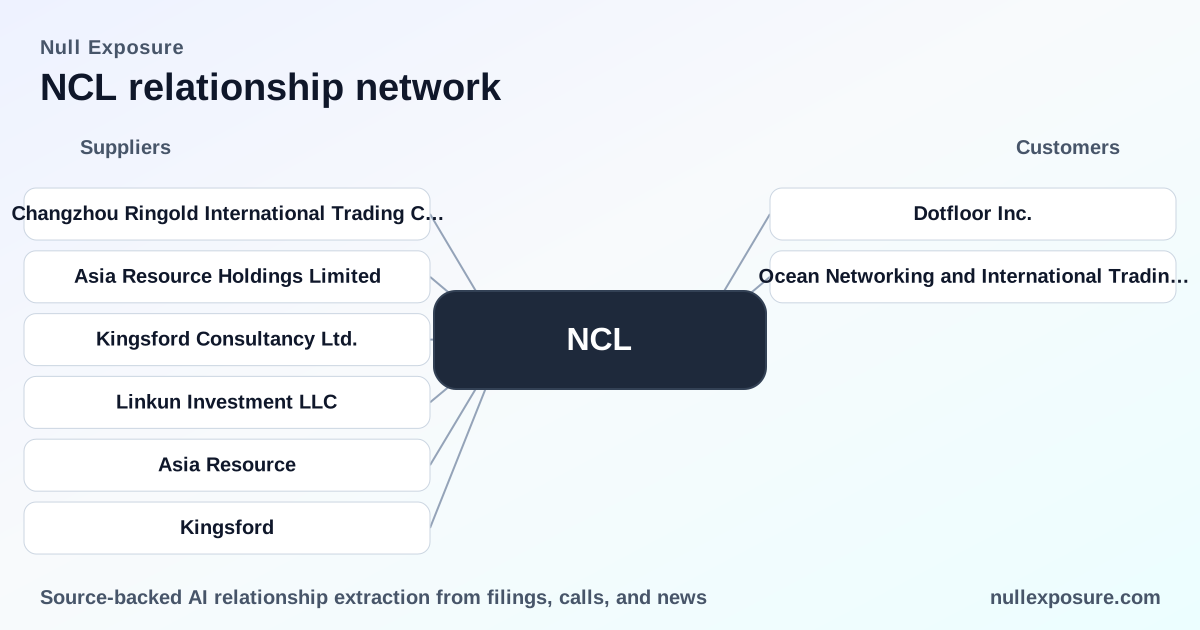
Northann (NCL) — Customer Relationship Intelligence and Risk Profile
Northann Corp. sells vinyl flooring through a mix of large wholesale distributors and direct retail channels, monetizing primarily through product sales to U.S. and Canadian customers; the company’s profitability depends on tight cost control and a small number of high‑value customer relationships that drive most revenue. For investors, the critical lens is concentration and counterparty risk: two customers account for the majority of revenue, and an active legal dispute with an international trading counterparty introduces receivable and earnings volatility. Learn more about how this analysis is generated at the Null Exposure homepage: https://nullexposure.com/.
One‑paragraph snapshot investors need
Northann reported $13.6M in trailing revenue with a gross profit of $3.577M and a negative EPS of -$0.78 (TTM). The company’s operating profile shows an early‑stage margin structure and high customer concentration: two customers represented nearly 72% of revenue in FY2024, and 100% of revenue originated in the United States during that year. Institutional ownership is minimal while insiders hold a meaningful stake, leaving management accountable for customer retention and commercialization execution.
What the 10‑K discloses about customers and channels
Northann’s FY2024 10‑K describes a two‑pronged go‑to‑market model: wholesale distribution into large‑sized distributors and direct retail sales through branded online storefronts and consumer channels. The filing lists specific customer relationships and a litigation matter, and it quantifies customer concentration and geographic concentration. These factors combine into a high‑leverage commercial posture: revenue is concentrated, counterparty types split between enterprises and individuals, and the company’s product sales represent the core business segment.
Relationship-by-relationship: the customers named in the filing
Dotfloor Inc.
Dotfloor operates dotfloor.com and functions as an online retail channel for vinyl flooring products sold to U.S. consumers; Northann identifies Dotfloor as a customer channel for its retail product line in the FY2024 10‑K. According to Northann’s 10‑K for the fiscal year ended December 31, 2024, Dotfloor is the online storefront through which Northann markets consumer vinyl flooring offerings to retail buyers.
Ocean Networking and International Trading, LLC
In November 2024 Northann initiated legal proceedings against Ocean Networking and International Trading, LLC for breach of contract related to invoices issued for products supplied, indicating a disputes-driven collections risk tied to that counterparty. The FY2024 10‑K records the commencement of litigation against Ocean Networking for unpaid invoices and contractual breaches.
Constraints and what they signal about the operating model
The company‑level signals pulled from the filing produce a clear operational profile:
- Concentration and criticality: Two customers generated nearly 72% of revenue, and the company designates “major customers” as those accounting for more than 10% of sales; this represents a concentrated revenue base that is material to earnings and liquidity. Investors must treat customer retention risk as equivalent to market risk for Northann.
- Geographic concentration: 100% of FY2024 revenue originated in the United States, with sales also focused in Canada for cross‑border retail channels; this reduces foreign exchange complexity but increases exposure to North American construction and renovation cycles.
- Counterparty mix and contracting posture: The company explicitly sells to large wholesale distributors and to individual consumers for home renovation, implying a hybrid contracting posture: bulk, invoice‑based wholesale agreements alongside high‑volume but lower‑value retail transactions through online channels.
- Segment focus and maturity: Northann’s revenues “mainly consist of wholesale and retail of vinyl flooring products,” placing product sales as the core segment and indicating a business model built on manufacturing/merchandising rather than recurring service revenue.
- Relationship stage: The filing treats these channels as active sources of revenue during FY2024, and the existence of a legal dispute signals active post‑sale risk management rather than dormant or legacy exposure.
Credit, operational and market implications for investors
Concentration elevates several risks while offering operational levers when managed correctly:
- Receivables and working capital vulnerability: With two customers accounting for the lion’s share of sales, a single default or negotiation setback creates immediate liquidity pressure; the Ocean Networking litigation is an active example of that risk crystallizing.
- Negotiation asymmetry: Large wholesale counterparts hold pricing and payment leverage. Northann must protect margins through supply chain efficiency and contract terms that limit extended payment cycles.
- Revenue volatility despite focused channels: 100% U.S. exposure reduces FX volatility but ties performance directly to North American renovation cycles, commodity and freight costs, and domestic distribution capacity.
- Operational focus required: The mix of enterprise and individual customers places competing demands on inventory, fulfillment, and marketing spend; effective segmentation and channel economics are critical to restoring positive EPS.
Monitoring checklist and investor actions
- Review accounts receivable aging and litigation disclosures each quarter to assess collections progress on the Ocean Networking dispute.
- Track any customer‑specific disclosures that reduce the two‑customer concentration, such as new distribution partnerships or diversification into different end markets.
- Monitor margin improvement initiatives and gross profit trends to determine whether scale and pricing discipline are taking hold.
- Evaluate management commentary on contracting terms with large distributors and on the strategic importance of retail channels like dotfloor.com.
If you want a deeper, model‑ready extraction of Northann’s customer disclosures and a rolling watchlist for litigation and concentration events, visit Null Exposure for the full intelligence suite: https://nullexposure.com/.
Bottom line
Northann generates revenue through wholesale and retail vinyl flooring sales, but its business is highly dependent on a small number of customers and concentrated in the U.S., creating significant earnings and liquidity sensitivity. The Dotfloor retail channel provides consumer access while the Ocean Networking dispute illustrates the near‑term receivables risk investors must watch. For active investors and credit analysts, the key focus is on diversification of the customer base, receivables resolution, and sustainable margin improvement as prerequisites for upside.