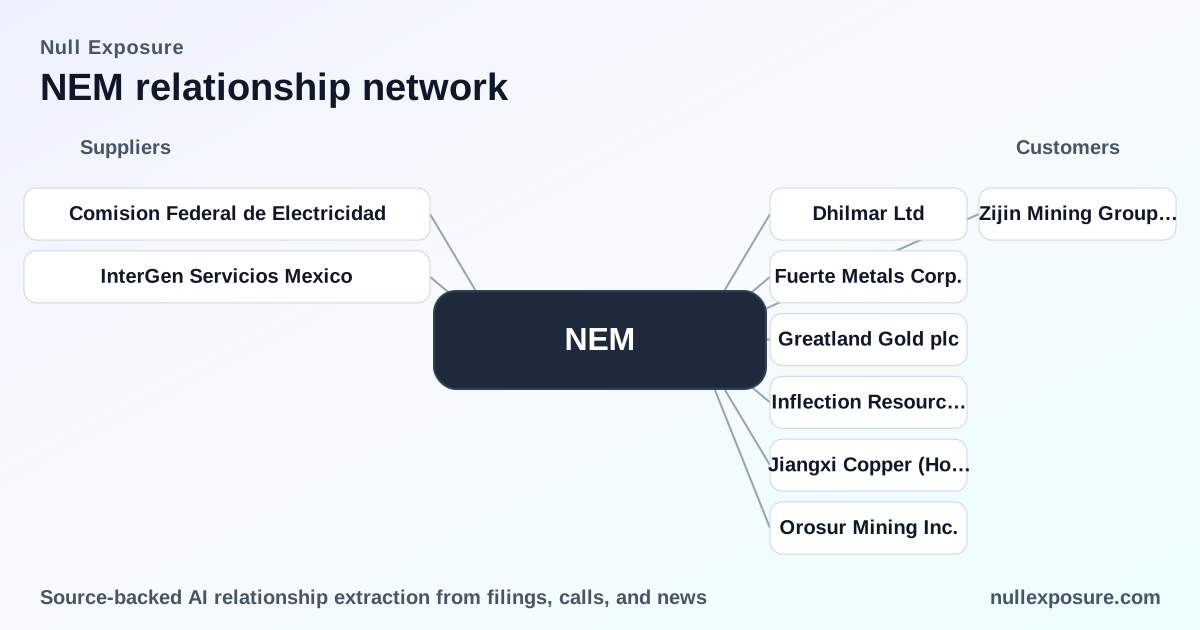
Newmont (NEM) — asset divestitures and customer relationships that reshape operating risk
Thesis: Newmont monetizes a global portfolio of gold-focused mining assets through direct commodity sales, concentrate dispositions to smelters and traders, and selective asset divestitures; the company's operating cash flow is driven by gold-centric production (≈85% of sales) while monetization strategy increasingly leverages asset sales and joint-venture exits to optimize portfolio exposure and capital allocation. Investors should read the recent customer and transaction flow as a signal that Newmont is transitioning certain non-core assets into cash while maintaining a concentrated revenue profile tied to a handful of large trading counterparties and long-dated offtake terms.
For a deeper monitor of Newmont’s evolving customer and asset flows, see https://nullexposure.com/.
What this coverage captures — why relationship-level signals matter
Newmont is a seller-first business: it extracts and sells physical metals and occasionally sells equity stakes or whole assets to other miners and financiers. The entries below document asset-level disposals and partner transactions across FY2024–FY2026 that directly affect production footprints, near-term revenue streams and counterparty exposure. Each relationship summary is a plain-English take on the transaction and the public source that reported it.
Asset disposals and buyers — transaction-by-transaction summaries
-
SSR Mining (SSRM): SSRM acquired the Cripple Creek & Victor (CC&V) mine in Colorado from Newmont in February 2025; later filings show CC&V contributed a meaningful portion of SSRM revenues (28% after acquisition) alongside Marigold (33%). Source: Elko Daily reporting (March 10, 2026) and a TradingView/Zacks summary of SSRM results (May 2026).
-
Dhilmar Ltd: Dhilmar completed the acquisition of the Éléonore operation in Northern Quebec from Newmont; the deal transfers a producing Canadian asset and associated regional exposure out of Newmont’s portfolio. Source: SimplyWallSt note summarizing Newmont activity (first reported March 10, 2026).
-
Fuerte Metals Corp.: Fuerte agreed to acquire the Coffee Project in Yukon from Newmont for $50 million, representing a staged disposal of exploration/project inventory in Canada. Source: SimplyWallSt coverage (March 10, 2026).
-
Greatland Gold plc: Greatland completed acquisition of 70% of the Havieron gold-copper project and full ownership of the Telfer gold-copper mine from Newmont, moving complex gold-copper assets into a junior/operator structure. Source: SimplyWallSt coverage (March 10, 2026).
-
Inflection Resources Ltd.: Inflection completed acquisition of the Bell River Project from Newmont, another example of converting exploration/early-stage assets into JV or outright sales. Source: SimplyWallSt coverage (March 10, 2026).
-
Jiangxi Copper (Hong Kong) Investment Co. Ltd.: Jiangxi completed the acquisition of the remaining 87.81% stake in SolGold Plc that listed several sellers including Newmont, illustrating Newmont’s role as a strategic joint-holder in larger copper/gold plays that are being consolidated by Asian offtakers and miners. Source: SimplyWallSt summary (March 10, 2026).
-
Orla Mining (ORLA): Reporting noted Newmont had divested the Musselwhite Mine to Orla, with commentary that Newmont may regret the sale given asset value upside — an indicator that divestitures carry valuation and operational trade-offs for the seller. Source: The Deep Dive analysis (May 3, 2026).
-
Fury Gold Mines (FURY): Fury and Newmont affiliates entered an agreement for Fury to purchase Newmont’s roughly 49.98% interest in the Éléonore South project for C$3 million, a targeted disposal of a minority interest in a Quebec asset. Source: Mining.com report (May 3, 2026) and further SimplyWallSt coverage (May 2026).
-
Orosur Mining Inc.: Orosur completed acquisition of the remaining 51% stake in the Anzá Project in Colombia from Newmont and partner Agnico Eagle, representing divestment of regional Colombian exposure and transfer of mid-stage project risk. Source: SimplyWallSt coverage (March 10, 2026).
-
Zijin Mining Group Company Limited: Zijin completed acquisition of Newmont Golden Ridge Limited from Newmont, reflecting Asian capital redeployments into Australian projects formerly held by Newmont. Source: SimplyWallSt coverage (March 10, 2026).
-
Triple Flag Precious Metals Corp. (TFPM): Triple Flag completed the acquisition of Maverix Metals Inc. from a syndicate that included Newmont, Pan American and Kinross — this is illustrative of Newmont exiting streaming/royalty or portfolio metal-finance exposures into a precious-metals-focused financier. Source: TSX/Triple Flag transaction note (reported May 4, 2026).
-
Fury Gold Mines (FURY) — additional line: Fury also bought a 10.98% stake in Sirios Resources from Newmont and Goldcorp, further evidence of Newmont paring small, non-core equity stakes. Source: SimplyWallSt coverage (March 2, 2026).
Each item above is grounded in contemporaneous press reporting and market summaries between 2024 and 2026. These transactions collectively reallocate capital away from minority-stage stakes and select regional operations into core-belt holdings and returns to shareholders.
What the constraints tell investors about Newmont’s operating posture
The relationship-level activity sits alongside contract and counterparty signals extracted from Newmont’s disclosures. These are company-level operating signals that shape monetization risk and concentration.
-
Contracting posture: Newmont operates with a blend of long-term off-market obligations and short-term provisionally priced sales. The company is contractually obligated to sell 25% of Peñasquito silver production to Wheaton Precious Metals under a long-term off-market offtake with inflation adjustments; concurrently, a material share of by-product sales are provisionally priced and recognized subject to final settlement. Source: Newmont filings summarized in constraints evidence (FY2026).
-
Counterparty concentration: Newmont’s cash receipts show large financial counterparties account for material shares of sales/payment flows — customers with >10% of sales included Standard Chartered, JPMorgan Chase and Royal Bank of Canada in 2024, indicating payment/receipt concentration with global banks rather than a diversified retail customer base. Source: FY2024 disclosure excerpt (company filing).
-
Geographic and operational maturity: Newmont is a global producer with material operations across North and South America, Australia, Papua New Guinea, West Africa and other jurisdictions, which gives it diversified asset exposure but concentrates revenue around gold pricing and USD-denominated metal contracts. Source: company operations disclosures (FY2026).
-
Materiality and business model: Gold is the core driver — 85% of sales in the last three reported years were attributable to gold, establishing high commodity-concentration risk but also focused operational expertise and pricing alignment. Source: FY2024–2022 sales composition.
-
Relationship role and segment: Newmont is primarily a seller of mined metal and concentrate; disposals in 2024–2026 show asset monetization as an active tool to reshape the portfolio and manage capital returns versus reinvestment. Source: company revenue model descriptions and transaction reporting.
Collectively these constraints imply a seller-dominant contracting posture, high product concentration (gold), meaningful counterparty concentration with large financial institutions, and mature global operations that balance operational scale against divestiture-driven volatility in near-term production.
Investment implications and risk-reward takeaways
- Positive: The asset sales sequence accelerates free cash flow generation and reduces capital intensity in peripheral jurisdictions, supporting the company’s ability to maintain dividends and buybacks while focusing on high-margin core assets.
- Negative: Concentration in gold and reliance on a small set of large financial counterparties for settlement and marketing create vulnerability to price swings and counterparty stresses; long-term offtake terms with off-market pricing (e.g., the Wheaton Peñasquito contract) lock in below-market economics for a portion of by-product output.
- Net: Investors should treat recent disposals as deliberate portfolio optimization that improves near-term liquidity while preserving a concentrated exposure to gold price cycles and large-bank counterparties.
For ongoing tracking of Newmont’s counterparty shifts and asset monetization, review our coverage at https://nullexposure.com/.
Bold takeaways: Newmont is selling non-core assets to crystallize value while remaining a high-conviction gold producer; concentration risks — both commodity and counterparty — are the primary drivers of near-term cash-flow volatility.