Neonode (NEON) — Customer relationships that drive a niche sensor play
Neonode develops optical sensing technologies and monetizes primarily through licensing and module sales to OEMs and Tier‑1 suppliers that embed its zForce and MultiSensing products into consumer electronics, automotive cockpits and kiosk solutions. Revenue concentration is high and contract economics are unit‑based license fees plus product sales, creating a business that is operationally lean but exposed to a small group of large customers and episodic non‑operating gains (patent settlements) that materially affect reported results. For a deeper read on how customer concentration and licensing leverage operational returns, visit https://nullexposure.com/.
How Neonode makes money and why customers matter
Neonode’s uplifts come from two buckets: recurring per‑unit license fees tied to customer shipments and direct sales of sensor modules. The company’s FY2024 10‑K discloses customers that accounted for sizeable shares of revenue, underlining a concentrated revenue base that is commercially attractive (high margin per unit when volumes scale) but operationally sensitive to order timing and OEM program cycles.
- Contracting posture: Neonode leans on licensing and OEM agreements; license fees are recognized largely when customer products ship.
- Geographic footprint: Customers sit across North America, EMEA and APAC, consistent with a global OEM go‑to‑market.
- Commercial maturity: Multiple licensees are actively shipping Neonode tech, signaling product maturity in targeted verticals.
Major implications for investors
Neonode’s model benefits from high gross margins on intellectual property, but investors must account for customer concentration, program timing risk, and occasional one‑off legal/assignment gains that can swing operating results. The FY2025 results reflect both operating revenue of roughly $2.06M and a material patent assignment gain that drove headline profitability.
Customer relationships and what they mean for NEON
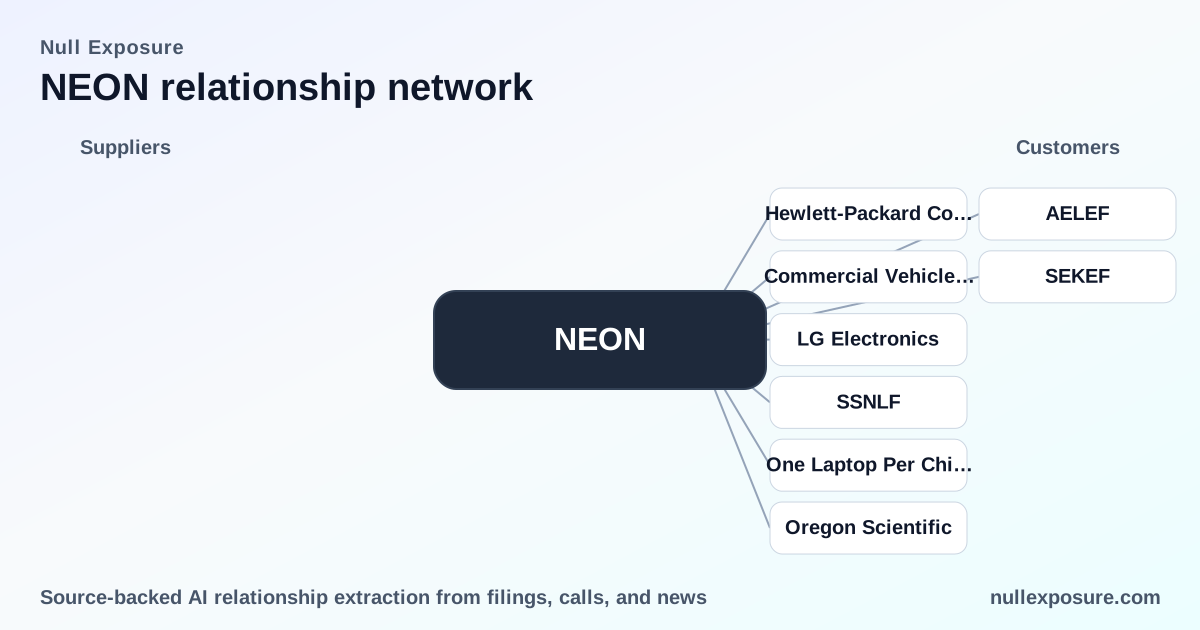
Hewlett‑Packard Company
Hewlett‑Packard accounted for 33.3% of revenues in 2023 and 20.4% in 2024, making HP a top strategic customer whose program volumes materially influence Neonode’s top line; this disclosure comes from Neonode’s FY2024 10‑K. (Source: Neonode 2024 10‑K)
Commercial Vehicle OEM
A single commercial vehicle OEM represented 11.8% of 2024 revenues, signaling Neonode’s traction in in‑cab or fleet applications and exposure to automotive program cadence as disclosed in the FY2024 10‑K. (Source: Neonode 2024 10‑K)
LG Electronics
LG Electronics was listed as contributing 13.1% of revenues in 2023, reflecting customer reach into consumer electronics categories where Neonode technology is licensed into displays and devices (FY2024 10‑K). (Source: Neonode 2024 10‑K)
Merim Groupe
Neonode signed an OEM agreement with Merim Groupe for design, marketing and sales of contactless kiosk products that use Neonode Touch Sensor Modules; the deal was announced in May 2026 press coverage and embedded in reports about new commercial partnerships and private placements. (Source: RavePubs and related May 2026 coverage)
SSNLF
Press commentary around Neonode’s IP litigation scenarios mentions SSNLF in the context of potential licensing outcomes tied to Samsung, reflecting market discussion of litigation upside rather than a disclosed revenue relationship in Neonode’s filings. (Source: TimothySykes news commentary, 2024 article reposted in 2026)
Samsung Electronics
Samsung figures in multiple news items tied to a patent settlement and assignment: press reports noted Neonode’s entitlement to a share of proceeds from Samsung litigation, and later media coverage linked Neonode’s FY2025 results to patent‑related gains involving Samsung. (Sources: Investing.com May 2026; TradingView May 2026)
Aequitas Technologies LLC
Neonode assigned certain patents to Aequitas and is contractually entitled to 50% of net proceeds under that 2019 assignment; Neonode reported gains from the patent assignment to Aequitas of $15.5 million in its FY2025 disclosures. (Source: Neonode press release / Cision reporting, May 2026)
NEXTY Electronics
Neonode disclosed growth with NEXTY Electronics as NEXTY moved zForce‑based amusement systems into production late in the year, indicating an active product shipment relationship and contribution to 2025 production ramp activity. (Source: Neonode 2025 financial report via Cision, May 2026)
Oregon Scientific
Historical licensing activity includes Oregon Scientific as a licensee in children’s tablets and other consumer devices, cited in legacy press coverage about Neonode licensing MultiSensing technology. This reflects Neonode’s multi‑segment licensing history. (Source: Yahoo News coverage, May 2013 archived item referenced 2026)
One Laptop Per Child
One Laptop Per Child was cited in historical coverage as a licensee of Neonode technology for the XO‑4 Touch tablet, illustrating an earlier generation of OEM licensing wins in education tablets. (Source: Yahoo News coverage, May 2013 archived item referenced 2026)
Alpine Electronics / AELEF
Alpine Electronics (listed also under ticker AELEF in filings) accounted for 18.2% of revenues in 2023 and 20.7% in 2024, marking Alpine as a high‑value automotive customer with consistent program shipments disclosed in Neonode’s FY2024 10‑K. (Source: Neonode 2024 10‑K)
Seiko Epson / SEKEF
Seiko Epson (SEKEF) was responsible for 20.2% of revenues in 2023 and 27.3% in 2024, making Epson the single largest reported customer in 2024 and a primary driver of Neonode’s revenue concentration risk disclosed in the 10‑K. (Source: Neonode 2024 10‑K)
Samsung (TradingView reference)
Independent market summaries noted that Neonode’s completion of a patent assignment settlement with Samsung contributed a reported $19.4 million gain in 2025, a figure cited in market news coverage that highlights the material impact of IP transactions on reported results. (Source: TradingView news summary, May 2026)
Operational constraints and what they signal about Neonode
The company disclosures and extracted signals show clear company‑level characteristics:
- Licensing is core: Neonode recognizes license fees largely on a per‑unit basis when customers ship products, which makes revenue volatile but scalable with OEM success.
- Global customer footprint: Customers are concentrated across North America, EMEA and APAC, consistent with OEM placement and automotive Tier‑1 relationships.
- Role and stage: Neonode primarily functions as a licensor and seller of sensor modules; several licensees are actively shipping products (company disclosure).
- Spend profile: Public filings imply mid‑range account sizes (company signals place typical named customers in a $100k–$1M band within reported revenues), reinforcing the idea that a handful of customers drive the bulk of revenue.
These constraints translate into a commercially efficient but concentrated model: if OEM programs scale, Neonode delivers disproportionate margin lift; if a major program slows, headline revenue and profitability shift quickly.
Risks, catalysts and investor takeaways
- Risk – concentration: Seiko Epson, Alpine and HP together comprised a large share of 2024 revenues; any program change or sourcing decision at these customers will materially affect NEON’s secular growth.
- Catalyst – IP monetization: The Aequitas assignment and Samsung‑related proceeds materially improved 2025 operating results and provide an earnings cushion; investors should separate recurring licensing trends from one‑off IP gains.
- Operational upside: Active shipping licensees and new OEM agreements (e.g., Merim Groupe, NEXTY production ramps) create a path to durable unit licensing revenue if program scale continues.
For primary research and further breakdowns of customer concentration, contract types and revenue recognition patterns, see the full company disclosures and curated analytics at https://nullexposure.com/.
Conclusion: Neonode is a focused IP and module supplier where small customer lists and licensing economics create both attractive margin leverage and concentrated business risk — investors should value Neonode on the twin axes of recurring license trajectories and the timing of non‑recurring IP receipts.