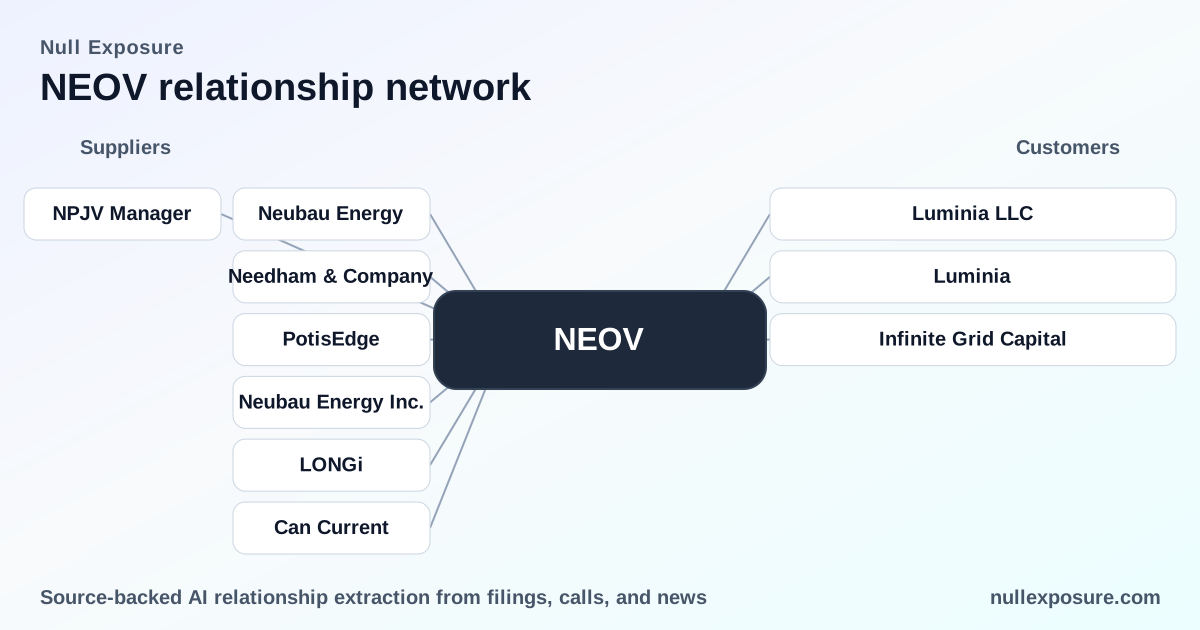
NeoVolta (NEOV): Customer Momentum and the Path to Commercial-Scale Revenue
NeoVolta designs, manufactures and sells battery energy storage systems and monetizes primarily by selling engineered energy storage hardware and integrated systems through a network of certified solar installers, regional distributors and strategic project developers; the company supplements hardware sales with strategic supply collaborations that target commercial & industrial (C&I) and grid-scale projects. Recent contract wins and strategic frameworks — a $1.9 million purchase order and multi‑megawatt frameworks — validate a deliberate shift from residential installer channels toward larger, higher‑value commercial relationships. For investors, the question is not whether NeoVolta can sell product, but whether these early commercial relationships scale enough to offset concentration and margin pressure inherent in a young hardware business.
Explore more company relationship analysis at https://nullexposure.com/.
What recent customer activity tells investors
NeoVolta’s recent announcements reveal a two‑track go‑to‑market: continue supplying a fragmented installer/distributor base while selectively pursuing larger, project‑level partnerships that deliver multi‑megawatt scale. The $1.9 million order from Luminia demonstrates the commercial unit economics of C&I engagements, while a cooperation framework with Infinite Grid Capital signals potential alignment with grid‑scale pipelines. Internally disclosed operating signals reinforce this view: NeoVolta sells primarily through small installers and a handful of dealers, it is concentrated by revenue, and it remains U.S.‑centric. These dynamics create an asymmetric growth profile — upside from successful scaling into larger projects, and downside from customer concentration and the capital intensity of scaling manufacturing.
Relationship snapshot: who NeoVolta is selling to now
Below are the relationships found in public reporting and press coverage. Each entry is condensed to one or two plain‑English sentences with source attribution.
Luminia / Luminia LLC
NeoVolta received a confirmed purchase order from Luminia valued at approximately $1.9 million for 40 NVGAIN‑125K261 battery storage units, marking NeoVolta’s first commercial transaction into the commercial and industrial storage sector and executing the strategic supply collaboration announced earlier. According to the company press release covered by The Globe and Mail and Renewables Now (May 3, 2026), the Luminia relationship also stems from a March 2026 non‑binding framework that contemplates supply collaboration for up to 160 MWh of solar‑plus‑storage projects in California. (The Globe and Mail; Renewables Now; SolarQuarter, March–May 2026.)
Eos Linx
NeoVolta systems are slated for deployment in Eos Linx EV charging stations installed at a major hotel brand, signaling product placement into commercial EV charging infrastructure and an adjacent channel to hospitality and fleet electrification customers. This deployment was reported through industry coverage in May 2026. (Simply Wall St, May 2026.)
Infinite Grid Capital
NeoVolta entered definitive agreements led by Infinite Grid Capital to advance a U.S. battery energy storage manufacturing initiative and to evaluate future commercial opportunities, including potential offtake alignments that would connect NeoVolta’s commercial channels to IGC’s grid‑scale pipeline. The collaboration was announced in a press release summarizing an initiative to advance up to 2 GWh of U.S. manufacturing capacity. (FinancialContent / PressReach, November 2025.)
Why these relationships matter for revenue and margins
- Revenue concentration and step‑function growth potential. NeoVolta’s top dealer customers historically generated a disproportionate share of revenue; a $1.9 million C&I order and a potential multi‑megawatt pipeline create step changes in order size that can materially influence revenue recognition in individual quarters. NeoVolta reported roughly $18.1 million in trailing‑twelve‑month revenue and negative operating margins, so each C&I win meaningfully affects the headline results.
- Channel diversification reduces but does not eliminate concentration. Adding developers and strategic partners (Luminia, IGC) complements the installer/distributor channel, but company disclosures indicate a small number of large dealers still account for a large portion of revenue — a structural concentration risk until product volume and customer breadth increase.
- Margin pressure from hardware and nascent scale. Hardware gross margins and operating leverage are constrained while manufacturing and customer support scale; strategic manufacturing partnerships are necessary to reduce unit costs but take time and capital to realize.
Operating constraints that shape execution risk
Company‑level disclosures and the reporting summarized above reveal several operational constraints that investors should weigh:
- Contracting posture: channel‑centric sales. NeoVolta sells primarily through certified installers and regional distributors and relies on just‑in‑time availability for recurring purchasers, which creates operational dependence on channel inventory and certification processes.
- Counterparty profile and concentration. The installer base is highly fragmented (thousands of small operators), which is NeoVolta’s core customer pool, while two dealers historically represented approximately 41% and 23% of revenues in a recent year — a material concentration that increases earnings volatility.
- Geographic focus and maturity. NeoVolta’s go‑to‑market remains concentrated in North America, with an initial emphasis on Southern California and expansion across U.S. markets; the company’s limited operating history makes these growth moves execution‑sensitive.
- Customer spend bands and deal economics. Public orders reported to date (notably the $1.9M Luminia PO) sit comfortably in the $1M–$10M spend band, suggesting that near‑term revenue growth will come from multiple mid‑sized C&I contracts rather than many micro sales.
These are company‑level signals drawn from NeoVolta’s reporting and market coverage; they inform the firm’s contracting flexibility, revenue volatility and capital requirements without being attributed to any single customer unless explicitly named.
Investment implications and risk‑reward profile
Bull case: NeoVolta leverages its installed base and strategic supply frameworks to scale into repeatable multi‑megawatt deployments; manufacturing partnerships reduce unit costs and improve gross margins, converting hardware sales into predictable, higher‑value commercial revenues.
Bear case: Customer concentration, negative operating margins and the capital intensity of scaling manufacturing keep profitability elusive; failure to convert frameworks into definitive large‑scale offtake contracts leaves revenue growth stochastic and stock volatility elevated.
Key investor takeaways:
- The Luminia order is commercially important and strategically validating — it proves NeoVolta can win mid‑six‑figure to low‑seven‑figure C&I business and execute product delivery. (Company press releases and industry coverage, March–May 2026.)
- Scaling requires execution on manufacturing and distributor diversification — partnerships such as Infinite Grid Capital are signals of intent but require milestones to materially alter cost structure and revenue cadence.
- Short‑term financials will remain lumpy until a broader set of multi‑megawatt contracts replaces the historical dependency on a small number of dealers.
For a concise breakdown of NeoVolta’s partner relationships and how they feed into commercial revenue models, visit https://nullexposure.com/.
Bottom line
NeoVolta is transitioning from a small‑dealer installer model toward higher‑value strategic supply agreements. The company’s recent Luminia purchase order and IGC collaboration materially improve the revenue runway narrative, but customer concentration, U.S. geographic focus and scale‑up execution remain the principal investment risks. For investors and operators, focus on the cadence and convertibility of frameworks into firm orders, plus the timeline for manufacturing scale, as the best near‑term indicators of durable value creation.