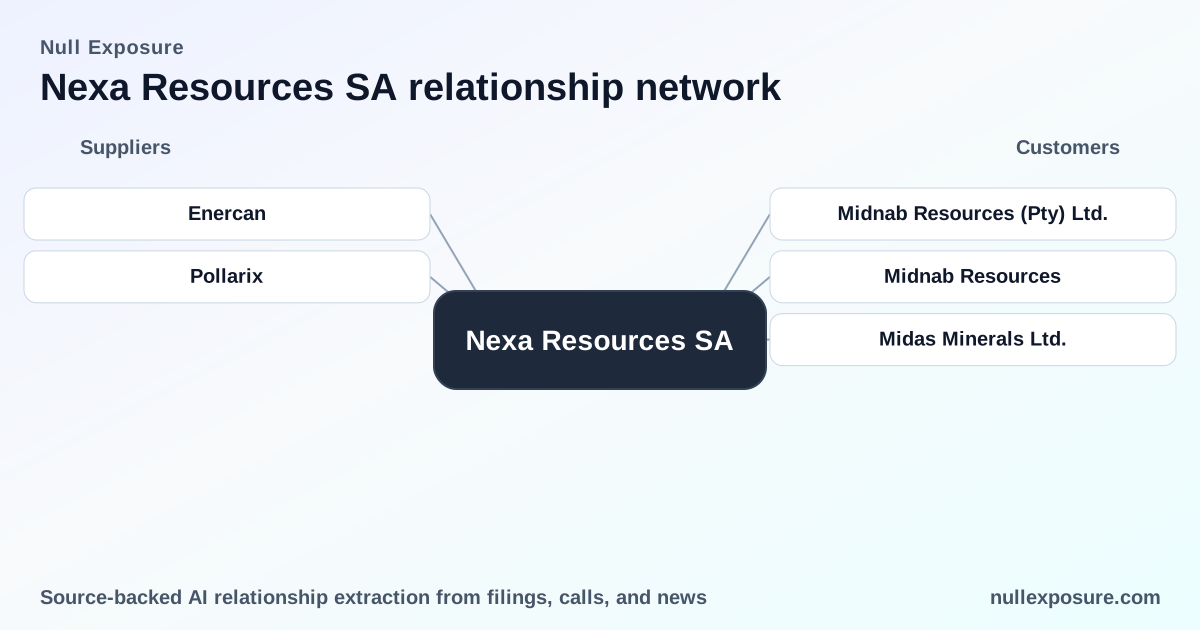
Nexa Resources (NEXA): Asset sales reshape the customer and counterparty map
Nexa Resources S.A. is a zinc-focused mining and smelting company that monetizes through the sale of concentrates and refined metals, operating asset-level mines and processing complexes while selectively monetizing exploration and non-core projects via divestitures. The company is cash-generative with FY2025–FY2026 revenues around US$3.0bn and EBITDA near US$660m, and it is actively reallocating capital by selling smaller projects to third parties to improve capital efficiency and focus on core operations.
For a succinct overview of Nexa’s corporate profile and financials visit https://nullexposure.com/.
Why the recent transactions matter to investors
Nexa’s announced and completed disposals in Namibia and Brazil are strategic portfolio pruning, not a pivot away from zinc production. The company converts non-core exploration rights into near-term cash, shares proceeds with partners as required, and tightens operational focus on its higher-margin assets. That improves near-term free cash flow and reduces exploration capital intensity, which is materially relevant for equity and credit valuation.
If you want a concise, investor-focused feed on Nexa and comparable metals companies, see https://nullexposure.com/.
Documented relationship entries — what the sources report
Below are each of the entries observed in the results set; every item is covered with a short, plain-English summary and the source reference.
-
Nexa — reported sale to Midnab Resources (SimplyWall News) — FY2026: Nexa completed the sale of its Otavi Project and ten Exclusive Prospecting Licenses in Namibia to Midnab Resources, a move cited alongside Nexa’s Q3 2025 revenue and EPS beats. Source: SimplyWall News coverage (first seen Mar 10, 2026) — https://simplywall.st/stocks/us/materials/nyse-nexa/nexa-resources/news/nexa-resources-nexa-is-up-167-after-namibia-asset-sale-and-e
-
Midnab Resources (Pty) Ltd. — FXStreet report — FY2025: Market commentary noted Nexa closed the previously disclosed sale of the Otavi Project to Midnab Resources (Pty) Ltd., described as a wholly owned subsidiary of Midas Minerals. Source: FXStreet (Dec 29, 2025) — https://www.fxstreet.com/amp/news/nexa-resources-nexa-surges-62-is-this-an-indication-of-further-gains-202512291405
-
Midnab Resources (Pty) Ltd. — Nexa press release via Newsfile — FY2025: Nexa announced the closing of the Otavi Project transaction by its subsidiary Votorantim Metals Namibia (Pty) Ltd. to Midnab Resources (Pty) Ltd., noting the licenses transferred were ten EPLs covering Otavi and Namibia North. Source: Nexa press release on Newsfile (Mar 10, 2026) — https://www.newsfilecorp.com/release/278822/Nexa-Resources-Announces-Closing-of-Otavi-Project-Sale-to-Midnab-Resources
-
Midnab Resources — SimplyWall valuation piece — FY2026: Analysts reacted to the Otavi sale, with commentary that JOGMEC would receive 49% of proceeds and that analysts raised earnings estimates following the deal. Source: SimplyWall valuation analysis (first seen Mar 10, 2026) — https://simplywall.st/stocks/us/materials/nyse-nexa/nexa-resources/news/a-look-at-nexa-resources-nexa-valuation-after-otavi-sale-and/amp
-
Midnab Resources — SahmCapital report — FY2026: SahmCapital relayed the same completion of the Otavi sale to Midnab Resources and highlighted Nexa’s Q3 2025 revenue and EPS outperformance as market context. Source: SahmCapital (Jan 18, 2026) — https://www.sahmcapital.com/news/content/nexa-resources-nexa-is-up-167-after-namibia-asset-sale-and-earnings-beat-expectations-whats-changed-2026-01-18
-
Midnab Resources (repeat coverage) — SimplyWall (news feed) — FY2026: Additional SimplyWall mention of the Otavi sale and market response; same transaction context repeated across editorial coverage. Source: SimplyWall news feed (Mar 10, 2026) — https://simplywall.st/stocks/us/materials/nyse-nexa/nexa-resources/news/a-look-at-nexa-resources-nexa-valuation-after-otavi-sale-and
-
Midnab Resources (Pty) Ltd. — FXStreet (duplicate) — FY2025: FXStreet published the report on the closing of the Otavi sale; coverage reiterated Midnab’s corporate link to Midas Minerals. Source: FXStreet (Dec 29, 2025) — https://www.fxstreet.com/news/nexa-resources-nexa-surges-62-is-this-an-indication-of-further-gains-202512291405
-
Midnab Resources (repeat coverage) — Yahoo Finance summary — FY2025: Yahoo Finance summarized Nexa’s share reaction after notifying the market of the Otavi sale to Midnab Resources (Pty) Ltd. Source: Yahoo Finance (Dec 29, 2025) — https://finance.yahoo.com/news/nexa-resources-nexa-surges-6-123600656.html
-
Midas Minerals Ltd. — Yahoo Finance mention — FY2025: Coverage clarified that Midnab Resources (Pty) Ltd. is a wholly owned subsidiary of ASX-listed Midas Minerals Ltd., connecting the buyer to a publicly listed Australian sponsor. Source: Yahoo Finance (Dec 29, 2025) — https://finance.yahoo.com/news/nexa-resources-nexa-surges-6-123600656.html
-
Casa Verde Holding Ltda — SimplyWall stub — FY2026: Casa Verde Holding Ltda completed the acquisition of Nexa’s Morro Agudo Complex, reflecting Nexa’s parallel program of downstream or non-core asset dispositions in Brazil. Source: SimplyWall news feed (Jul 03, 2026 summary, listed May 03, 2026) — https://simplywall.st/stocks/us/materials/nyse-nexa/nexa-resources
What these relationships reveal about Nexa’s operating model and constraints
These transactions and counterparties signal specific company-level operating characteristics:
-
Contracting posture: selective divestiture. Nexa sells non-core exploration licenses and smaller complexes (Otavi, Morro Agudo) rather than issuing equity, indicating a preference for asset-level monetization to preserve control of core mines.
-
Concentration on zinc and processing footprint. The counterparty set is transaction-focused (exploration licenses, project sales) rather than long-term off-takers, showing Nexa’s revenue base continues to depend on commodity markets and its primary smelting and mining operations.
-
Counterparty sophistication and execution risk. Buyers include a private project buyer (Midnab/Midas group) and a Brazilian holding company (Casa Verde), suggesting Nexa is transacting with specialist acquirers rather than strategic global miners; that reduces buyer complexity but increases execution focus on legal/title transfer and local permitting.
-
Maturity and capital discipline. With FY2025 revenue of about US$3.0bn, EBITDA near US$660m and operating margin ~24%, Nexa is in a mature cash-generating phase and is using disposals to rebalance the portfolio rather than to fund core operating needs.
Investment implications and risk checklist
-
Positive: portfolio concentration and liquidity improvement. Asset sales provide immediate proceeds and simplify the operating footprint, which supports cash flow conversion and potential deleveraging or shareholder returns.
-
Watchpoint: execution and revenue replacement. The transactions reduce optionality on future resource upside in exchange for certainty of proceeds; investors should monitor whether incremental free cash flow and margin profile improve as projected.
-
Market perception: earnings revisions and share action. Analysts already revised estimates upward following the Otavi sale and the market reacted with price appreciation in late 2025/early 2026, indicating investors value the clarity and cash implications of these divestitures.
Bottom line
Nexa is consolidating around its core zinc mining and smelting cash flows while opportunistically selling peripheral projects to specialist buyers. These moves reduce exploration capital intensity and improve near-term cash visibility, which is directly relevant to valuations based on free cash flow and enterprise multiple. For ongoing monitoring of Nexa and comparable mid-cap base-metals producers, see https://nullexposure.com/.