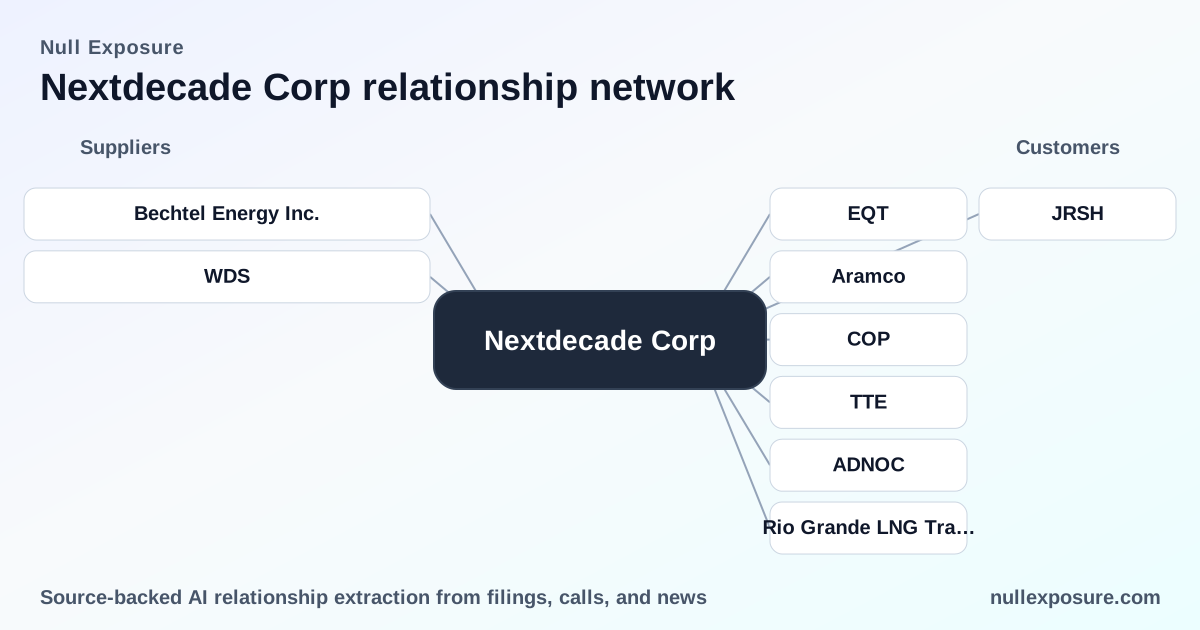
NextDecade's Customer Map: which global energy majors underpin Rio Grande LNG?
NextDecade develops large-scale LNG liquefaction capacity at Rio Grande and monetizes primarily by selling contracted LNG volumes under long-term Sale and Purchase Agreements (SPAs) that combine fixed fees and variable commodity-linked components; the company also earns development and management fees from project vehicles during financial close and construction. A portfolio of multi-decade contracts with integrated oil & gas and national oil companies is the core economic engine that underwrites financing and shifts market risk away from the developer. For a concise dashboard of counterparties and implications, see https://nullexposure.com/.
Why the contract book matters for valuation
NextDecade's value proposition is not built on spot trading or short-cycle sales alone — the company has structured most of Phase 1 capacity into long-term contracts with a weighted average tenor near 19 years and aggregate volumes that cover the vast majority of expected Phase 1 output. That contracting posture converts future liquefaction capacity into a revenue stream that supports project-level debt and equity. Simultaneously, NextDecade will sell commissioning and excess volumes into short-term and spot markets, giving it optional upside to prevailing LNG prices. Investors should treat the SPA portfolio as the principal de-risking instrument for Rio Grande while recognizing that project execution and financing remain the binary triggers for cash flow realization.
For more context on how counterparties line up to support construction and offtake, visit https://nullexposure.com/.
The counterparties (plain-English summaries, source references)
Below are the relationships extracted from recent reporting; each entry provides a short plain-English description and a source reference.
ExxonMobil
ExxonMobil signed a 1.0 MTPA LNG sale and purchase agreement with NextDecade, contributing a long-duration offtake to the project book. This announcement is reported in market coverage tied to FY2026 activity. (Source: Simply Wall St / market report, Jul 2026).
EQT (EQT Corporation)
EQT secured 1.5 MTPA under a 20-year SPA with NextDecade for Train 5 capacity, a commercially significant commitment that strengthens the financing case for that train. (Source: PR Newswire press release, FY2025).
ConocoPhillips
ConocoPhillips is a named counterparty within the 4.5 MTPA package supporting Train 5, sharing commercial backing with JERA and EQT; that allocation underpins deliveries expected in the early 2030s. (Source: The Globe and Mail press release / NewsBreak coverage, FY2025).
Aramco
Aramco is listed among the long-dated SPA counterparties backing Trains 4 and 5, providing a state-backed customer relationship that materially improves credit quality in the contract book. (Source: ChemAnalyst and Simply Wall St coverage, FY2025–FY2026).
TotalEnergies (TTE)
TotalEnergies is a counterparty on multi-decade SPAs for Trains 4 and 5, and is included in reporting that notes early cargo sales covering a meaningful share of near-term open volumes. (Source: TradingView coverage and ChemAnalyst, FY2026).
ADNOC
ADNOC is named among the international energy companies participating in 20-year SPAs backing the current construction phase, adding sovereign-linked demand to the portfolio. (Source: ChemAnalyst project coverage, FY2025).
JERA (JRSH)
JERA has contracted capacity as part of the Train 5 commercial package and is cited consistently in press notices describing the 4.5 MTPA support for Train 5. (Source: The Globe and Mail / Simply Wall St summaries, FY2025).
Rio Grande LNG Train 5, LLC
The project vehicle Rio Grande LNG Train 5, LLC made a development payment of $117 million to NextDecade at financial close to cover development costs and management services, representing a direct cash inflow tied to project funding milestones. (Source: The Globe and Mail press release on financial close, FY2025).
What the corporate constraints signal about NextDecade's operating model
The public evidentiary excerpts available for NextDecade describe a contracting posture dominated by long-term, take-or-pay style SPAs (weighted average term ~19.2 years) that cover over 90% of Phase 1 nameplate capacity, supported by shorter-term spot/short/medium-term sales for commissioning and excess volumes. This produces several company-level operating characteristics:
- Concentration and scale: Aggregate fixed fees tied to the Phase 1 Henry Hub-linked SPAs total roughly $1.8 billion annually (unadjusted), signaling very large cash-flow capacity at stabilization and a spend band consistent with projects that require hundreds of millions to billions of dollars in capital.
- Counterparty credit quality: The counterparty list is comprised of global integrated majors and national oil companies (ExxonMobil, TotalEnergies, Aramco, ADNOC, ConocoPhillips, JERA, EQT), producing high-credit anchor demand for financing packages even if project-level execution risk remains.
- Revenue profile and market exposure: Long-term fixed-plus-variable pricing reduces price volatility for the bulk of supply while leaving spot upside for commissioning and surplus cargoes, creating a hybrid cash-flow profile.
- Operational maturity: SPAs are described as currently effective, with deliveries tied to Dates of First Commercial Delivery and train completion; this signals contractual readiness even if physical commissioning and ramp remain to be executed.
These constraints are company-level signals and not assigned to any single counterparty unless explicitly stated in the evidence excerpts.
Investment implications and risk framing
- Credit-positive commercial book: The presence of multi-decade SPAs with investment-grade and sovereign counterparties materially improves project bankability and provides predictable long-term fee revenue. This is the single most important credit and valuation support for NextDecade.
- Execution and financing remain the value lever: Project FID sequencing, construction delivery on Trains 4–5, and the ability to refinance construction-level debt into long-dated project debt are the near-term catalysts for cash flow conversion; until those triggers are complete, the SPA economics are contingent on successful buildout.
- Large capital and concentration risk: Despite diversified counterparties, the project is capital intensive and dependent on a relatively small set of large buyers; any material change in a counterparty’s long-term plans or a systemic LNG price shock would have outsized financial implications.
- Optional upside from spot sales: Selling commissioning and excess volumes into spot and short-term markets delivers upside to revenues beyond SPA fixed fees; this optionality is a secondary but material source of potential upside.
Bottom line
NextDecade's commercial strategy is clear: convert liquefaction capacity into long-duration contracted cash flows with global majors and national suppliers, then leverage that contract book to secure financing and monetize construction-phase fees. For investors and operators, the health of the SPA portfolio — and the company’s ability to execute Trains 4 and 5 to DFCD — will determine whether contracted value converts into distributed economic value.
For more structured counterparty intelligence and ongoing monitoring, visit https://nullexposure.com/.