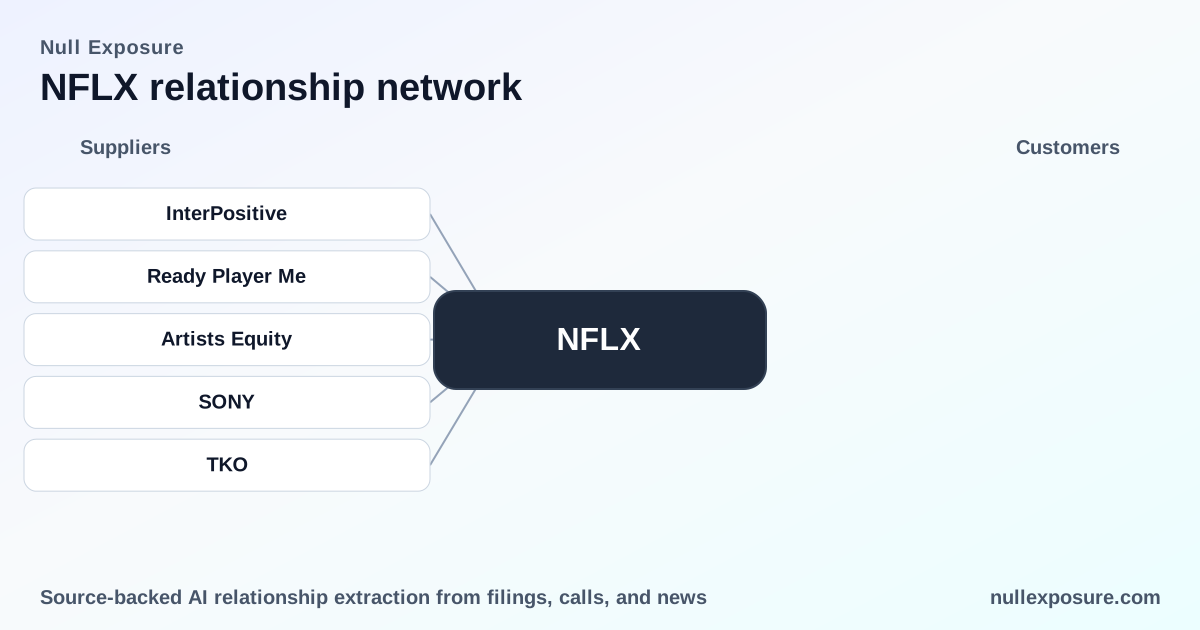
Netflix (NFLX) — customer relationships that shape distribution and monetization
Netflix operates a global subscription streaming and production business that monetizes primarily through recurring monthly member fees while leveraging content partnerships for distribution, event programming, and brand extensions. Its operating model is service-led, geographically diversified, and increasingly integrated with distribution partners (telcos, pay-TV bundles, and theatrical exhibitors) to extend reach and create ancillary revenue and marketing value. For a focused review of counterparties and partner dynamics, see more at https://nullexposure.com/.
How Netflix’s commercial model drives partner economics
Netflix’s revenue base is subscription-first, anchored to millions of individual accounts that generate steady cash flow and high lifetime value. The company sells a service rather than title-by-title products, which creates a contracting posture characterized by recurring, low-friction renewals and limited counterparty concentration at the subscriber level. At the company level, Netflix is a global seller of entertainment services with material exposure across North America, EMEA, LATAM and APAC, giving partners regional segmentation options for bundling and marketing. This maturity of the subscriber business supports aggressive content spending and makes Netflix a strategic partner for distribution and promotional deals.
Key operating signals:
- Subscription contracts and individual payers drive predictable ARPU and churn dynamics (high confidence from company reporting).
- Geographic footprint is broad: strong revenues reported in UCAN (North America), EMEA, LATAM and APAC, which informs regional distribution strategies.
- Services-first segmentation positions Netflix as a supplier of ongoing entertainment services rather than one-off media sellers.
If you want a structured view of Netflix’s counterparty exposure and partner patterns, consider a deeper dive at https://nullexposure.com/.
Partner catalogue — what filings and press reveal (each relationship covered)
AMCX (AMCX earnings call, 2025 Q4)
AMCX reported that an original series generated nearly half a billion hours of viewership on Netflix over the final six months of 2025, signaling large-scale consumption of Netflix content and its cultural reach. Source: AMCX earnings call transcript (2025Q4, first seen Mar 7, 2026).
RCI / Rogers (Rogers press release, FY2025)
Rogers introduced a bundled streaming plan that includes Netflix alongside Disney+ and Apple TV+, positioning Netflix as a fixture in carrier-managed bundles in Canada. Source: Rogers corporate press release (StreamSaver, Mar 10, 2026).
CMCSV / Comcast (TheWrap coverage, FY2026)
Comcast expanded its StreamSaver bundling to offer Netflix and other services with deep discounts and centralized billing, demonstrating Netflix’s role as an anchor service in cable/telco bundles. Source: TheWrap report on Comcast’s StreamSaver expansion (May 2, 2026).
MCS / Marcus Theatres (Deadline, FY2021)
Marcus confirmed it screened Netflix’s Army of the Dead with a one-week theatrical exclusivity window before the streaming premiere, underscoring Netflix’s selective theatrical strategies for event titles. Source: Deadline coverage (May 2021; cited Mar 10, 2026).
IMAX (Insidermonkey, FY2026)
IMAX referenced a pioneering partnership with Netflix on a high-profile director project, indicating Netflix’s willingness to collaborate with premium exhibition formats for value creation with partners. Source: IMAX Q4 2025 earnings coverage on Insidermonkey (first seen Mar 10, 2026).
BUD / AB InBev (StockTitan, FY2025)
AB InBev planned to advertise during Netflix’s live NFL Christmas Game Day event in 2025, showing Netflix’s use of live and event programming as a marketing and sponsorship platform. Source: StockTitan news (Mar 9, 2026).
CNK / Cinemark (Insidermonkey, FY2026 — transcript excerpt)
Cinemark executives discussed optimism about Netflix recognizing the theatrical exhibition opportunity, reflecting ongoing industry dialogue about Netflix’s greater theatrical engagement. Source: Cinemark earnings call transcript coverage (Insidermonkey, Mar 9, 2026).
AMC (SahmCapital, FY2026 and FY2025)
AMC partnered with Netflix to screen the Stranger Things series finale in over 620 theaters with more than 1.1 million seats reserved, and previously hosted Netflix sing-along events, demonstrating Netflix’s ability to drive box office-style audience demand for select events. Source: SahmCapital reporting (Jan–Nov 2025/2026 coverage).
RDI / Reading International (Investing.com transcript, FY2025)
Reading International credited a two-day K-pop “Demon Hunter” sing-along distributed by Netflix for a meaningful theatrical uplift, highlighting Netflix’s event distribution impact in international markets. Source: Reading International Q3 2025 transcript (reported May 3, 2026).
COTY (SahmCapital, FY2026)
Coty launched a limited-edition Bridgerton fragrance collection in collaboration with Netflix and Shondaland, illustrating Netflix’s brand-extension opportunities through licensing partnerships. Source: SahmCapital coverage (Mar 9, 2026).
LBTYB / Liberty Global (Liberty Global press release, FY2020)
Liberty Global’s Virgin TV 360 set-top includes the Netflix app among top streaming services, showing that Netflix remains a standard app partner for pay-TV operators integrating streaming services. Source: Liberty Global product announcement (historic FY2020 notice; surfaced May 3, 2026).
VZ / Verizon (MarketBeat, FY2026)
Verizon’s promotional streaming deals that include Netflix indicate continued telco distribution partnerships where Netflix is part of customer acquisition and retention bundles. Source: MarketBeat coverage of Verizon streaming deals (May 1, 2026).
IQ / iQIYI (MediaPlayNews, FY2026)
Reports note a content license agreement with China’s iQIYI after a failed standalone launch, reflecting Netflix’s strategic content licensing and market-entry adjustments in Greater China. Source: MediaPlayNews report (May 3, 2026).
TMUS / T‑Mobile (aijourn, FY2026)
T‑Mobile advertises competitive plans that include Netflix and Hulu for subscribers, reinforcing Netflix’s role as a bundled entertainment incentive in wireless plans. Source: aijourn coverage of T‑Mobile plan bundles (Mar 2026).
ARES / Ares Management (MarketScreener, FY2025)
Ares acquired Netflix’s London office for $215.6 million, representing a real-estate transaction tied to Netflix’s corporate footprint and capex/lease optimization activities. Source: MarketScreener notice of Ares acquisition (Feb 27, reported Mar 9, 2026).
Cinemark Holdings, Inc. (separate transcript, FY2026)
A later Cinemark earnings mention reiterated mutual opportunity with Netflix on theatrical distribution and confirmed continued industry conversations about deeper collaboration. Source: Cinemark Q1 2026 earnings call transcript coverage (reported May 3, 2026).
What these relationships imply for investors
- Distribution breadth and commercial optionality: Netflix is embedded in telco and pay-TV bundles (Comcast, Rogers, Verizon, T‑Mobile, Liberty Global), which accelerates subscriber acquisition and reduces direct marketing cost per net add.
- Event and theatrical strategy: Partnerships with major exhibitors (AMC, Cinemark, IMAX, Marcus, Reading) show Netflix is willing to deploy theatrical windows and event programming selectively to amplify titles and capture premium ticketing revenue or marketing lift.
- Brand and licensing upside: Consumer product tie‑ins (Coty) and advertising sponsorships (AB InBev) create ancillary monetization and marketing synergies beyond subscription fees.
- Real estate and corporate flexibility: The Ares transaction signals Netflix’s ability to monetize or rationalize physical office assets as part of capital allocation.
Key risks and maturity signals:
- Netflix’s core revenue model is subscription-driven and globally diversified, reducing single-counterparty concentration but increasing sensitivity to regional competition and ARPU mix.
- Many partner arrangements are distribution or promotional in nature, so revenue impact is often indirect — the structural cash flow strength comes from membership economics, not partner fees.
- Geographic diversification (NA, EMEA, LATAM, APAC) is a structural advantage but requires localized content investments and regulatory navigation.
For a more granular counterparty exposure analysis or tailored risk assessment for your portfolio, visit https://nullexposure.com/ for additional resources and structured reports.