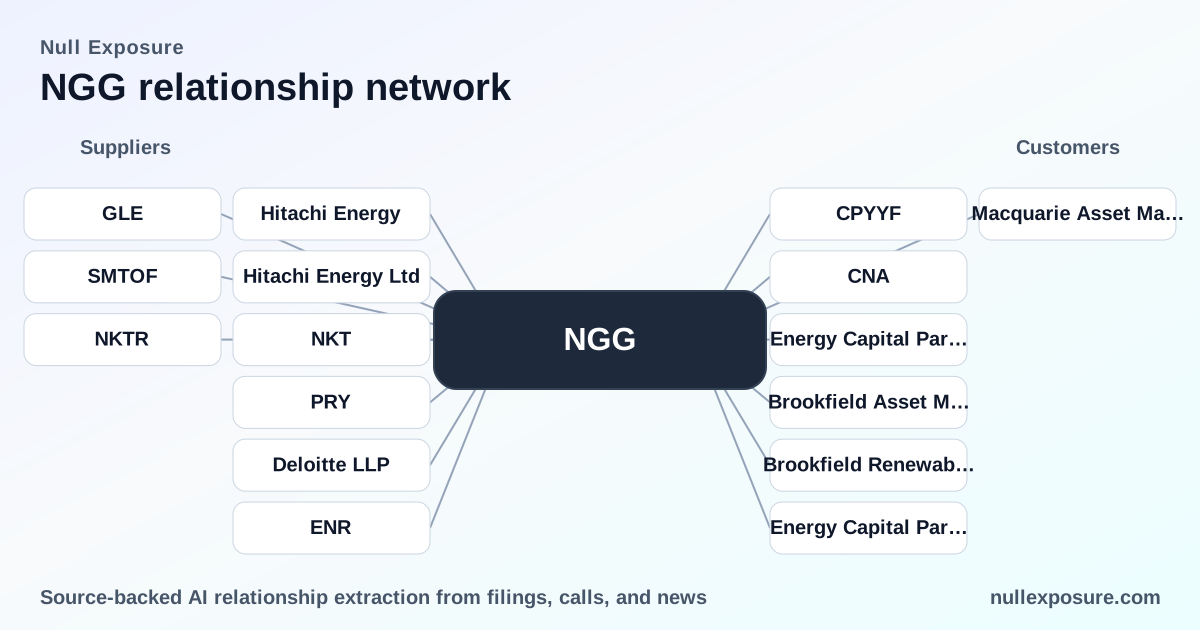
National Grid (NGG) — Customer Relationships and Strategic Divestments
National Grid plc operates regulated electricity and gas transmission and distribution networks in the UK and US and monetizes through long-term regulated tariffs, contracted asset sales, and rationalization of non-core infrastructure. Recent disposals of LNG, renewables and regional utility assets accelerate a cash-return and portfolio-focus strategy that strengthens regulated core cash flow while reducing merchant and merchant-like exposure. Explore the full profile at nullexposure.com.
Why the recent asset sales shift how investors should value NGG
National Grid’s business is anchored in regulated network earnings that produce stable EBITDA and dividend capacity; management is converting non-core, capital-intensive businesses into liquid proceeds. The announced and completed transactions for Grain LNG, Thamesport, renewables platforms and US regional utilities represent both immediate cash generation and a structural move to concentrate capital on regulated transmission and distribution. That reallocation alters growth optionality but improves clarity of regulatory-rate-of-return economics that dominate NGG’s valuation.
Customer relationship rundown — every listed counterpart and what the deal means
1) Centrica plc (reported via Simply Wall St; March 10, 2026)
National Grid completed the sale of its Grain LNG business and Thamesport Interchange to a consortium led by Centrica plc and Energy Capital Partners, signaling the removal of LNG asset exposure from NGG’s balance sheet and delivery of sale proceeds. This transaction was reported on Simply Wall St on March 10, 2026 (source: https://simplywall.st/stocks/gb/utilities/lse-ng./national-grid-shares).
2) CPYYF (symbol entry tied to the Centrica transaction; March 10, 2026)
The CPYYF listing duplicates the Centrica-related transaction record and confirms market-facing identification of the buyer side in off-market or ADR contexts; the same acquisition of Grain LNG and Thamesport is documented in the March 10, 2026 report. See Simply Wall St coverage (https://simplywall.st/stocks/gb/utilities/lse-ng./national-grid-shares).
3) Energy Capital Partners / Energy Capital Partners, LLC (reported via TS2.Tech; December 16, 2025)
Energy Capital Partners joined Centrica in the consortium that acquired Grain LNG, representing a private-equity buyer for NGG’s gas infrastructure and demonstrating the market demand for midstream LNG assets. The sale completion was described on TS2.Tech on December 16, 2025 (source: https://ts2.tech/en/national-grid-plc-stock-ng-l-ngg-latest-news-analyst-forecasts-dividend-outlook-and-key-catalysts-on-16-december-2025/).
4) Centrica plc (symbol CNA; reported via TS2.Tech; December 16, 2025)
TS2.Tech also reported that Centrica plc led the acquisition of Grain LNG, reinforcing the strategic buyer profile for the asset and the timing of the transaction as reported in late 2025. See TS2.Tech coverage for the December 2025 announcement (https://ts2.tech/en/national-grid-plc-stock-ng-l-ngg-latest-news-analyst-forecasts-dividend-outlook-and-key-catalysts-on-16-december-2025/).
5) Brookfield Renewable Partners L.P. (reported via Simply Wall St; March 10, 2026)
Brookfield Asset Management and institutional partners, including Brookfield Renewable, agreed to acquire National Grid Renewables, LLC for an enterprise value reported at $1.7 billion — a deliberate exit of merchant renewables positions. Simply Wall St reported this transaction on March 10, 2026 (https://simplywall.st/stocks/gb/utilities/lse-ng./national-grid-shares).
6) Brookfield Asset Management Ltd. (reported via Simply Wall St; March 10, 2026)
Brookfield Asset Management led the consortium acquiring the renewables platform from NGG, converting a growth-facing portfolio into sale proceeds and strategic simplicity for the regulated core. Coverage is available via Simply Wall St on March 10, 2026 (https://simplywall.st/stocks/gb/utilities/lse-ng./national-grid-shares).
7) CNA (ticker variant of Centrica; TS2.Tech report; December 16, 2025)
The CNA symbol entry reiterates Centrica’s role in the Grain LNG and Thamesport deal as noted in the December 2025 reporting, underscoring buyer identity across English and ADR market references. See TS2.Tech (December 16, 2025) for the announcement (https://ts2.tech/en/national-grid-plc-stock-ng-l-ngg-latest-news-analyst-forecasts-dividend-outlook-and-key-catalysts-on-16-december-2025/).
8) Energy Capital Partners, LLC (duplicate entry; Simply Wall St; March 10, 2026)
Simply Wall St’s separate entry for Energy Capital Partners mirrors the TS2.Tech reporting and confirms that private-equity participation was visible across multiple market reports in March 2026. Reference: Simply Wall St (https://simplywall.st/stocks/gb/utilities/lse-ng./national-grid-shares).
9) PPL Corporation (reported via Daily Energy Insider; May 3, 2026)
PPL Corporation received Rhode Island Superior Court clearance to acquire Narragansett Electric from National Grid USA, completing a regional utility divestment that transfers rate-base earnings and regulatory relationships to a US buyer. This was reported by Daily Energy Insider on May 3, 2026 (source: https://dailyenergyinsider.com/policy/35144-ppl-corp-receives-approval-from-rhode-island-court-to-acquire-narragansett-electric/).
10) Macquarie Asset Management (reported via Simply Wall St; March 10, 2026)
A Macquarie-led investor consortium completed acquisition of the remaining 20% equity interest in National Gas Transmission Plc from NGG, reflecting continued third-party appetite for regulated transmission stakes and NGG’s willingness to sell minority or non-core positions. Simply Wall St covered this on March 10, 2026 (https://simplywall.st/stocks/gb/utilities/lse-ng./national-grid-shares).
Constraints and operating-model signals investors should read through
Although the provided relationship records include no explicit constraint excerpts, the collection of transactions offers company-level signals about National Grid’s operating posture:
- Contracting posture: NGG is shifting from owning merchant and platform assets toward a tighter, regulated-contracting posture — sales of LNG, renewables and regional utilities reduce exposure to commodity and merchant risk and increase visibility on regulated cash flows.
- Concentration: The divestment program concentrates economic exposure in regulated transmission and distribution. That concentration increases predictability of returns tied to regulatory regimes and tariff-setting authorities.
- Criticality: As a transmission and distribution operator, National Grid’s core assets remain systemically critical to energy delivery; the company’s monetization through regulated tariffs retains high counterparty and end-customer criticality.
- Maturity: The pattern of disposals is consistent with a mature utility emphasizing capital returns and balance-sheet optimization rather than broad platform expansion.
Company financials support this profile: NGG reports TTM revenue of roughly $17.48 billion and EBITDA around $7.142 billion, with a dividend yield near 3.57% and a trailing P/E around 21.9 — figures that reflect a regulated-utility cash-flow model and dividend orientation (company overview).
Investment implications and key takeaways
- Stronger regulatory clarity equals valuation stability. By exiting non-core LNG and renewables merchant assets, NGG tightens its earnings base toward regulated returns that are simpler to model.
- Near-term balance-sheet improvement and buyback/dividend optionality. Sale proceeds from the transactions cited above create immediate liquidity that management can deploy to reduce leverage, return capital, or fund regulated capex where returns are predictable.
- Reduced growth optionality but lower volatility. Investors trading growth for predictability should reassess NGG’s role in portfolios: it now behaves more like a pure regulated network owner with a focus on yield and steady cash flows.
For institutional readers who want an aggregated tracker and deeper lineage of counterparties and transaction timing, visit nullexposure.com for the company dossier and relationship timeline.
Bold closing recommendation: National Grid’s recent disposals materially reshape its risk-reward toward regulated core returns; investors should reweight forecasts to prioritize tariff-driven cash flow and regulatory outcomes over merchant-asset growth scenarios.