Ingevity (NGVT): Portfolio reshaped through targeted divestitures — what buyers tell investors about customer relationships
Ingevity manufactures specialty chemicals and activated carbon, selling finished products to industrial and automotive customers worldwide and monetizing through product sales and periodic asset sales as it refocuses the portfolio toward higher‑margin specialty materials. Recent FY2026 divestitures — the sale of the North Charleston Crude Tall Oil (CTO) refinery and related Industrial Specialties product line, and the sale of the Ozark Materials road‑markings unit — materially change the company’s customer-facing footprint and are best read as a shift from commodity/refinery exposure toward concentrated, higher-value specialty supply relationships. For a concise corporate view and deeper signals around customer concentration, see NullExposure’s coverage at https://nullexposure.com/.
What the FY2026 transactions mean for customer exposure
Ingevity executed two cash sales in FY2026 that directly alter which counterparties buy its former product lines and which channels remain core to the business. These transactions reduce low-margin, asset‑intensive exposures and cede certain customer relationships to strategic buyers that are better aligned to operate those businesses. That reallocation of customer relationships influences counterparty risk, revenue concentration, and working‑capital dynamics for the remaining specialty portfolio.
Deal-by-deal: buyers, price points and immediate implications
Below are the relationships recorded in the recent coverage; each relationship is summarized in plain English with a concise source reference.
-
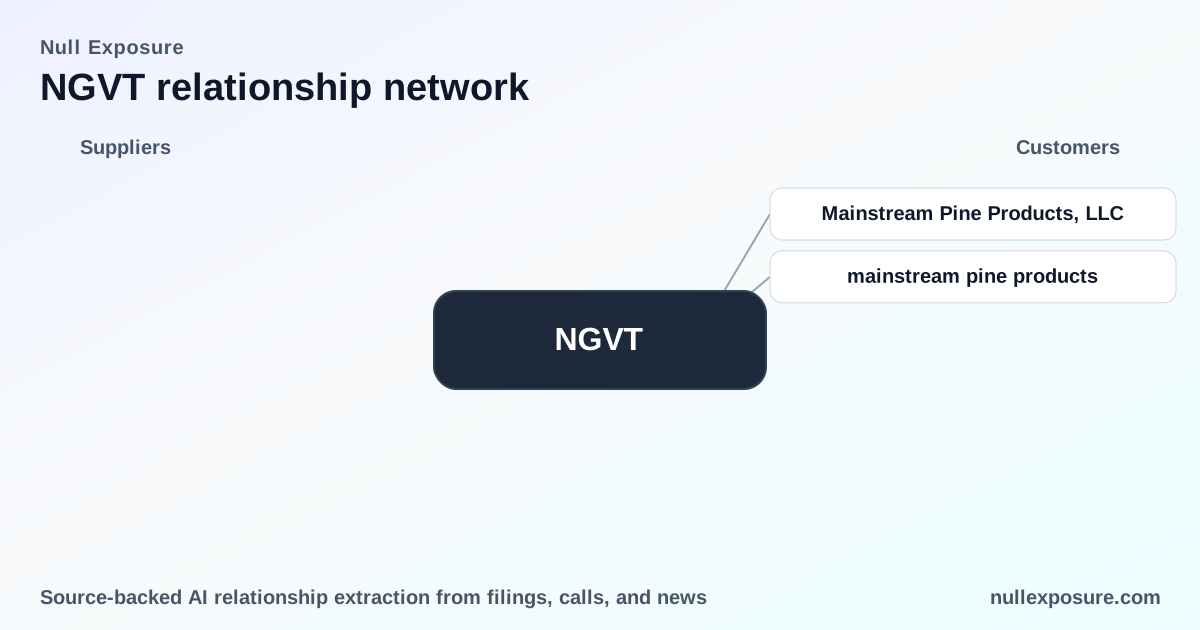
Mainstream Pine Products, LLC — Ingevity completed the sale of its North Charleston CTO refinery assets and the majority of its Performance Chemicals Industrial Specialties product line to Mainstream Pine Products for approximately $110 million, transferring refinery operations and associated customer flows for those product categories to Mainstream Pine. According to Ingevity’s disclosures reported March 10, 2026, the transaction closed on January 1, 2026 and included a first amendment to the asset purchase agreement in connection with the closing (news reports and the company’s earnings commentary in Q4 2025/ FY2026 coverage).
Source: company earnings commentary and multiple press items reported March 10, 2026 (e.g., Yahoo Finance / InsiderMonkey / Chemanalyst coverage). -
PPG (PPG Industries) — Ingevity signed and closed an all‑cash sale of its Ozark Materials road‑markings business to PPG for roughly $65 million, moving the pavement‑markings customer book and manufacturing continuity to a global coatings and specialty materials player with road‑marking expertise. The deal was announced and reported in early May 2026 and described as closed and subject to customary adjustments.
Source: press releases and market reports dated May 3–4, 2026 (e.g., TipRanks / ChemEngOnline / Investing.com coverage).
How these buyer relationships reframe customer risk and commercial posture
The two buyers are strategic acquirers for the assets they purchased: Mainstream Pine Product takes on refinery operations and industrial specialty flows, while PPG integrates pavement‑marking products into an existing global coatings platform. For investors, that matters because:
- Customer continuity for the sold product lines is preserved under buyers with operational fit, reducing the execution risk of the divestitures compared with spinning assets to non‑specialists.
- Revenue formerly tied to those product lines is now outside Ingevity’s direct customer ledger, compressing the company’s revenue base but improving segment focus; investors should expect headline revenue contraction offset by margin profile improvement if redeployment succeeds.
Company-level operating signals investors must weigh
Use the company‑level constraints and excerpts to read across how Ingevity runs its customer relationships and where the risks concentrate.
- Contracting posture: short payment cycles. Ingevity reports payment terms generally in the range of zero to sixty days, which creates a working‑capital profile that is sensitive to seasonal demand and divestiture timing yet benefits cash conversion when receivables turnover is high. (Company disclosures.)
- Counterparty type: large enterprise customers. The company positions itself as a trusted supplier for many of the world’s largest automotive parts manufacturers, signaling high standards for quality and long procurement qualification cycles, which translates into stickier account relationships for specialty products. (Company disclosures.)
- Geographic reach: global footprint with regional manufacturing. Ingevity sells through a direct sales force across North America, EMEA, LATAM and APAC and operates manufacturing locations in the U.S. and China, indicating that customer relationships are managed regionally but with global strategic accounts. (Company disclosures.)
- Concentration and criticality: material to critical. Corporate disclosures include multiple concentration excerpts: one statement indicates the company’s ten largest customers accounted for approximately 85% of sales in 2024, while other segment‑level excerpts report top‑ten shares of 26%, 46%, and 38% in different contexts; collectively these excerpts signal notable customer concentration at the corporate and segment levels and underline revenue sensitivity to a few large counterparties. (Company disclosures.)
- Role and maturity: seller, manufacturing segment. Revenue recognition is tied to shipped or delivered manufactured product, underlining that the company’s customer relationships are transactional and manufacturing‑driven rather than subscription or service‑based. (Company disclosures.)
Bottom line: these signals point to a firm that relies on short‑term commercial contracts with a small number of large buyers and that manages customer risk through regional manufacturing and direct sales relationships — an arrangement that delivers margin upside when the product mix improves but concentrates downside if a major account changes sourcing.
Investor implications and operational watch‑list
For investors and operators analyzing NGVT customer dynamics, the immediate implications are clear and actionable.
- Watch for margin vs revenue trade‑offs. Divestitures will likely compress reported revenue but are intended to lift overall margins. Monitor quarterly segment profitability and commentary on redeployment of divestiture proceeds.
- Monitor top‑customer disclosures and replacement risk. With customer concentration already elevated, any loss or shift in a major account will have outsized earnings implications — pay attention to 10‑largest customer schedules in filings.
- Working capital sensitivity. Short payment terms mean tight receivable cycles; track days‑sales‑outstanding and inventory turns after the asset sales to see how cash conversion evolves.
- Integration risk is limited for the sold lines but central for the remaining portfolio. Buyers are strategic operators for the acquired assets, reducing transitional execution risk on those businesses; Ingevity’s challenge is allocating capital and preserving specialty customer relationships.
If you want a consolidated briefing and issuer‑level relationship mapping for NGVT customers and counterparties, visit NullExposure for a structured investor playbook: https://nullexposure.com/.
Final assessment
Ingevity’s FY2026 divestitures materially reallocate customer exposure: sold asset customer flows now sit with strategic buyers (Mainstream Pine and PPG), while the remaining business becomes more concentrated and specialty‑oriented. That trade — lower revenue with a cleaner, higher‑margin product mix — is favorable for enterprise value if management executes on customer retention, reinvestment, and margin realization. Investors should prioritize monitoring customer concentration metrics, cash conversion, and segment margins in the next several quarters to validate the strategic thesis.