NHI's Tenant Map: Who Pays Rent and Why It Matters
National Health Investors (NYSE: NHI) is a healthcare-focused REIT that monetizes long-term real estate cash flows through sale‑and‑leasebacks, master leases and mortgage lending to senior‑housing and skilled‑nursing operators, collecting rent and interest while selectively trading assets. Its core economics are driven by long-duration, triple‑net lease cash yields, operator concentration and periodic portfolio dispositions that reset balance‑sheet and cash‑flow dynamics.
Learn more at https://nullexposure.com/
What drives NHI's operating profile — and how that shapes risk
NHI runs a classical landlord model with concentrated, operator‑specific exposure. The company’s lease book is predominantly long‑term (10–15 year initial terms with five‑year renewal options) and structured as triple‑net leases, which shifts operating and capex risk to tenants while locking in contractual rent escalators. All investments and lending are domestic — properties are located across 31 U.S. states, limiting geopolitical or FX exposure but concentrating sensitivity to U.S. healthcare reimbursement and demographic cycles.
Several other company-level signals matter for investors evaluating counterparty risk:
- Tenant concentration is material: NHI discloses a small number of tenants account for a meaningful share of revenue, making operator performance a principal earnings lever.
- Counterparty mix spans public and small operators, implying heterogenous credit quality across the book.
- Relationships are mostly active, though NHI records occasional terminations and operator transitions that generate one‑time rent adjustments or write‑offs.
- NHI deploys capital beyond rents: the company has committed to mortgages, construction and mezzanine loans (aggregate commitments of $138.2 million), giving it a dual role as landlord and lender.
These characteristics produce a stable base of contractual cash flow but concentrate idiosyncratic risk around a handful of operators.
Operators and counterparties investors should track
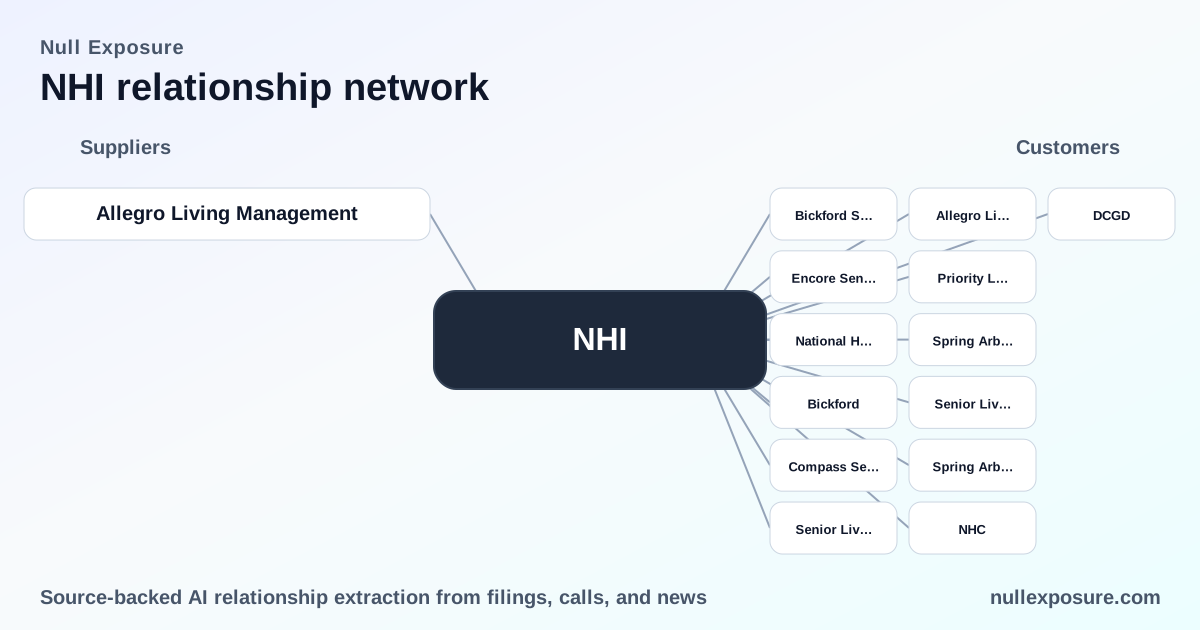
Below are concise, investor‑oriented notes on every NHI customer relationship referenced in public materials.
National HealthCare Corporation (NHC)
NHC is a major long‑term lessee that operated 32 skilled‑nursing facilities and three independent‑living facilities under a master lease with NHI as of December 31, 2024; NHI also agreed a $560 million sale of those 35 facilities to NHC in 2026 while noting NHC remains the operating counterparty. According to NHI’s 2024 Form 10‑K and multiple May 2026 press reports, NHC is a material, public lessee and the counterparty to a high‑value portfolio disposition. (Sources: NHI 2024 10‑K; press coverage May 2026)
Bickford Senior Living / Bickford
Bickford leases are a concentrated cash‑basis relationship for NHI: 38 facilities are leased under four leases, and management has reported strong NOI contribution from Bickford, with an outstanding repayment balance and notable quarterly cash flows. NHI’s 2024 10‑K documents the leases and recent earnings calls highlight Bickford’s operating performance and receivable balances (Q4 2025 reported $7.6 million outstanding). (Sources: NHI 2024 10‑K; NHI 2025 Q4 earnings call)
Encore Senior Living
Encore is a tenant in NHI’s assisted‑living portfolio that contributed a meaningful uplift in ALF rental income during the referenced period, reflecting Encore’s operational role in NHI’s senior‑housing strategy. Rental income disclosures in the 2024 10‑K show Encore’s ALF rents materially increased year‑over‑year. (Source: NHI 2024 10‑K)
Spring Arbor / Spring Arbor Management
Spring Arbor is a long‑standing operator in NHI’s senior‑housing book; NHI records ALF rent derived from Spring Arbor and describes affiliation with Spring Arbor Management in its earnings commentary. Management referenced Allegro as an affiliate of Spring Arbor and noted a working relationship that began in 2024. (Sources: NHI 2024 10‑K; NHI 2025 Q4 earnings call)
Allegro Living Management
Allegro is the new manager for a set of properties transitioned into NHI’s portfolio; NHI expects transitional impacts in year one but solid double‑digit growth in year two as the manager stabilizes operations. Management discussed Allegro’s role and transition considerations on the 2025 Q4 earnings call. (Source: NHI 2025 Q4 earnings call)
Senior Living Communities
NHI leased ten retirement communities totaling 2,232 units to Senior Living Communities as of December 31, 2024, and continues to add and acquire assets operated by this partner, with management praising this operator as a long‑time collaborator in acquisition commentary. (Sources: NHI 2024 10‑K; NHI 2025 Q3 earnings call)
Senior Living Management
Senior Living Management appears as an operator involved in dispositions and smaller asset sales; NHI disclosed a Q2 2024 disposition of two ALFs operated by Senior Living Management with modest net proceeds and gains on sale. (Source: NHI 2024 10‑K)
Priority Life Care
Priority Life Care is a newer operator relationship described on an earnings call as an established operator with over 60 properties in 12 states, representing NHI’s push into more geographically diversified operator partnerships. (Source: NHI 2025 Q4 earnings call)
Compass Senior Living
Compass served as the operator on NHI’s first SHOP acquisition (four properties for $74.3 million) completed October 1, highlighting NHI’s strategy to grow its senior‑housing operating portfolio via selective SHOP investments. (Source: NHI 2025 Q3 earnings call)
Discovery / DCGD
Several analyst and news narratives referenced Discovery (DCGD) as another tenant that contributes to NHI’s concentration considerations; coverage flags that occupancy softness among SHOP operators like Discovery could pressure rental income. (Source: media analysis March 2026, SimplyWall.St)
What the contractual constraints tell an investor
Collectively, NHI’s disclosure set establishes a landlord with large, durable contractual claims but clear concentration and operator‑quality sensitivity:
- Contracting posture: leases are long‑dated and triple‑net, which secures nominal cash flows while shifting operating nexus to tenants.
- Concentration: a few tenants account for a material portion of revenue, elevating idiosyncratic operator risk as an earnings driver.
- Counterparty mix: the portfolio includes public and small operators, producing variable credit profiles across the book.
- Maturity and stage: relationships are mostly active and long‑term, with occasional terminations or transitions that produce discrete earnings effects.
- Capital commitments: NHI is both landlord and lender with >$100 million in committed credit facilities to operators, adding balance‑sheet deployment exposure beyond rent collection.
These constraints make NHI a stable cash‑flow vehicle but one where investor returns are strongly correlated to operator‑level execution and selective portfolio recycling.
Learn more about counterparty mapping and portfolio analytics at https://nullexposure.com/
Investment implications and watch‑list
- Upside: the $560 million disposition to NHC crystallizes value from a concentrated SNF/ILF block and reduces landlord exposure while generating liquidity to redeploy into higher‑growth senior‑housing SHOP assets.
- Risk: operator concentration and SHOP occupancy sensitivity remain principal downside vectors; monitor receivable balances and covenant performance from Bickford and other top tenants.
- What to watch next: settlement details on the NHC sale, tenant rent reset mechanics at lease expirations, and performance updates from Allegro and Priority Life Care as transitional managers/operators realize projected growth.
Bottom line: NHI’s business model is cash‑flow centric and contractually insulated, but investor returns are dependent on a small number of operator relationships and the company’s ability to execute disciplined asset rotations.