Nixxy, Inc. (NIXX) — Customer Map and What It Means for Investors
Nixxy monetizes a hybrid services model built around software subscriptions, time- or usage-based recruiting services, and occasional platform sales; the company recognizes revenue on a gross basis as the principal and is executing a strategic pivot into AI-enabled financial and telecom infrastructure. Investors should focus on customer concentration, contract tenor, and the shift from mobile-commerce/SaaS products toward high-throughput telecom payment rails when assessing cash-flow durability and upside from new partnerships. For a concise corporate overview and relationship intelligence, see https://nullexposure.com/.
The customer relationships investors should track
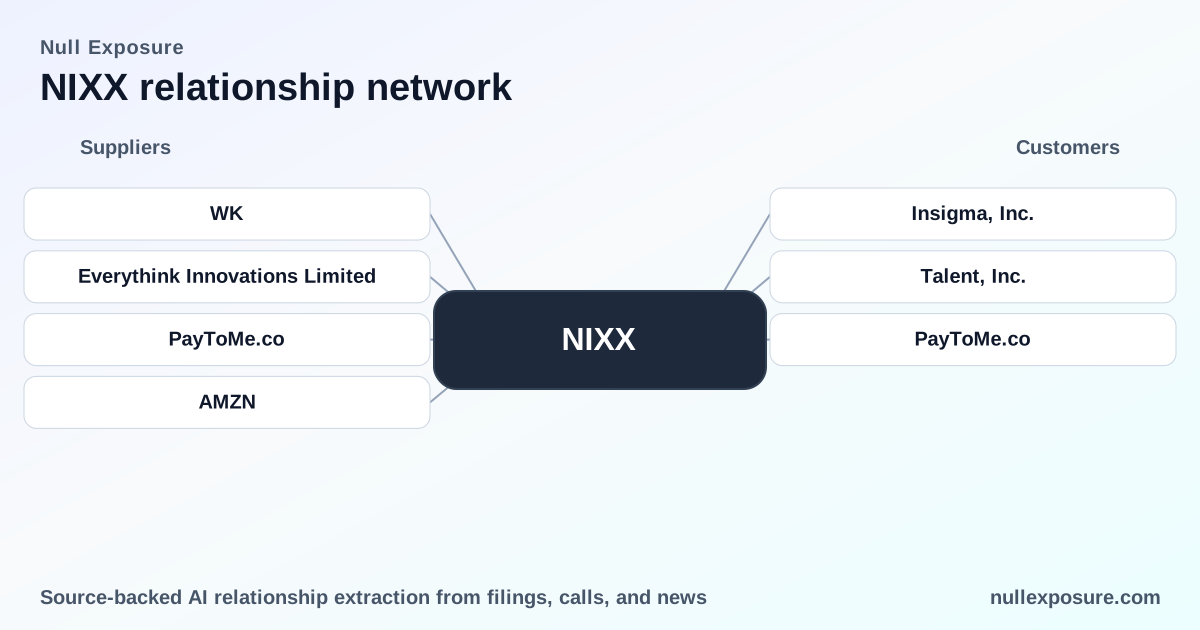
Below I summarize the explicit customer/counterparty mentions disclosed in Nixxy’s public materials and press coverage. Each relationship is described in plain language with source attribution.
Insigma, Inc.
Nixxy disclosed an asset purchase agreement with Insigma, Inc. executed on August 9, 2023, indicating a transactional sale of assets between the parties rather than an ongoing subscription relationship. This is documented in Nixxy’s Form 10‑K for FY2024. (Source: Nixxy FY2024 10‑K, disclosure of August 9, 2023 asset purchase agreement.)
Talent, Inc.
Nixxy sold one of its software platforms to Talent, Inc. in December 2022; the sale was described as a divestiture of a platform that had been used to deliver subscription services, which reduces recurring revenue bases tied to that asset. (Source: Nixxy FY2024 10‑K, December 2022 platform sale disclosure.)
PayToMe.co
In March 2026 Nixxy announced a commercial integration with PayToMe.co to extend AI-enabled financial infrastructure into telecom distribution, enabling payment and invoicing workflows at carrier-scale engagement volumes—an explicit pivot toward wholesale telecom rails. The announcement was covered in press releases and media distribution in March 2026. (Source: March 2026 press releases reported on Morningstar/AccessWire and Futunn news coverage.)
How the relationship map shapes Nixxy’s operating model
Nixxy’s disclosed customer interactions and corporate disclosures together produce a cohesive portrait of the company’s contracting posture, revenue mix, counterparty profile, and strategic trajectory.
- Contracting posture: Nixxy operates with a mix of short-term contracts and subscription terms. The company disclosed a twelve‑month agreement with Mexedia (announced February 24, 2025), and its revenue recognition policy confirms subscription billing recognized over contract terms. The presence of one‑year deals and subscription billing indicates near-term revenue visibility but limited long-duration lock‑ins. (Source: February 2025 Mexedia announcement; Nixxy revenue recognition policy in FY2024 10‑K.)
- Revenue model composition: The firm recognizes revenue on a subscription basis for platform access and on time/usage‑based billing for Recruiters On Demand—Nixxy invoices customers monthly for service access and bills certain services on time or usage. This structural mix supports recurring cash flows from subscription customers while retaining episodic variability from time-based services. (Source: Nixxy FY2024 10‑K revenue recognition disclosures.)
- Counterparty breadth and go-to-market: Nixxy targets a broad spectrum of buyers—from SMBs to Fortune‑scale enterprises—and explicitly sells mobile commerce and recruiting services for smaller customers while servicing larger clients with flexible outsourced recruiting and enterprise license arrangements. That breadth reduces single-segment exposure but necessitates different commercial workflows and sales motions. (Source: Nixxy FY2024 10‑K go‑to‑market disclosures.)
- Geography and expansion: The company’s historical product footprint spans North America and APAC, specifically with mobile commerce launches in Indonesia (Gologiq) and ambitions for global wholesale telecom, signaling a multi‑regional distribution strategy as the company pivots into telecom rails. (Source: Nixxy FY2024 10‑K product geography disclosures.)
- Relationship role and margin dynamics: Nixxy reports revenue on a gross basis as a principal, confirming it bears operational and credit risk for services rendered rather than acting as an agent. That posture elevates both gross revenue and the associated cost volatility on the P&L. (Source: Nixxy FY2024 10‑K revenue presentation and principal/agent discussion.)
- Materiality and concentration: High concentration is a material risk—as of December 31, 2024 three customers represented 77% of accounts receivable and two customers comprised 40% of FY2024 revenue—making collections and contract renewals with large customers core drivers of near-term liquidity and revenue stability. (Source: Nixxy FY2024 10‑K concentration disclosure.)
For more on how these relationship signals are tracked and why they matter for operating leverage and risk, explore https://nullexposure.com/.
Financial implications: risk and opportunity
Nixxy’s customer relationships produce a clear set of investment implications:
- Concentration risk is acute. With a handful of customers dominating receivables and revenue, any churn or payment stress from those accounts would materially affect cash conversion and working capital.
- Revenue visibility is moderate. Subscription recognition provides recurring revenue, but the prevalence of short-term contracts and time-based billings constrains multi-year predictability.
- Margin recovery depends on successful product transitions. The company reported very low gross profit in TTM figures relative to revenue and negative operating metrics—Nixxy must either improve pricing/mix or realize scale benefits from higher‑margin infrastructure work (e.g., PayToMe/telecom engagements) to lift profitability. (Source: Nixxy financials, TTM revenue and gross profit figures in company overview.)
- Strategic pivot creates upside and execution risk. The PayToMe commercial linkage positions Nixxy to monetize AI-enabled billing at carrier scale, which could transform revenue growth and unit economics if executed, but the shift requires new partnerships, product hardening, and possibly longer contract tenors to capture telecom margins. (Source: March 2026 press coverage.)
What investors and operators should watch next
- Contract renewals and payment performance among the top two revenue customers—these are primary levers for short-term cash flow.
- Traction and commercial milestones from the PayToMe partnership and any subsequent carrier or wholesale distribution agreements.
- Progress in shifting mix from low-margin platform sales and time-based services toward higher-throughput telecom billing and licensing revenue.
- Any disclosures that reduce customer concentration or extend contract terms beyond the current one‑year typical tenor.
Bottom line: Nixxy runs a principal-led revenue model with mixed subscription and time-based billing, significant customer concentration, and an explicit strategic pivot into telecom payment infrastructure that can unlock higher-margin, scalable revenue if the company secures durable enterprise/wholesale contracts and reduces receivables concentration. For ongoing relationship monitoring and alerting on material customer events, visit https://nullexposure.com/.
Sources: Nixxy FY2024 Form 10‑K (customer disclosures, revenue recognition, concentration figures), press releases and coverage on March 10, 2026 (Morningstar/AccessWire and Futunn) regarding the PayToMe.co commercial integration, and Nixxy corporate filings cited above.