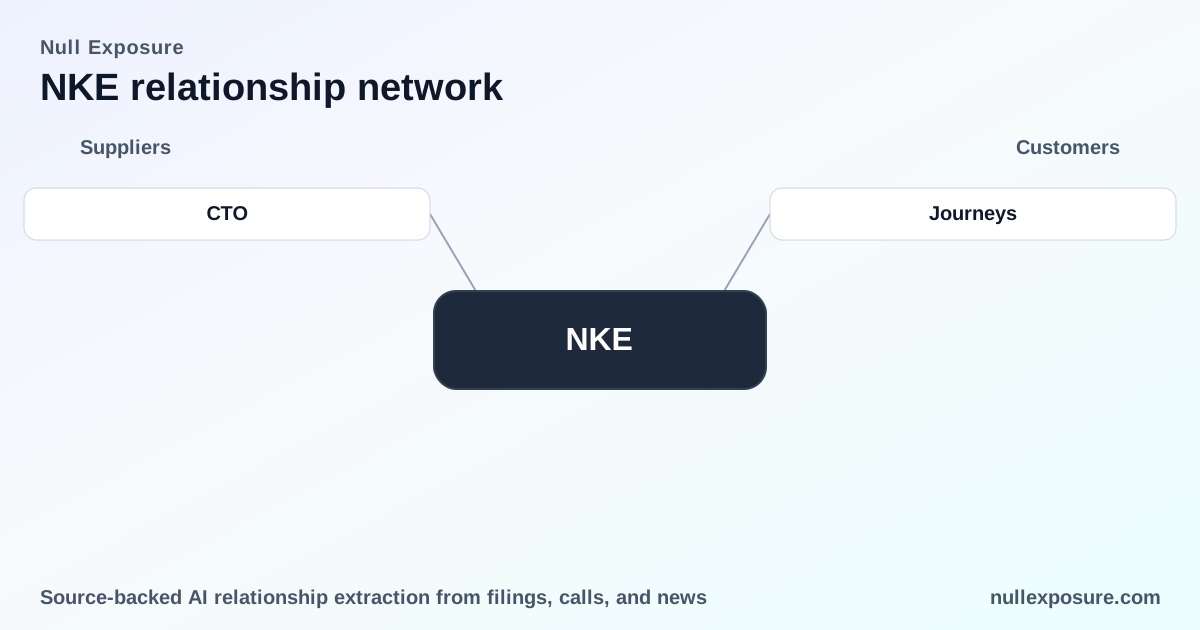
Nike's Retail Ecosystem: Customer Relationships and Operational Signals
Nike monetizes through product sales, direct-to-consumer retail and digital channels, wholesale relationships, and licensing. The company designs and markets footwear, apparel and equipment globally while distributing via NIKE-owned stores and NIKE Brand Digital, plus a broad wholesale base of distributors, licensees and large retail partners. For investors, valuation and margin outlook turn on wholesale sell‑through, promotional discipline across partners, and the contribution of licensing and owned‑brand channels to revenue mix. Learn more at https://nullexposure.com/.
How to read Nike’s customer map — what matters to investors
Nike’s customer footprint is globally diversified and functionally segmented: North America and EMEA are explicit operating segments alongside Greater China and APLA. The company reports that no single customer represented 10% or more of consolidated revenue in fiscal 2025, signaling low counterparty concentration at the corporate level. Nike sells as both a seller (direct retail, digital) and as a supplier to wholesale accounts that act as buyers, distributors and licensees; licensing income and non-geographic revenue streams are captured under global brand divisions. These structural signals imply:
- Contracting posture: centralized brand and product control with standardized wholesale relationships and selective licensing programs rather than bespoke large-customer contracts.
- Concentration risk: low at the top line (no 10%+ customers), but retail channel quality and promotional behavior among large partners materially affect near‑term revenue and margin volatility.
- Criticality: wholesale partners are important for reach and inventory sell‑through, but Nike retains pricing and product control through Direct channels and licensing rules.
- Maturity: relationships are mature and industry standard — long-established retail partnerships with major chains and marketplaces across regions.
For a structured view of retail exposure and partner dynamics, visit https://nullexposure.com/.
Customer relationships — who carries Nike (every relationship in the record)
Academy Sports & Outdoors (ASO)
Academy has expanded its assortment to include Nike and Jordan, using those brands to drive store traffic and higher-income customer trade‑down; Academy executives highlighted the role of Nike/Jordan in FY2026 merchandising commentary. Source: Academy Q4 FY2026 earnings coverage (InsiderMonkey, May 2026) — https://www.insidermonkey.com/blog/academy-sports-and-outdoors-inc-nasdaqaso-q4-2025-earnings-call-transcript-1720426/
DICK’S Sporting Goods (DKS)
DICK’S lists Nike as a key vendor and cited collaborative brand activations (NBA All‑Star, launches) that delivered exceptional sell‑through; DKS also benefits if Foot Locker’s stabilization reduces promotional pressure. Source: DKS earnings and industry analysis (InsiderMonkey & company transcripts, FY2026) — https://www.insidermonkey.com/blog/what-makes-dicks-sporting-goods-dks-a-compelling-investment-1743545/
Urban Outfitters (URBN)
Urban Outfitters has used Nike-led in-store installations in its “On Rotation” program, signaling Nike’s role in experiential retail and Gen Z footwear initiatives. Source: Urban Outfitters PR and retail coverage (PR Newswire / SimplyWallSt, May 2026) — https://www.prnewswire.com/news-releases/urban-outfitters-launches-vans-on-rotation-experience-as-footwear-emerges-as-a-core-growth-category-302712384.html
Caleres / Famous Footwear (CAL)
Caleres disclosed that Nike and Jordan were among its top-performing labels, and Famous Footwear sourced material volumes from Nike across multiple years, highlighting Nike’s importance to specialty footwear chains. Source: Caleres SEC filing and industry coverage (10‑K and WWD, FY2025–FY2026) — https://cal-2025-02-01
Shoe Carnival (SCVL)
Shoe Carnival cites Nike as a named national brand and reported a phased Jordan rollout, with the Jordan brand present in a majority of stores and planned fleet expansion. Source: Shoe Carnival earnings and press mentions (FY2026) — https://www.gurufocus.com/news/8691499/shoe-carnival-scvl-increases-dividend-and-schedules-q4-2025-earnings-release
Genesco / Journeys (GCO and Journeys)
Genesco (Journeys parent) identifies Nike activations and product additions as drivers of holiday and teen‑market performance, indicating targeted brand placements in younger demographics. Source: Genesco holiday quarter coverage (SGB Online / InsiderMonkey, FY2026) — https://sgbonline.com/journeys-parent-genesco-delivers-robust-holiday-quarter/
Walmart (WMT)
Walmart’s store remodels and marketplace assortment updates include Nike among lifestyle and branded offerings, reflecting Nike’s placement in mass‑market channels and vision/retail services contexts. Source: Local retail reporting on Walmart remodels (RutherfordSource, FY2026) — https://rutherfordsource.com/dickson-and-murfreesboro-walmart-stores-among-8-tennessee-locations-getting-major-makeovers-in-2026/
UEFA
Nike entered exclusive discussions to supply match balls for UEFA men’s competitions, a strategic sponsorship/partnership play that would displace a long incumbent and affect global brand visibility in elite soccer. Source: Sports sponsorship reporting and industry analysis (SAHM Capital, April 2026) — https://www.sahmcapital.com/news/content/nike-restructures-with-layoffs-as-uefa-push-and-valuation-questions-emerge-2026-04-24
Foot Locker (FL)
Foot Locker is a major wholesale partner whose promotional posture influences category pricing; industry commentary ties Foot Locker’s turnaround prospects to broader vendor dynamics with Nike. Source: Industry analysis and DKS comparative commentary (InsiderMonkey, FY2026) — https://www.insidermonkey.com/blog/what-makes-dicks-sporting-goods-dks-a-compelling-investment-1743545/
Designer Brands Inc. (DBI)
Designer Brands’ Canadian comps pointed to Nike’s reintroduction in women’s casual categories as a contributor to category growth, indicating regional SKU and assortment impact. Source: Designer Brands retail commentary (SGB Online, FY2025) — https://sgbonline.com/designer-brands-inc-ekes-out-comp-sales-growth-for-2024-q4/
G‑III Apparel Group (GIII)
G‑III referenced product launches under Converse licensing; while not Nike directly, Converse activity is operationally adjacent to Nike’s brand ecosystem and licensing strategies. Source: 10‑Q and trading commentary (TradingView, FY2025) — https://www.tradingview.com/news/tradingview:b9108d3c53d7f:0-g-iii-apparel-group-ltd-de-sec-10-q-report/
Amazon (AMZN)
Amazon’s fashion assortments include brands such as Nike and Converse in marketplace listings and category extensions, reflecting Nike’s critical placement in online multi‑brand retail. Source: Amazon earnings call merchandising remarks (2025 Q4 transcript) — amzn-2025q4-earnings-call
TEN
An outlying historical reference to “NK” equipment showed up in a maritime piece (FY2014), a minor and non-core mention that does not change Nike’s retail customer footprint. Source: MarineLink archival mention (FY2014) — https://www.marinelink.com/news/shuttle-tanker-great362771
Investment implications — distilled takeaways
- Low single‑customer concentration reduces balance‑sheet counterparty risk: no customer accounted for 10%+ of revenue in fiscal 2025. This supports a stable receivables profile but does not neutralize channel risk.
- Wholesale partners are strategically material but not individually critical; promotional behavior at large chains like Foot Locker and DICK’S can meaningfully affect near‑term sell‑through and margin.
- Licensing and global segmentation broaden revenue sources (EMEA, NA, Greater China, APLA), helping price and product flexibility across geographies. The company’s contracting posture is standardized with centralized brand control, favoring channel governance over bespoke dependency.
- Operational maturity: longstanding retailer relationships and repeat activations (Jordan launches, in‑store experiences) point to a stable go‑to‑market playbook; risk is execution and promotional discipline in a challenged retail environment.
Bold conclusion: Nike operates a globally diversified retail network with low top‑customer concentration but material channel exposure; investors should watch partner promotional behavior, regional sell‑through, and licensing contributions as primary drivers of near‑term revenue and margin variability.
For deeper, structured intelligence on retail counterparties and exposure mapping, visit https://nullexposure.com/.