Nomura Holdings (NMR): Customer relationships that drive capital-markets revenue
Nomura Holdings operates as a global capital markets and investment bank that monetizes through underwriting and syndication fees, advisory and structuring mandates, trading and principal financing, and selective balance-sheet investments. The firm’s client relationships are predominantly transactional—arranging financings, underwriting bonds and equities, and providing advisory services—yet they regularly translate into fee streams and occasional balance-sheet exposure that support Nomura’s capital-markets P&L. Learn how these engagements map to revenue drivers and risk vectors at https://nullexposure.com/.
How to read these customer ties: what they reveal about Nomura’s model
Nomura shows a consistent commercial posture: on-demand capital markets intermediary and arranger, stepping in as sole lead manager, co-manager, structuring agent, bookrunner or financial advisor depending on client needs. This contracting posture delivers immediate fee income and episodic credit exposure when the firm underwrites or provides financing.
Concentration is low at the client level but high in activity type: Nomura’s relationships span fintech, renewable energy, pharmaceuticals, securitizations and REITs, indicating diversified sector exposure but concentrated reliance on capital-markets flows. Criticality is transactional—clients depend on Nomura to access capital or structure deals at specific moments—so revenue is lumpy but strategically important for issuers. Maturity is mixed: some engagements are one-off mandates (IPOs, securitizations), while others reflect repeat financing and advisory roles that can recur across years. These are company-level operating signals rather than relationship-level constraints.
For a structured view of Nomura’s client activity and to explore transaction details, visit https://nullexposure.com/.
Deal-by-deal read: every reported customer interaction
- RILYK (Rilyk): Rilyk used a Nomura facility to retire an outstanding senior security credit facility, with Nomura providing working capital support as disclosed in the company’s 2024 Q4 earnings call in March 2026. According to the 2024 Q4 earnings call (reported March 2026), Nomura provided the facility used to retire prior debt and supply working capital.
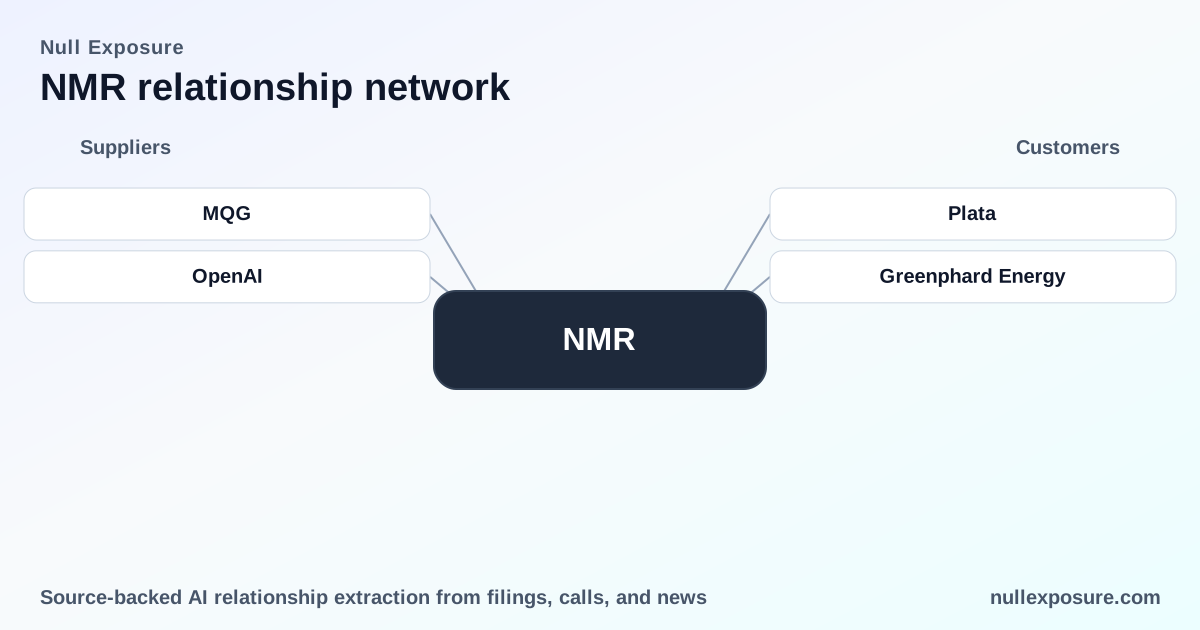
- Plata (Mexican fintech): Plata secured financing of up to $500 million that was arranged by Nomura Securities International, representing a sizable cross-border structuring mandate for digital finance in Latin America (CrowdfundInsider, December 2025).
- Shimizu Corporation (SHMUF): Nomura acted as sole lead manager for Shimizu’s inaugural blue bond, delivering framework development and financing to support offshore wind acceleration in Japan (Nomura Connects client story, FY2026).
- Deciphera Pharmaceuticals (DCPH): Nomura Securities International served as a co-manager on Deciphera’s IPO offering, alongside JMP Securities, reflecting Nomura’s role in life-science underwriting in 2017 (GlobeNewswire release, FY2017).
- Orchid Island Capital (ORC) — March 2026 disclosure: Nomura Securities International shows up as a holder/participant in Orchid Island Capital position reporting, reflected in a Globe and Mail disclosure listing Nomura Securities International holdings for March 2026.
- RILYL (Rilyl class): RILYL’s 2024 Q4 call indicates the same operational use of a Nomura facility—to retire senior security credit and provide working capital and to fund an investment loan—confirming Nomura’s role as a lender/facility provider (2024 Q4 earnings call, reported March 2026).
- KMTS (wearable heart device company): The Wolfe | Nomura alliance served as co-manager for a proposed public offering, illustrating Nomura’s participation in health-tech capital raises (Cardiovascular Business report, FY2025).
- ICLK (iClick Interactive Asia): The company’s special committee engaged Nomura International (Hong Kong) Limited as financial advisor to evaluate strategic alternatives, signaling Nomura’s advisory footprint in corporate M&A processes (InvestorNewsBreaks / Silicon Valley Markets reporting, FY2021).
- Greenphard Energy: Greenphard announced expected funding from Nomura Holdings and co-investors, showing Nomura’s balance-sheet or committed-investor role in energy projects in FY2026 (MarketScreener news item, FY2026).
- Redwood Trust / Point (RWT): Nomura Securities International acted as sole structuring agent and sole bookrunner for a $146 million home-equity investment securitization, highlighting Nomura’s securitization and structured finance capabilities (PR Newswire release and National Mortgage Professional coverage, FY2021).
- RILYP (Riley class P): Reporting in InvestmentNews notes Nomura provided financing for a $2.8 billion management buyout of Franchise Group that B. Riley helped orchestrate, underlining Nomura’s role as a strategic lender in large LBO-style financings (InvestmentNews reporting, FY2026).
- RILYT (Riley class T): InvestmentNews also documents Nomura’s financing support for the same $2.8 billion Franchise Group management buyout, reinforcing that Nomura underwrote or provided structured financing in that transaction (InvestmentNews reporting, FY2026).
- Orchid Island Capital (ORC) — December 2025 disclosure: Public dividend and shareholding disclosures show Nomura Securities International listed with holdings in Orchid Island Capital as of December 2025, confirming recurring positions in mortgage REIT securities (QuiverQuant/press disclosures, FY2025).
What investors should take away: revenue drivers and risk vectors
- Fee-driven but lumpy revenue: Underwriting, structuring and advisory mandates generate significant fees but are episodic; Nomura’s capital-markets revenue profile is transaction-dependent.
- Selective balance-sheet exposure: Financing and committed-investor roles (e.g., management buyout financing, energy funding, working capital facilities) create credit exposure that complements fee income and can amplify earnings volatility.
- Sector diversification reduces single-client dependency: The client list spans fintech, renewable infrastructure, healthcare, REITs and securitizations, which mitigates concentration risk at the sector level while preserving concentrated exposure to capital markets activity.
- Reputational and execution risk matter: Acting as sole lead manager or sole bookrunner concentrates execution and reputational responsibility; deal failures or underpricing affect fee realization and market standing.
- Mixed maturity profile improves optionality: A combination of one-off mandates and repeat advisory roles provides optionality—Nomura converts transactional wins into repeat engagement where execution and client trust are established.
Bottom line and next steps
Nomura’s client relationships documented here reinforce its role as a versatile arranger and financier across geographies and sectors; its business model converts episodic deal flow into a steady stream of fees and periodic financing gains or losses. For investors and operators evaluating counterparty exposure or fee-stream durability, focus on the pipeline of mandates, balance-sheet commitments, and sector trends that feed future issuance.
For continued monitoring of Nomura’s client activity and transaction-level detail, see https://nullexposure.com/.